Everything you always wanted to know about Prosecco explained
I am quite sure, pretty much everyone is familiar with Prosecco. After all, it’s the world’s most popular sparkling wine, if you go by the volume of bottles sold each year. So, way write a guide about it? And perhaps more importantly, why should you read it?
Short answer: Because Prosecco is much more varied and offers more individual styles of quality and taste profiles than you’d likely expect.
The longer answer consists in my guide below. Read on to learn about the different styles of Prosecco, where and how it is made, the best food pairing suggestions, and get a list of the best cocktails made with the delicious Italian sparkler, and lastly examples of great Proseccos to try.
What is Prosecco
Just in case, though likely everyone knows. Prosecco is an Italian sparkling wine.
Contrary to common believe, Prosecco is not named after the grape variety from which it’s made. Instead, Prosecco takes its name from the small village of Prosecco, located just few kilometres north of Trieste in the Friuli-Venezia Guilia region and near the Slovakian boarder.
The first mention of Prosecco goes back to 1754 when it was mentioned in a poem written by Aureliano Acanti, and the Glera grape had been used to make wine for several centuries before that already.

The first Prosecco similar in style as we know it today was produced in the historic Conegliano Valdobbiadene area sometime in the 1890s by legendary Etile Capernè, perfecting a method already used by his father Antonio. It was the same Etile Capernè who also produced the very first bottle of sparkling wine being the name Prosecco on the lable in 1924.
Where does Prosecco come from
Prosecco can be made exclusively in three designated appellations in the northern Italian regions of Veneto and Friuli-Venezia Guilia. More precisely, it’s made in the provinces of Belluno, Padova, Treviso, Venice, and Vicenza in the Veneto, and Gorizia, Pordenone, Trieste, and Udine in Friuli.
That said, the Glera grape, the main grape variety of Prosecco (which until 2009 was actually called Prosecco, see explanation below), is believed to have originated in Croatia. The variety has once been grown across most of the Balkans, and particularly in Slovakia. However, today, the Glera grape is almost exclusively grown in the Veneto and Friuli regions of Italy.
The most prestigious area of Prosecco production, Conegliano Valdobbiadene, was given DOCG status (the highest level of the Italian wine classification) in 2009. And ten years later (in 2019), this particular area was given UNESCO World Heritage status!
What grape varieties are used for Prosecco
As I’ve mentioned before, the predominant grape variety used to make Prosecco is the Glera grape. It was indeed once called Prosecco but there have been legal reasons leading to the name change.
The most important was to create Prosecco DOC status (the Italian name for a vineyard appellation) to protect the product and its name. Given the rapidly rising popularity of Prosecco, other regions around the world started to make ‘Prosecco’ as well. Which obviously did not go down well with the Italian producers of the sparkler.
The problem: European appellation names do not allow to name an appellation after a grape variety. To resolve this dilemma, the name of the grape was changed from Prosecco to Glera. Which was already in use for the grape before, but only known and used by few.
Glera is a green-skinned, late ripening grape that is highly productive. It’s largely neutral taste and high acidity make it the perfect grape to produce sparkline wine. The grape boasts aromas of melon, peaches, pears, and white flowers.
That said, there is no one Glera grape but the variety is composed of several sub-varieties.
How Prosecco is made
Prosecco is made in the Charmat method, also called the tank method.
Unlike Champagne and various other sparkling wines made according to the traditional method, where the second fermentation takes place in the bottle, second fermentation in the Charmat method is taking place in large pressure tanks. Base wine is added to the tanks, yeast and sugar are added, triggering the second fermentation to start. Once the desired pressure is reached, the fermentation process is stopped through cooling. The final Prosecco will then be separated from the yeast lees that have settled at the bottom of the tank and using counter pressure, filled into the bottle.
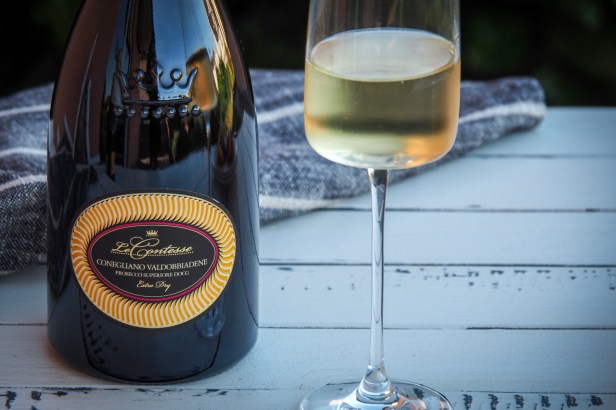
According to appellation rules, Prosecco must be made from at least 85% and a maximum of 90% of Glera grapes. Additional grape varieties allowed are Verdiso, Bianchetta Trevigiana, Perera, Chardonnay, Pinot Bianco, Pinot Grigio and Pinot Nero. The latter had to be vinified as a white wine up until production of rosé Prosecco was officially approved by the Consorzio Tutela Prosecco DOC, the governing body of Prosecco in 2020.
A quick guide to the different styles of Prosecco
This part is where it gets more complicated than you might expect.
Prosecco is indeed much more than the easy-to-drink, light sparkling wine retailing at prices well below Champagne and other traditional method sparkling wines.
That said, as a rule of thumb, Prosecco is usually a light to medium bodied sparkline wine, with alcohol levels ranging from 8.5% to 12.5%.
However, when it comes to different styles, there are quite a few attributes that differentiate the style – and quality – of the final wine.
Styles of Prosecco according to the level of sweetness
Prosecco is made in different levels of sweetness from bone dry to sweet, following an internationally recognized classification for various types of sparkling wine.
- Brut Nature / Zero, is bone dry with 0-3 g/l of residual sugar
- Extra Brut, very dry with 0-6 g/l of residual sugar
- Brut, dry with 0-12 g/l of residual sugar
- Extra dry, is medium dry with just a little hint of sweetness and 12-17 g/l of residual sugar
- Dry, medium sweet with 17-32 g/l of residual sugar
- Medium dry, is sweet with 32-50 g/l of residual sugar
Most Prosecco will fall into the Brut or Extra dry categories.
Prosecco frizzante and Prosecco spumante: What is the difference
Another important difference in style is based on the level of pressure in the bottle. This level of pressure determines whether a Prosecco belongs into one of two categories: Prosecco frizzante or Prosecco spumante.
Prosecco frizzante has a lower pressure, typically between 1 to 2.5 bar, and therefore a finer mousse with tiny bubbles.
Prosecco spumante (which represents the vast majority of all Prosecco) is bottled at a pressure of 4 to 6 bar, and therefore has more persistent bubbles.
Also important to know, the base wines used for Prosecco spumante are typically higher in quality and second fermentation will take longer relative to the frizzante variation.
The different quality styles of Prosecco by appellations
Prosecco is made in a range of different qualities and styles.
The most basic differentiation is whether a Prosecco is made in the DOC (denominazione d’origine controllata) or DOCG (denominazione d’origine controllata e garantita) appellations.
Prosecco DOG appellations are located in the northern parts of Veneto and across the Friuli-Venezia Giulia region. This vast area offers a wide range of local micro-climates and growing conditions.
Forming part of these appellations, but boasting the most distinct local conditions, Prosecco made in the provinces of Treviso and Trieste can be labelled Prosecco Treviso DOC and Prosecco Trieste DOC, highlighting the particularly distinct styles of the wines.
Prosecco DOCG is made in two distinct areas located around 50 kilometres north of Venice in the historic Conegliano Valdobbiadene Prosecco Superiore DOCG appellation and more recently in the Asolo Prosecco DOCG appellation, both located in the province of Treviso.
Over the past 10 years, annual Prosecco production in the Asolo DOCG has risen from 3 million bottles in 2014 to nearly 30 million bottles at the end of 2023. This makes the area the fourth most important appellation for sparkling wines in Italy.
Meanwhile, Prosecco made in historic Conegliano Valdobbiadene Prosecco Superiore DOCG is further divided into three categories.
- Prosecco Superiore DOCG: Vineyards in this particular area are located on the steep hillsides of the Venetian Prealps, allowing the grapes to retain higher acidity and develop more complex aromas.
- Superiore Rive DOCG: The name Rive comes from the local Venetian dialect and can be translated into ‘steep hills’. Thus, Rive grapes come from the steepest vineyard areas within the Conegliano Valdobbiadene area. The challenging geographic conditions require these vineyards to be worked manually. Each of these Rive vineyards offer unique microclimates and expressions of soil. Prosecco Superiore Rive DOCG are considered of particular high quality, reflecting the particular characteristics of each unique location. They are typically complex, with high minerality and intensive aromas.
- Valdobbiadene Superiore di Cartizze DOCG: Even more prestigious than Rive Prosecco, Cartizze comes from a specifically defined very small area in the Valdobbiadene area. Here you find a particular distinct micro-climate. Cartizze Prosecco are particularly complex and delicate with intense aromas of apple, pear, peach, citrus fruits and flowers. It is typically dry or extra dry.
Rosé Prosecco
In May 2020, the Prosecco DOC consortium officially allowed the production of of rosé Prosecco.
For the production of rosé Prosecco, the addition of a maximum of 15% of Pinot Noir grapes vinified as red wine are allowed.
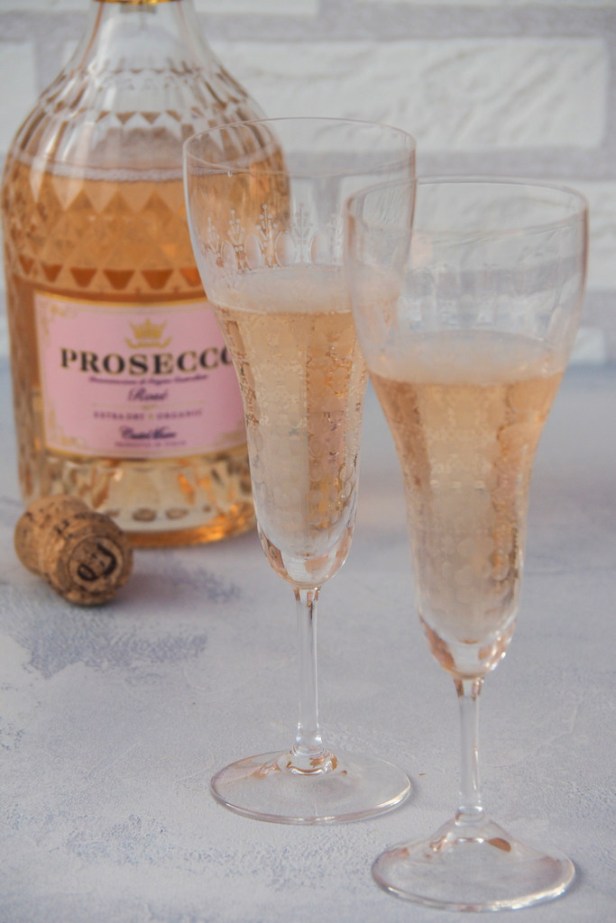
To learn more about rosé Prosecco, read my post Sip the new rosé Prosecco for a fresh take on the world’s favourite bubble.
Vintage Prosecco: Prosecco Millesimato
Prosecco, like all sparkling wines including Champagne, is mostly made according to the standard practice blending wines from various vintages to create a particular house style.
Meanwhile, few Prosecco are made from a single vintage only. Or more precisely, with at least 85% of grapes from a single harvest, as the remaining grapes can still come from a different year. These vintage Prosecco are labelled Millesimato, which is the Italian translation for vintage.
Prosecco Millesimato are typically on the drier side and particularly suited to be paired with shellfish and grilled fish.
What is the typical taste profile of Prosecco
The typical taste profile of Prosecco depends on the particular style and quality level, but there are some common characteristics.
- Prosecco frizzante is typically a pale straw yellow with greenish notes and a light perlage. Light and youthful, boasts fresh fruity aromas of apple, pear, citrus, and white flowers.
- Prosecco DOC is a light, youthful sparkling wine with a persistent perlage and fruity flavours of pear, peach, honeysuckle, melon, and white flowers, followed by notes of sage and spices. It has a high acidity and low levels of alcohol.
- Prosecco DOCG is the highest quality of Prosecco and taste profiles vary according to the specific appellations. As a rule of thumb, it will have a well-balanced taste with long lasting and aromatic flavours.
- Rosé Prosecco boasts aromas of wild strawberries, cranberries, raspberries and delicate notes of sweet candy.
What food pairs with Prosecco
Prosecco is perhaps the most perfect light summer aperitif, perfectly enjoyed by itself or as mixer in a wide range of cocktails. Yet it is also highly versatile and works perfectly with a wide range of food.
Pair Prosecco with any type of Italian antipasto (appetizer), light seafood and fish, sushi, pasta, poultry and white meats.
Famous Prosecco cocktails you should know
If like me, you love refreshing, low alcohol summer cocktails, you are likely familiar with some of the most famous ones created with Prosecco. Thanks to its refreshing taste, it is one of the best sparkling wines to use for cocktails.

If you are looking to use Prosecco in a cocktail, you will want to go for a Prosecco DOC. Which is the lower level of quality and perfect for a cocktail. Instead, definitely reserve the more prestigious Prosecco DOCG to be enjoyed pure.
So, what are the most famous Prosecco cocktails?
- Bellini – White peach pure, peach schnaps, lemon juice, and Prosecco. This is cocktail heaven.
- Aperol Spritz – Aperol, Prosecco and soda water. Easy like an Italian summer day on the beach.
- Hugo – Elderflower liqueur, Prosecco, soda water. For all that grave a more elaborate version of the spritz cocktail.
- Limoncello Spritz – Limoncello, Prosecco, soda water. Close your eyes and let yourself being transported to the Amalfi Coast, just literally.
- Mimosa – Orange juice, Prosecco. Have it for brunch. Or even breakfast.
- Negroni spagliato – Sweet vermouth, campari, and Prosecco. If you like your Negroni a bit more refreshing and less alcohol heavy.
- Sgroppino – Lemon sorbet, vodka, Prosecco. This one is perhaps one of the most popular Italian after-dinner drinks. Try it, and you will know why.
If you miss your favourite Prosecco cocktail, that’s because the list of cocktails you can make with Prosecco (and of course any other sparkling wine) goes on and on!
The best Proseccos to try
As usual, what is the best is quite subjective. Thus, it’s likely more appropriate to say, those listed below are currently among my favourite bottles of Prosecco. Those familiar with Prosecco would certainly agree, these are well worth trying.
- Mionetto Prosecco di Treviso Brut
- Bottega Gold Prosecco
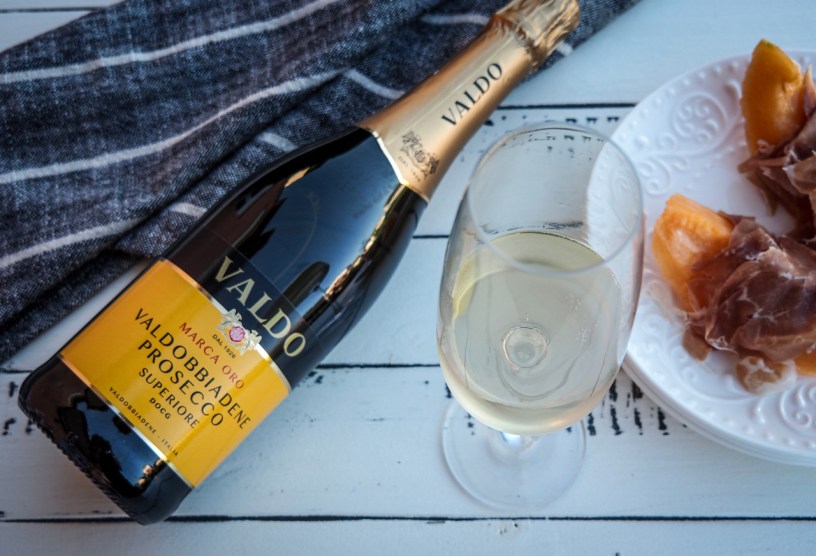
- Valdo Marco Oro Valdobbiadene Prosecco Superiore DOCG
- Scavi & Ray Prosecco Superiore Spumante DOCG
- La Gioiosa Prosecco Superiore Millesimato Valdobbiadene
- Ruggeri Prosecco di Valdobbiadene Cartizze Brut
- Bisol Prosecco Valdobbiadene Superiore di Cartizze
- Villa Sandi Il Fresco Millesimato Rosé Extra Dry
Do you have a favourite Prosecco? Let me know which one in the comments below.
 Carrots and Tigers