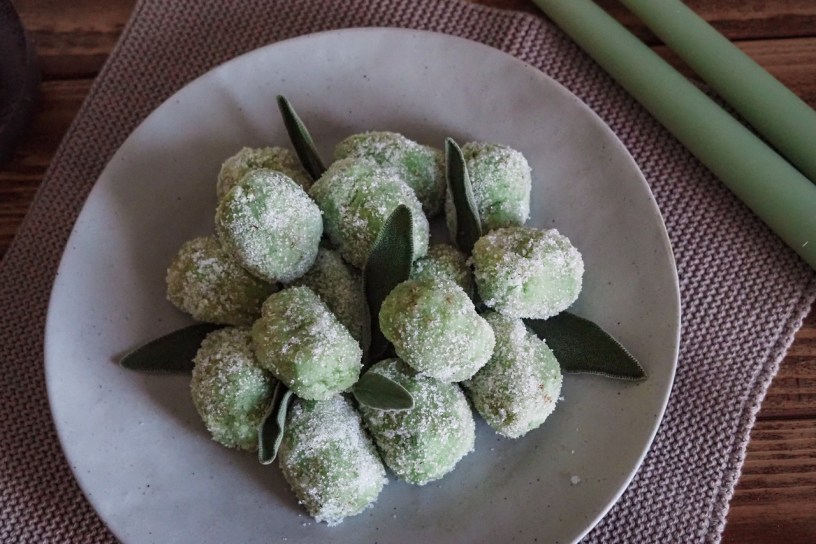
Learn about the legend behind Sicily’s traditional almond sweets and how to make them at home
If you have ever visited Catania in Sicily during the first days of February, you will have witnessed the city decorated with candles, lights and flowers to celebrate Sant’Agata, the parton saint of Catania. While the official date is February 5th, celebrations are taking place from February 3rd to 5th ever year. There will be large crowds following the relics carried through the streets of the city, and there will be also the symbolic sweets dedicated to the event.
The popular sweets made in honour of Saint Agata are now available in bakeries throughout the island year-round. But locally, they are particularly popular around Sant’Agata. Thus, during the last days of January and through to the 5th of February, the traditional sweets dedicated to the saint can be found everywhere across Sicily.
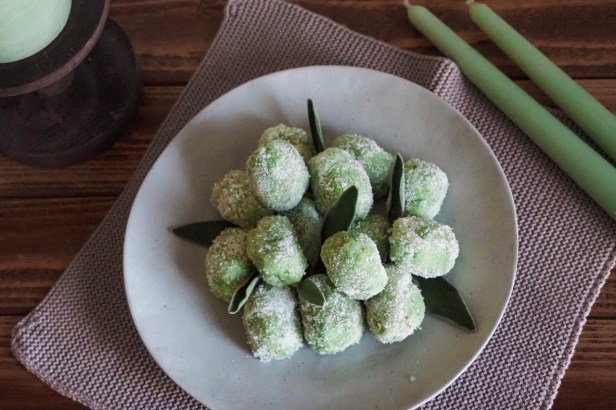
Olivette di Sant’Agata are a particular eyecatcher thanks to their green shade, and while Sicily is famous for particularly rich and sweet desserts that often require a bit of work in the kitchen, olivette di Sant’Agata will be ready in just minutes (though they need to dry out overnight).
But before I share the recipe for these delicious, quick and easy sweets from Sicily, let’s go back to the origins of the feast of Saint Agata for a moment.
The legend of Saint Agata, the patron saint of Catania
According to legend, Agata was born into a noble family of either Catania or Palermo in the second half of the 3rd century. Around the age of 15, she decided to live a life consecrated to God. Therefore, when local governor Quinziano started to curt her (possibly to get access to her family’s wealth, rather than being in love) she refused his advances. Since this was the time of Christian prosecution by Roman Emperor Decius, the refused governor took revenge by having Agata arrested, tortured, and prosecuted.
Despite the martyrdom and veneration as a saint is acknowledged, it is uncertain how she ultimately died. In addition, different legends of her doing miracles exist.
One claims that when she was led to her trial, she bent down to tie her sandal. Where her food touched the earth an olive tree started to grow and bear fruits.
Another legend claims that after her death, Mount Etna violently erupted and inhabitants from the city of Catania would use the white vail placed over Agata’s tomb to stop the lava from advancing the city. The vail turned red and stopped the eruption on February 5th, the anniversary of her death.
What are Olivette di Sant’Agata
The two different miracles linked to Saint Agata have inspired two sweets created in honour of the saint.
Minne di Sant’Agata are sweets formed to reflect the breasts of Saint Agata that were torn off from her during torture. Minne are maid from ricotta cheese, marzipan, and powdered sugar and are a delicious but quite heavy dessert.
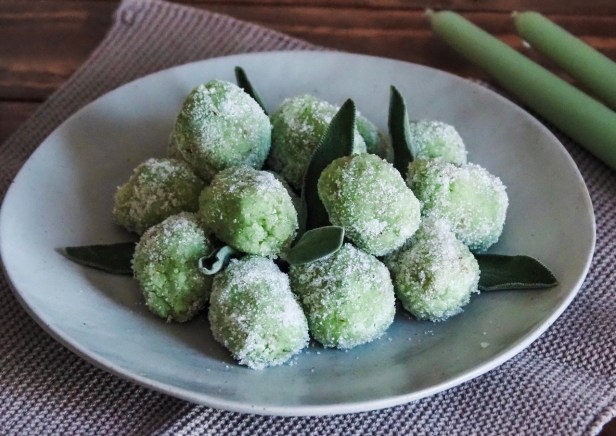
Olivette di Sant’Agata on the other hand are linked to the story of the olive tree. Olivette translates to little olives and the small olive-shaped sweets are made with sugar, water, liquor and almond flour.
How to make Olivette di Sant’Agata
These little sweet olive-shaped sweets are assembled in just few minutes and are made with only few key ingredients.
Almond flour: Almond flour is quite common in Italy but if you can’t find it ready-made in your supermarket, you can use ground almonds.
Liquor: The original recipe does not call for a particular liquor. While rum or brandy are mostly used, you can substitute with other liquors you have at hand or the one you prefer. I usually make olivette with Amaretto which adds an extra punch of almond flavour.
Lemon zest and vanilla extract: Likewise, the original recipe does not call for lemon zest or vanilla extract. However, I am adding both for additional flavour.
Green food colouring: The olivette should be a light green to resemble olives, so start adding only small amounts of colouring and continue until you get the colour you desire.
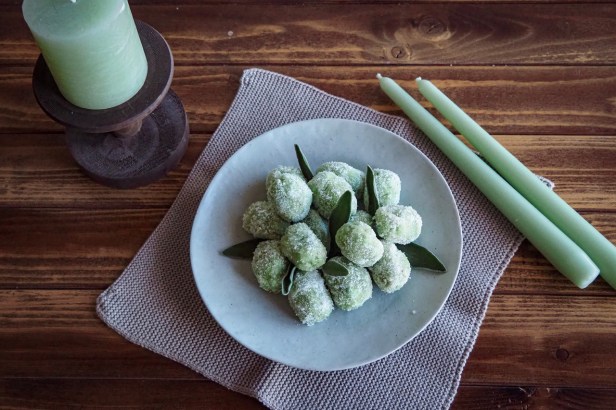
Makes around 15 pieces
200 g almond flour
200 g granulated sugar
50 ml cold water
pinch of salt
2-3 drops vanilla extract
½ teaspoon lemon zest
green food colouring
additional sugar for coating
Add the sugar, vanilla extract, lemon zest, salt, and water to a saucepan and bring to a light boil over medium heat. Stir occasionally.
Turn the heat to minimum, then add the almond flour. Cook for about 6-7 minutes, stirring constantly. The dough is ready when it starts to come off easily from the bottom of the pan.
Take off the heat and add first the liqueur and then the food colouring adding few drops at the time.
Set aside for a moment until the dough has cooled to the point where you can work it with your hands.
On a work surface, knead the dough for few minutes until obtaining a homogenous mixture. Cut out small portions and model into a slightly oval shape resembling an olive.
Immediately pass them through the additional sugar before the dough will dry to make sure the coating will stick.
Let the olivette dry overnight at room temperature to develop the right texture and flavour.
You can keep the olivette for several weeks in an airtight container.
 Carrots and Tigers