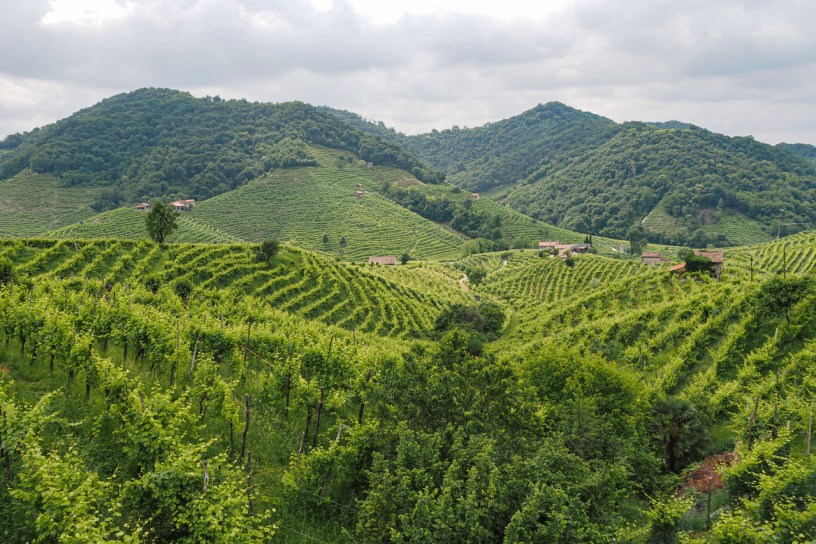
The region home to the world’s most popular bubbles is an underrated gem you need to visit next.
It might sound like a cliché, but Prosecco hardly needs any introduction. It is the most popular sparkling wine globally, and with an annual production of more than 600 million bottles beats all other styles of sparkling wines.
Not all Prosecco is the same, however. A small zone of the vast Prosecco producing area spanning large parts of Italy’s Veneto and Friuli regions stands out.
Located less than an hour north of Venice, Conegliano Valdobbiadene is home to world-class prosecco wineries nestled within the lush green landscape characterized by steep slopes, scenic medieval towns and many beautiful cultural sites.
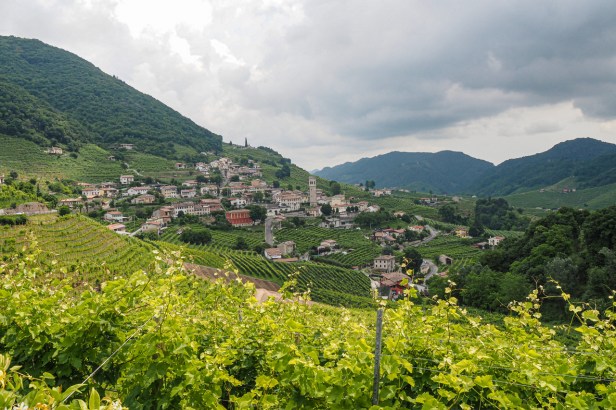
To be precise, I am talking of the original production area of modern-day Prosecco which took off in the area following the foundation of Italy’s first winemaking school in Conegliano in 1876 (while sparkling wine made in Italy goes back to Roman times and the first evidence of Prosecco wines made in the area dates back to 1772). Today, Conegliano Valdobbiadene this is one of two areas where Prosecco DOCG is made. The second one is the area around nearby Asolo which I will introduce to you in the next few weeks in a separate post.
So, if you are as serious as I am to explore under-the-radar wine regions, the stunning UNESCO listed Conegliano Valdobbiadene Prosecco Hills in the Province of Treviso should be on your bucket list.
Prepare for an unforgettable trip that will you see discovering some of the leading prosecco cellars, wandering the area’s breathtakingly beautiful landscapes and small historic villages, and above all sampling the iconic foods of this part of the Veneto region.
There are of course many more vineyards and wineries outside the small Conegliano Valdobbiadene area, producing the large numbers of Prosecco DOC wines exported to nearly every corner of the world. The enlarged Prosecco DOC area is scattered around large parts of the Veneto and Friuli flatlands, running from Vicenza in the west to Trieste in the east. Though this area too is worthwhile visiting, this part of Italy is less about vineyards and more about beautiful historic and cultural sites. Therefore, in this article I’m exclusively covering the area of Conegliano Valdobbiadene.
Key Takeaways
- Italy’s Conegliano Valdobbiadene wine region is the birthplace of Prosecco as we know it today, with a vineyard area of around 9,000 hectares.
- The area is an under-the-radar wine region for most international travellers offering many exciting slow-travel experiences.
- Located just 45 kilometres (roughly 50 minutes drivetime) from Venice Marco Polo International Airport.
- Best time to visit is from mid-April through October.
- You can visit the Conegliano Valdobbiadene area on a day trip from Venice. However, for a really unforgettable experience, plan to stay at least for four days / three nights.
- Best option to get around is by car. If you don’t want to drive yourself, there are various driver services available.
- While many of the local wineries are open to the public on a fixed schedule, if you are keen to enjoy a tasting at a particular winery, or if your group is larger than four people, I recommend making arrangements in advance.
- Drive the 47-kilometre Strada del Prosecco (Prosecco Road) for an unbeatable spectacle of stunning nature, architectural and cultural monuments, historic villages and above all, excellent Prosecco wineries, wine tasting, and local food.
The best time to visit the Prosecco Hills region of Conegliano Valdoppiadene
The best time to explore the stunning Conegliano Valdoppiadene Prosecco DOCG area is from mid-April through October. Temperatures usually start to approach the 20°C mark during the later part of April, vineyards will start to sprout and the whole region will erupt with beautiful spring blossoms. The summer months (July, August) can get hot, with day temperatures exceeding the 30°C. September and October bring nice, temperate autumn weather, beautiful golden autumn colours in the vineyards, and the local grape harvest usually starts in the early part of September.
How to get to the Prosecco Hills region of Conegliano Valdoppiadene
The area in the northeast of Italy’s Veneto region is located just 45 kilometres north of Venice airport.
Conegliano can be reached by train from Venice, which takes around 50 minutes.
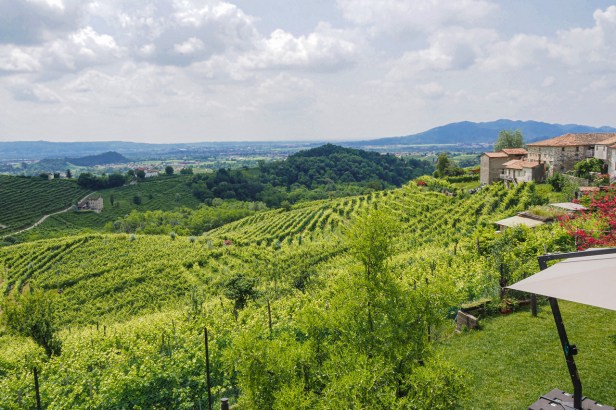
Once in the area, there are buses connecting several of the 15 municipalities that form part of the main Conegliano Valdoppiadene DOCG area. However, if you want to explore the vineyards, visit some of the wineries, and some of the most interesting sites, you will need a car.
How much time to plan for a visit to Italy’s Prosecco Hills
If you want to leave the crowds of Venice behind you for a while, located less than an hour from La Serenissima, the area of Conegliano Valdoppiadene, home of the Prosecco DOCG vineyards, is a great destination for a day trip.
That said, visiting the area on a day trip means you are barely scratching the surface of all the exciting sights and experiences waiting to be discovered. I recommend planning at least three days (two nights) to stay in the area. This will give you enough time to explore the main attractions along the Prosecco Road (Strada del Prosecco), including some winery visits without having to rush.
Visiting the Prosecco Hills, should you include the nearby Asolo DOCG area?
Awarded DOCG status more recently, the small Asolo designation is without any doubt worth being explored too. In addition to vineyards and Prosecco DOCG wineries, there are several historic and cultural sites, including the beautiful small historic town of Asolo itself.
If you have time enough, I definitely recommend adding Asolo to your itinerary. However, if you are planning to stay less than four or perhaps five days in the area, do not add too much to your list. Exploring Conegliano Valdobbiadene will offer you plenty of things to do and see.
In this article, I am exclusively covering the area of Conegliano Valdobbiadene. However, if you are planning an extended stay and want to explore the wider area, watch out for more to come on Asolo and beyond. You might also want to check out my recent post about Bassano del Grappa, located just 35 kilometres (50 minutes drivetime) from Valdobbiadene.
Where to stay in the Prosecco Hills of Conegliano Valdobbiadene?
Despite the small size of the area, there is a wide range of accommodations available, covering all price categories from low budget to high-end luxury accommodation.
If you are dreaming of a stylish, luxury retreat right in the middle of the stunning vineyard area of Conegliano Valdobbiadene, there are three places that stand out.
Hotel Villa Abbazia Relais & Chateaux, located in the town of Follina is a small family-run hotel nestled within two distinct historic buildings, an 18th century mansion and the Art Nouveau style villa. Offering beautiful rooms and the award-winning gourmet La Corte Restaurant and the more informal Bistrot La Cantinetta.
Castel Brando, towering high on a hill halfway between the towns of Cison di Valmarino and Follina, overlooking the stunning Conegliano Valdobbiadene hills is one of the largest and oldest still inhabited castles in Europe. Turned into a luxury retreat, the castle is home to a 2,000 sqm spa, several restaurants and bars, panoramic terraces and gardens.
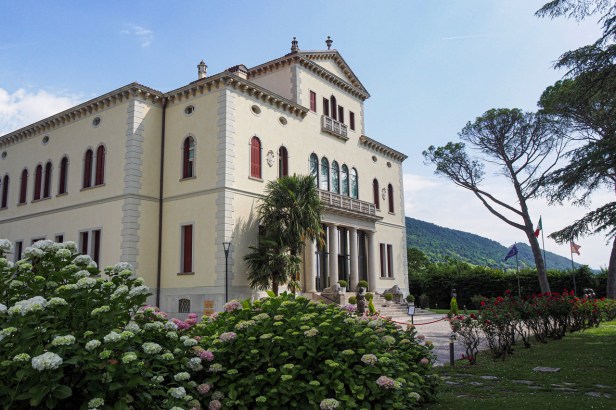
Hotel Villa Soligo, a stunning Palladio-style mansion from the 18th century turned luxury hotel in the heart of the Prosecco Hills right in the historic centre of Farra di Soligo. The hotel boasts modern rooms, a gourmet restaurant, and outdoor pool.
Exploring Italy’s Prosecco Road – La Strada del Prosecco
The Prosecco DOCG area of Conegliano Valdoppiadene stretches from the town of Valdoppiadene in the west to Vittorio Veneto in the east, with roughly 8,000 hectares of vineyards within a small area covering around 30 x 25 kilometres.
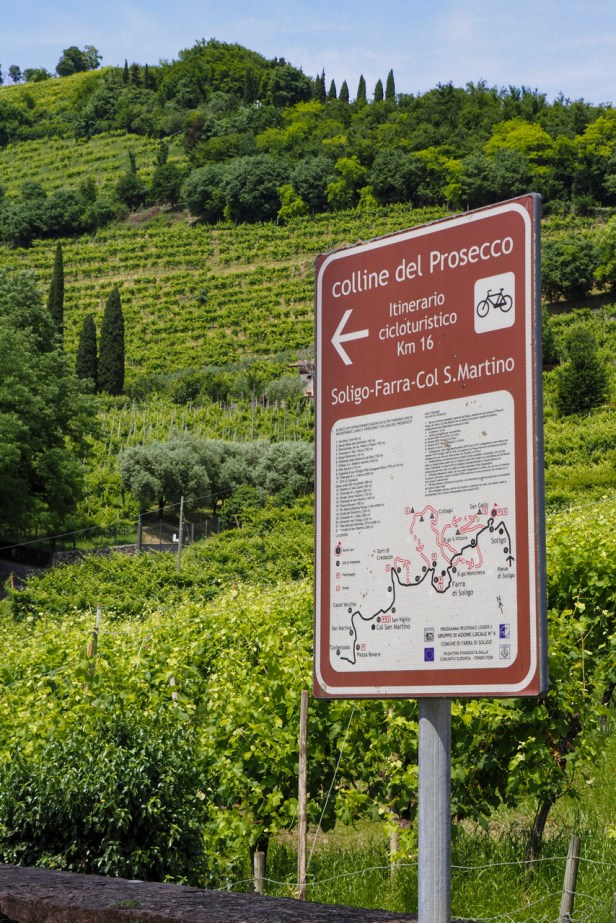
The best option to explore this beautiful area is to follow the 47-kilometre-long Prosecco Road. Inaugurated in 2003 and officially called Strada del Prosecco e Vini dei Colli Conegliano Valdobbiadene, this round-trip is an extended route of Italy’s first-ever official wine route launched in 1966.
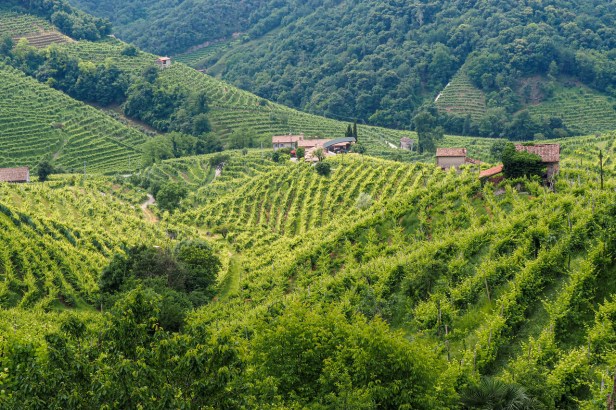
While the route itself was built to connect the wineries of the area, it is much more than that. It is an experience that evolves around the areas 15 historic towns, cultural and architectural historic sites, beautiful nature, and many opportunities savour local food.
In other words, this is the perfect slow-travel destination for wine lovers and everybody else.
When driving the Prosecco Road, be prepared to find yet another even more spectacular view once you turn the next corner (and there are many of them).
Which are the highlights to explore along the exciting Strada del Prosecco, Italy’s Prosecco Road?
While the school of Onelogy of Conegliano, opened in 1876, is often cited as the starting point, honestly there is no best point from where to start exploring the Prosecco Road. Anywhere is fine, and where you chose to stay during your visit to the Prosecco Hills will most likely determine your starting point.
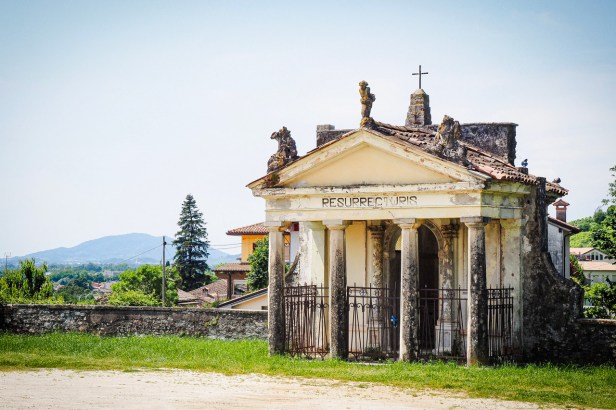
Another consideration to keep in mind: While all the 15 municipalities included in the official Strada del Prosecco parcourse are home to interesting sights and historic monuments, not all are equally interesting vineyard locations. Thus, it’s up to you if you want to focus on the wine experience or the region as a slow-travel experience on a wider scale.
Depending on the time you are planning to spend in the Conegliano Valdobbiadene region, I recommend planning your itinerary around some of the cornerstones located on the Prosecco Road or slightly beyond.
Conegliano
Conegliano rose to importance during the 12th century when the castle, a picturesque palace and new streets were built.
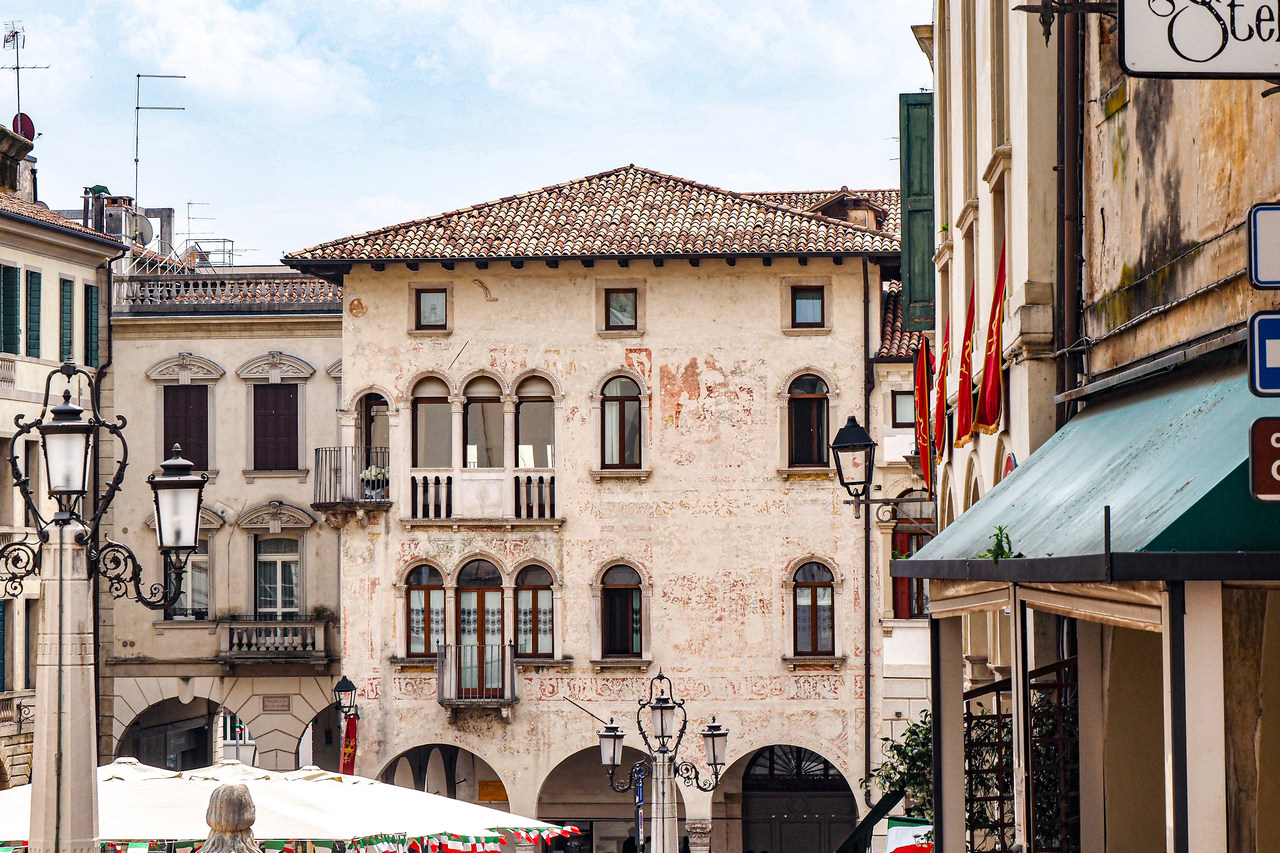
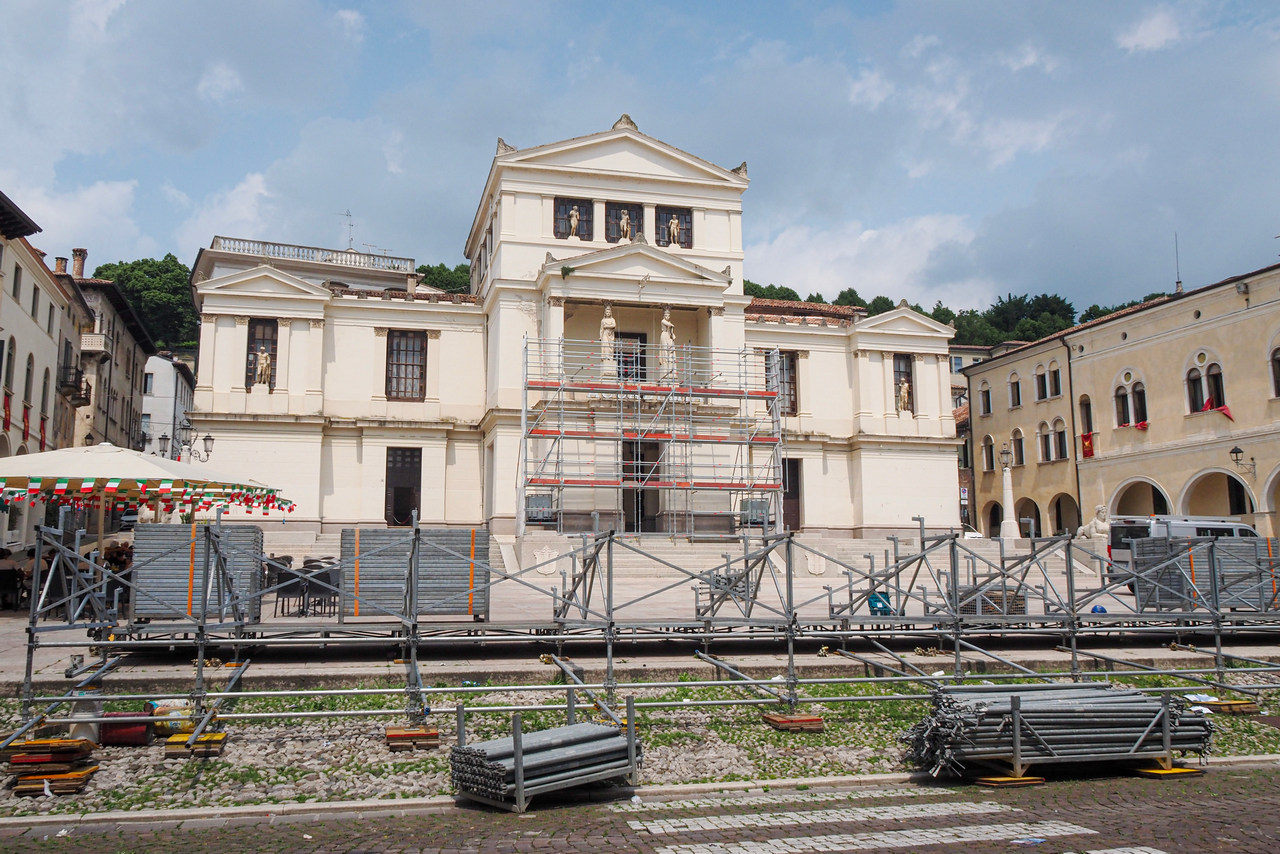
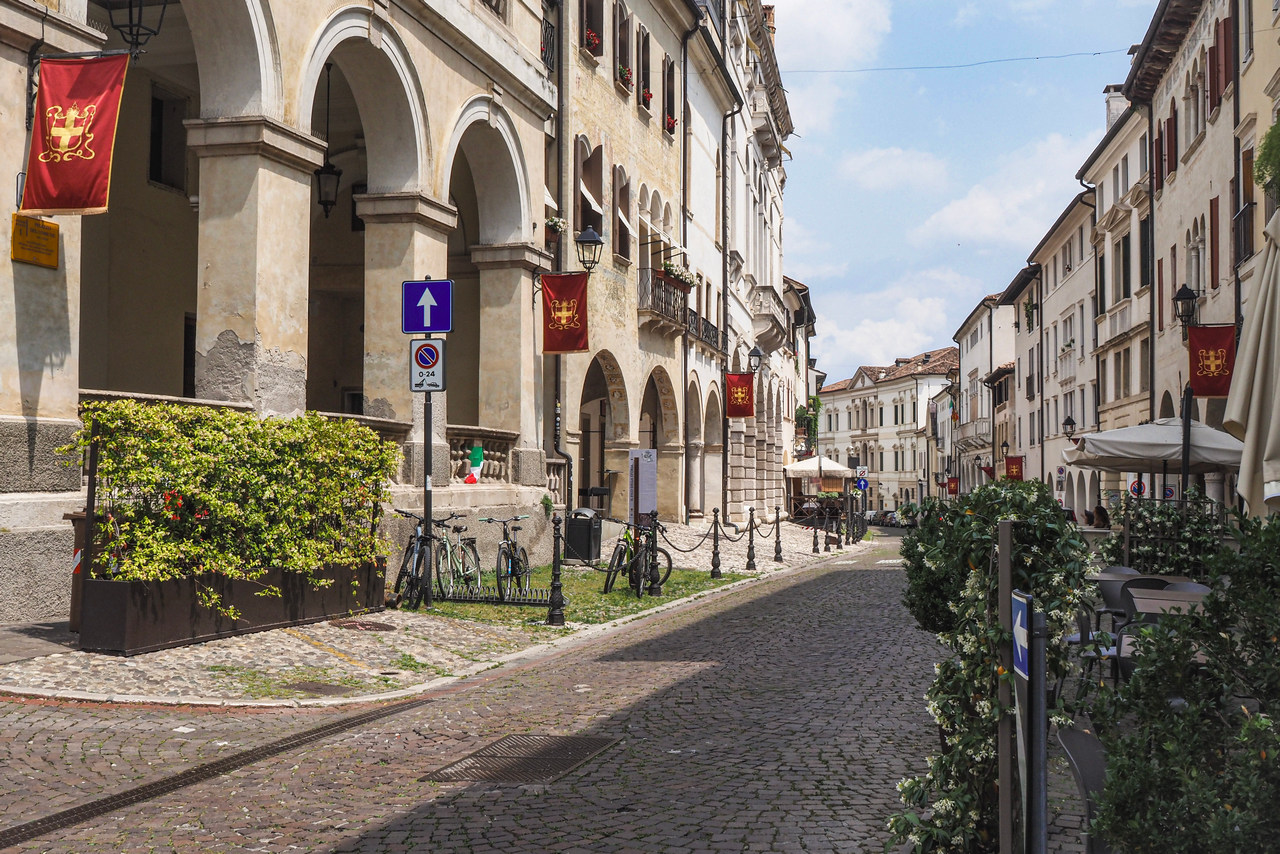
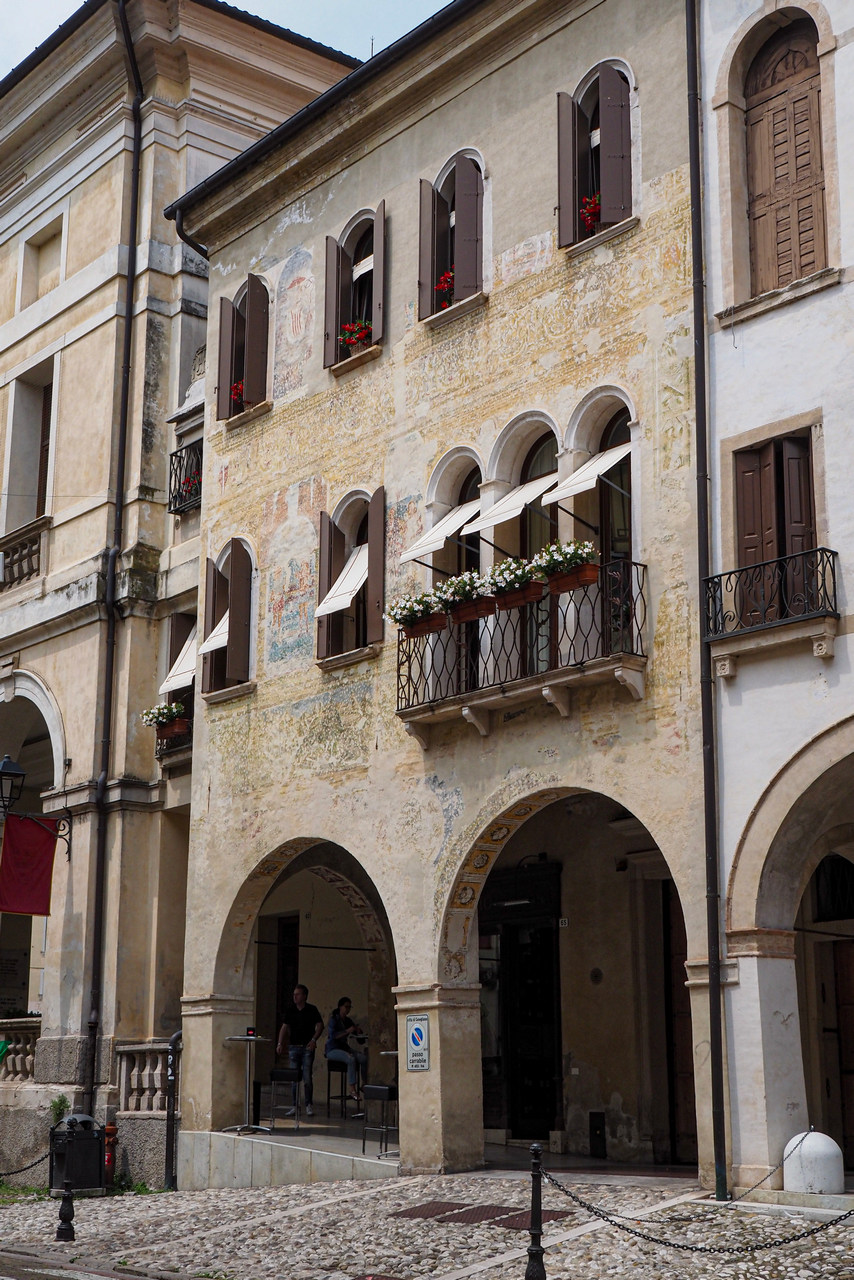
Today, the small town of Conegliano is often described as the cultural heart of the region. The small historic centre around Piazza Cima, the main square, is a beautiful place to wander (at least it will be again once the works on the piazza are finished).
Located to one side of the piazza is the stunning cathedral dedicated to San Leonardo, spotting beautiful frescoes on its façade.
Vittorio Veneto
The small town located northeastern-most corner of the Prosecco Hills region, is well-known in all of Italy as the site of an important and ultimately decisive Word War I battlefield.
The town of Vittorio Veneto was created in 1866 when the two smaller villages of Serravalle and Ceneda were merged and named after the then ruling king of Italy, Vittorio Emanuele II.
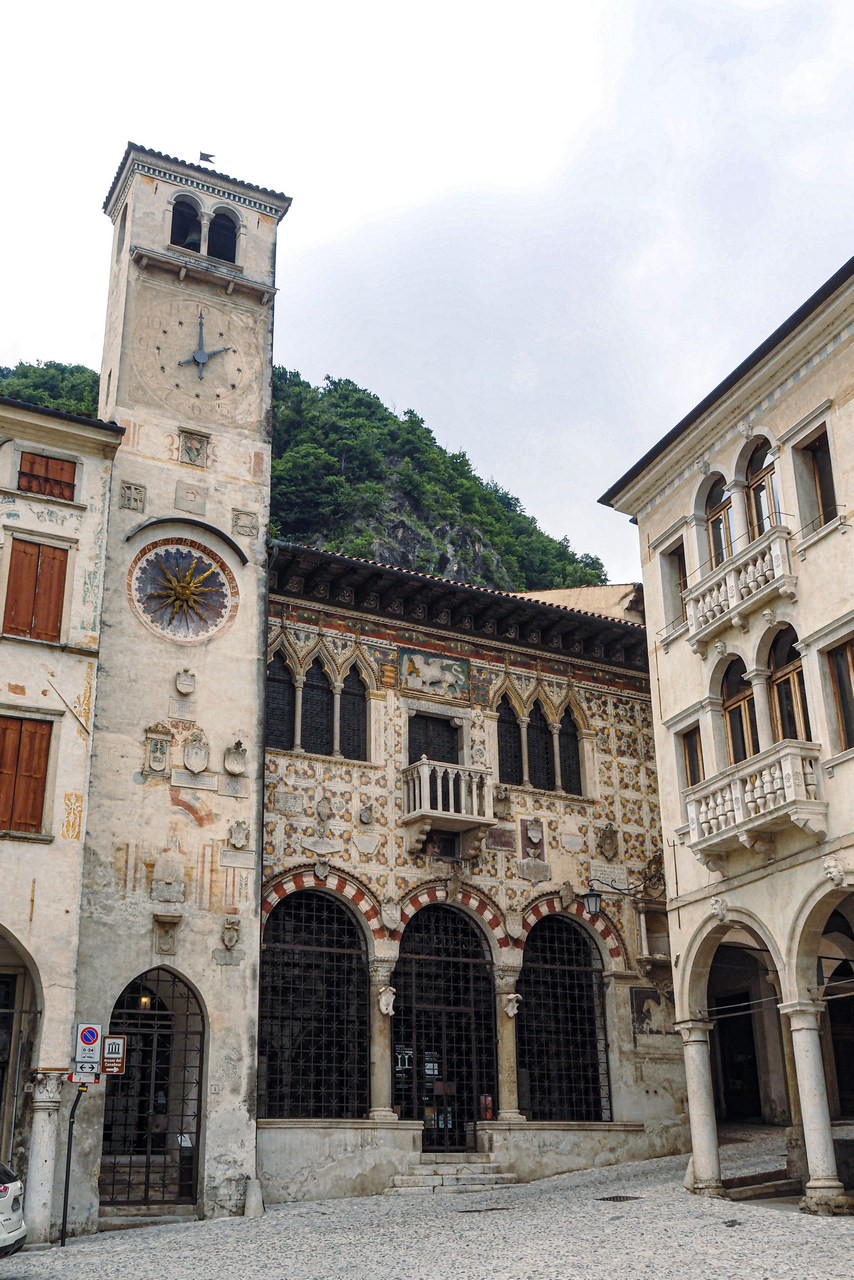
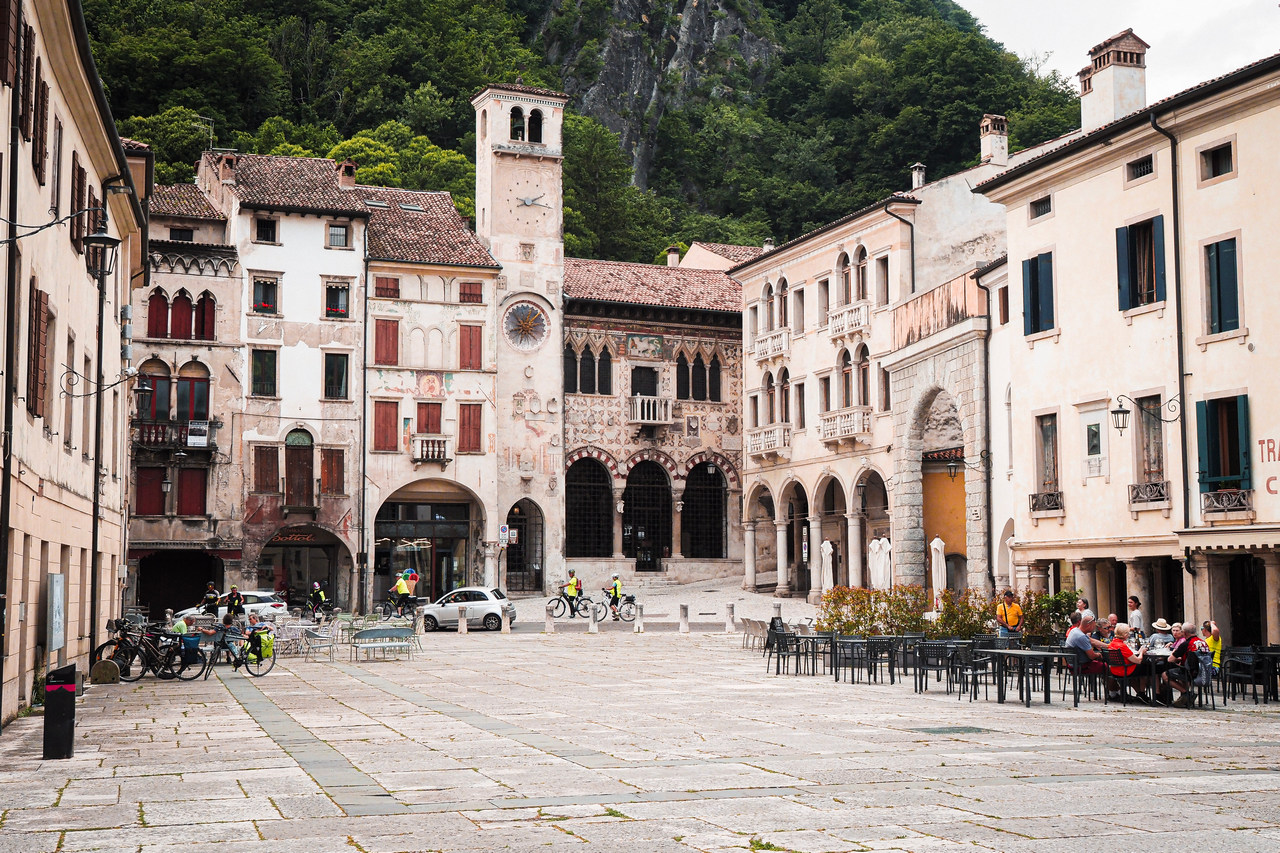
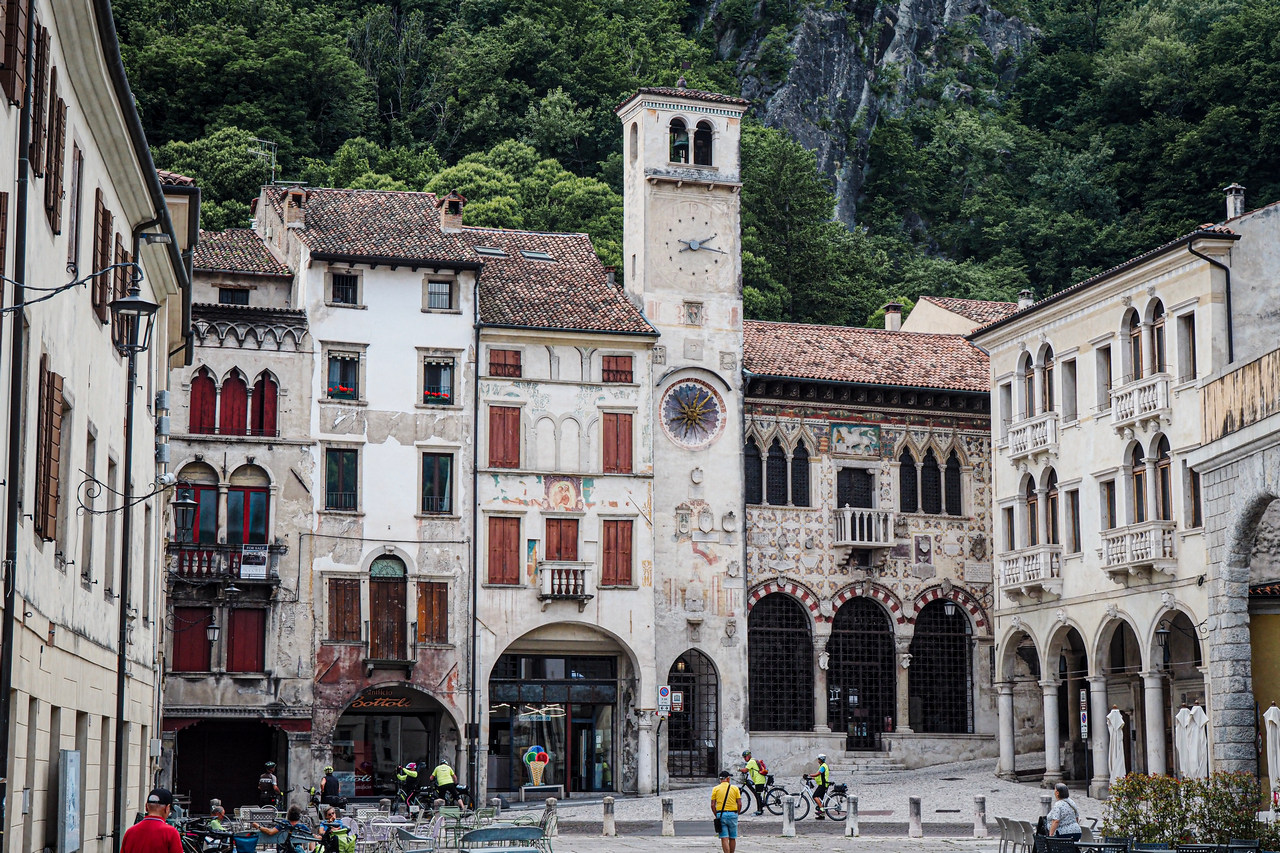
The section of Vittorio Veneto you will want to visit is the historic Serravalle neighbourhood at the northern end. It mostly centres around the beautiful main square, Piazza Flaminio. It is lined by stunning 15th century palaces spotting beautiful frescoes.

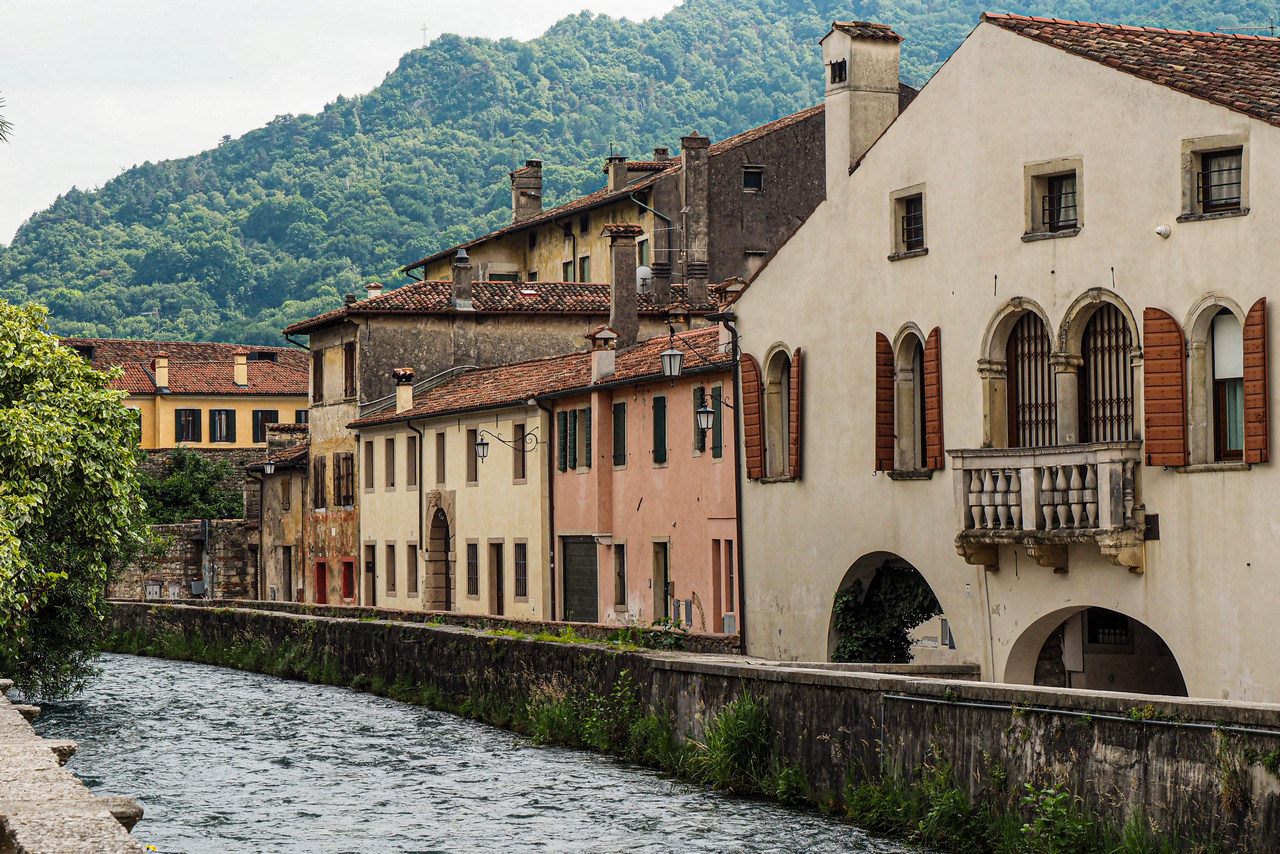
Like many other towns in this part of the Veneto, there is a small river flowing right through the town centres, with historic buildings sitting right by its side.
Pieve di Soligo
Right in the middle of the Conegliano Valdobbiadene Prosecco Hills, the municipality of Pieve di Soligo and its various neighbourhoods forms another important Prosecco-making spot.

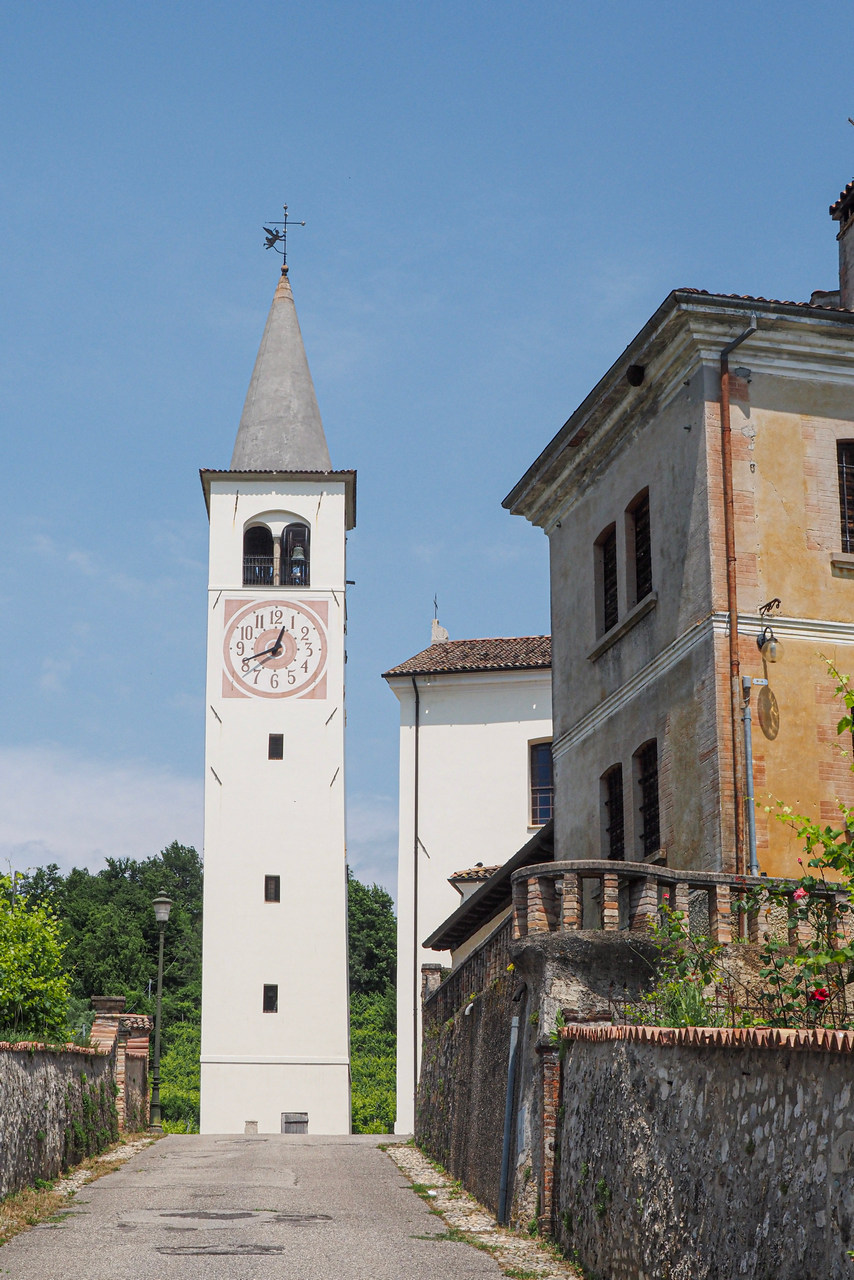
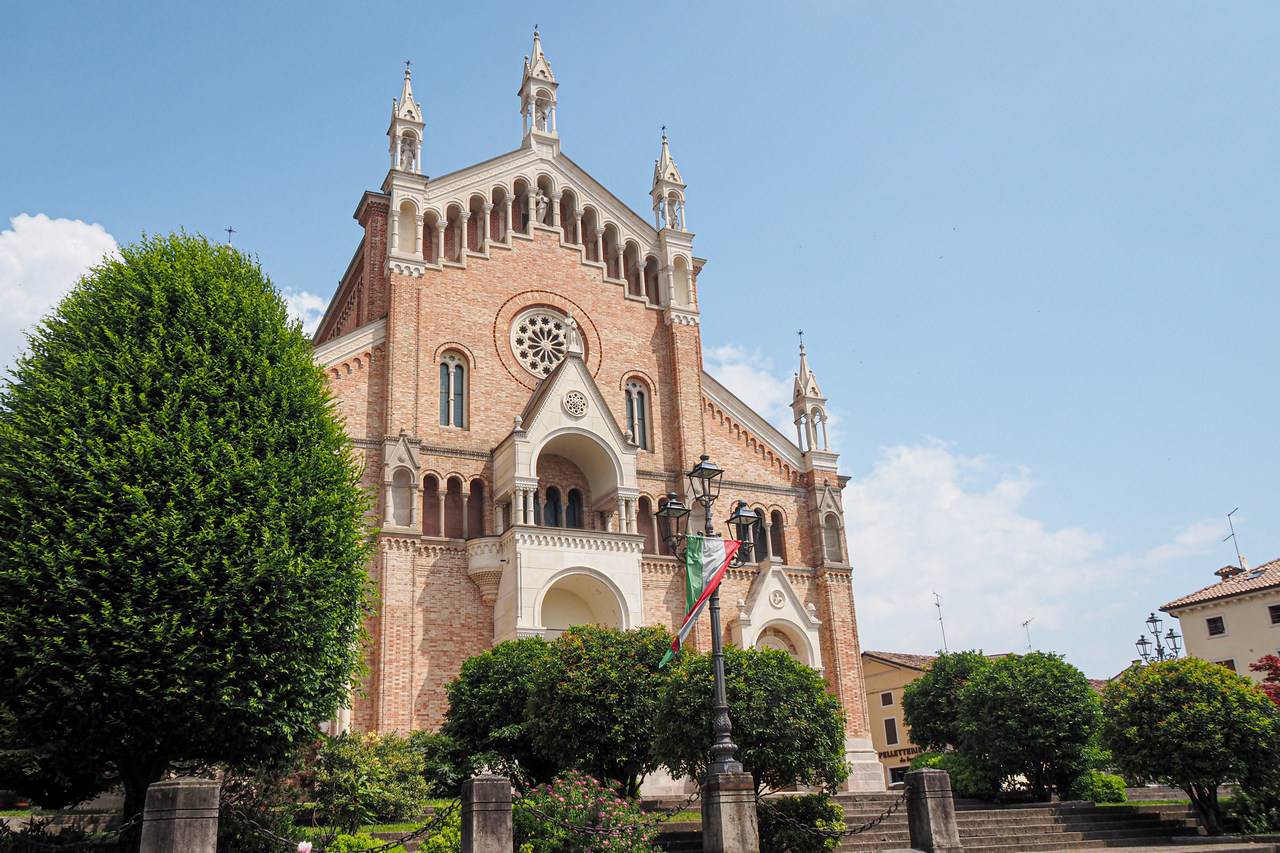

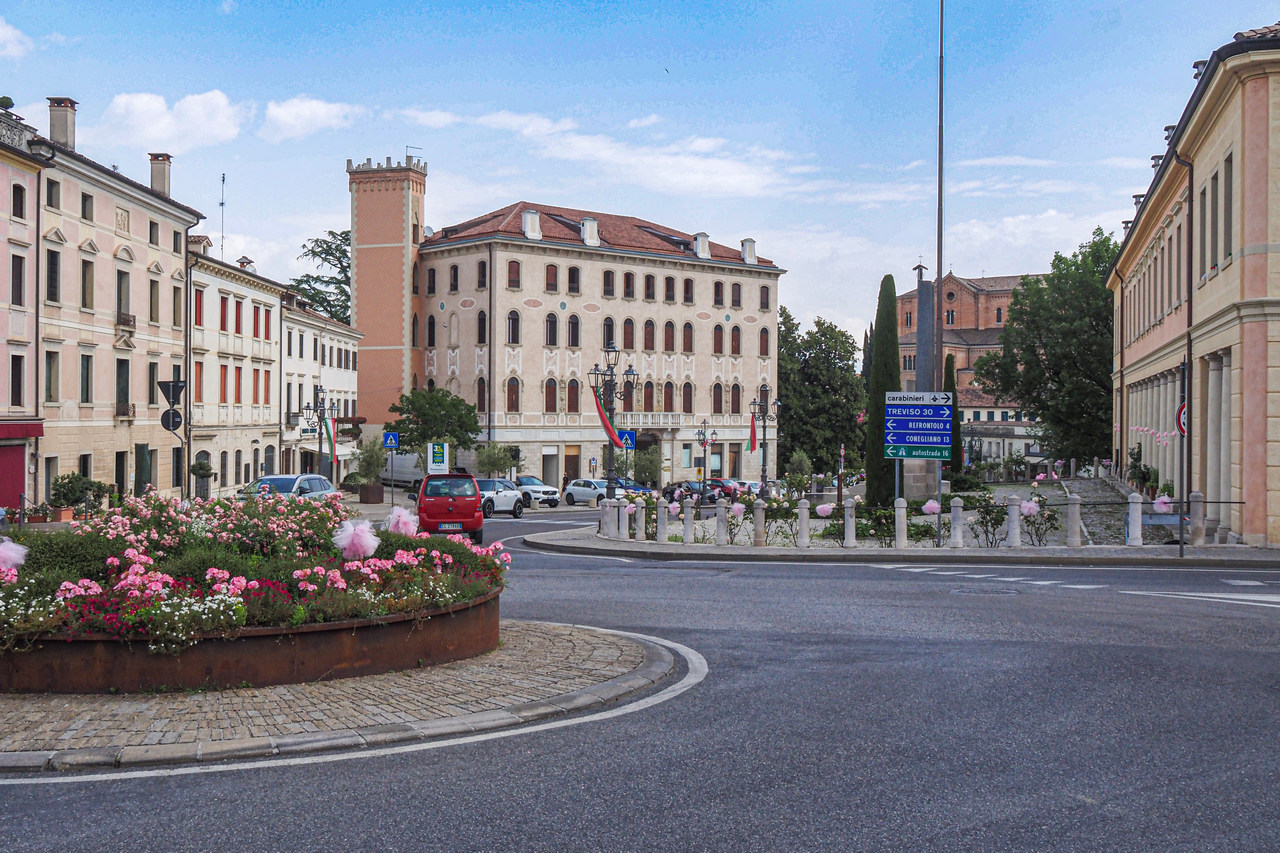
Some of the highlights include the small Romanesque church of San Vigilio towering over the neighbourhood of Farra di Soligo, the Cathedral of Santa Maria Assunta in Pieve di Soligo, and Molinetto della Croda (a historic water mill) in Refrontolo.
Surrounded by picturesque vineyards, the town is another perfect gateway if you want to explore the area hiking or biking.
Valdobbiadene
The area surrounding the town of Valdobbiadene, at the western end of the official Prosecco Road, this the most prestigious one concerning Prosecco.
While you already are in the midst of the highest quality Prosecco area, nestled within the DOCG area beginning just at the outskirts of Valdobbiandene is a particular gem you need to pay the highest attention.
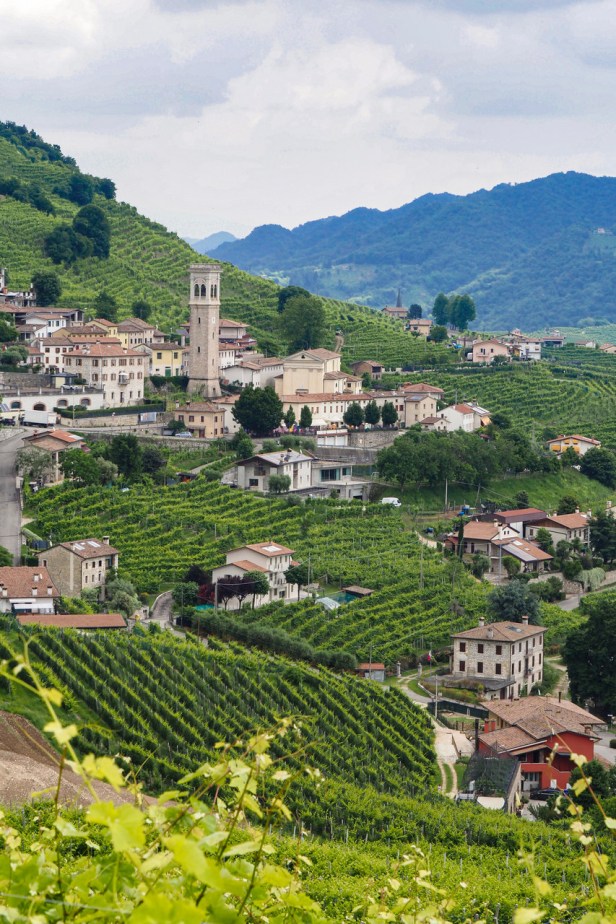
Cartizze, a small hill near the village of Santo Stefano is the most expensive farmland in all of Italy thanks to its location and soil conditions. Consequently, Cartizze Prosecco is considered the crown of Prosecco and the wineries located within this small area are among the most prestigious in the whole DOCG area.
The best Prosecco wineries to visit in Conegliano Valdobbiadene
Visiting this UNESCO-listed winegrowing area, you certainly want to have a sip of the various Prosecco wines made at one of the over 100 wineries in the small Prosecco DOGC area.
So where to start?
Below, I am rounding up some of the best places to stop for a wine tasting and buy excellent Prosecco to bring home. Of course, this list is by no means intended to be complete. There are many more wineries offering excellent tasting experiences. But since it is impossible to cover all of them (not in a few days at least), the places listed below are those I recommend having on your itinerary if you are visiting the Prosecco DOCG area for the first time.
Cantina Colli di Soligo
Via L.Toffolin 4, Pieve di Soligo (Frazione Solighetto); Mon-Sat 9-13 and 15.30-19.30
Located at the outskirts of Farro di Soligo, Cantina Colli di Soligo was founded in 1957 by 31 local winegrowers. Over 60 years later, one of the few cooperatives in the Prosecco DOCG area counts over 600 members.
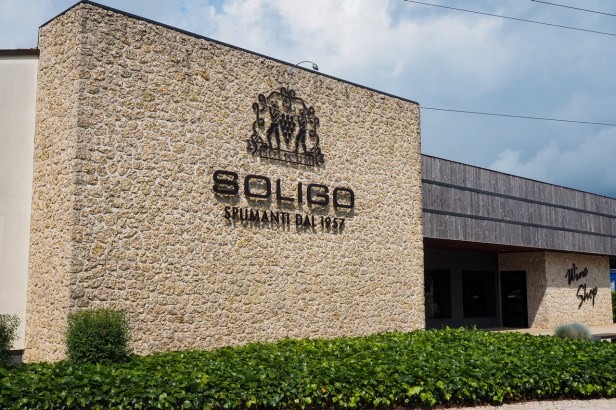
The place to visit is the Soligo Spumanti wine shop, located a short distance from the Cantina Colli di Soligo’s new wine cellar. The shop sits on top of the historic foundations of the original Bottega del Wino built in 1957.
The shop doubles as tasting room and is one of the main stops if your time in the area is limited. At the shop, you can taste and buy a wide range of the Soligo products, along with other products from the wider Veneto region, including cured ham, honey, olive oil, biscotti, and more.
Sutto Wine
Via Scandolera 72, Farra di Soligo (fraz. Col San Martino)
Founded in 2015, the brand evolves around quality wine, spirits and artisanal products including ham, honey, jams, olive oil, vinegar and more.
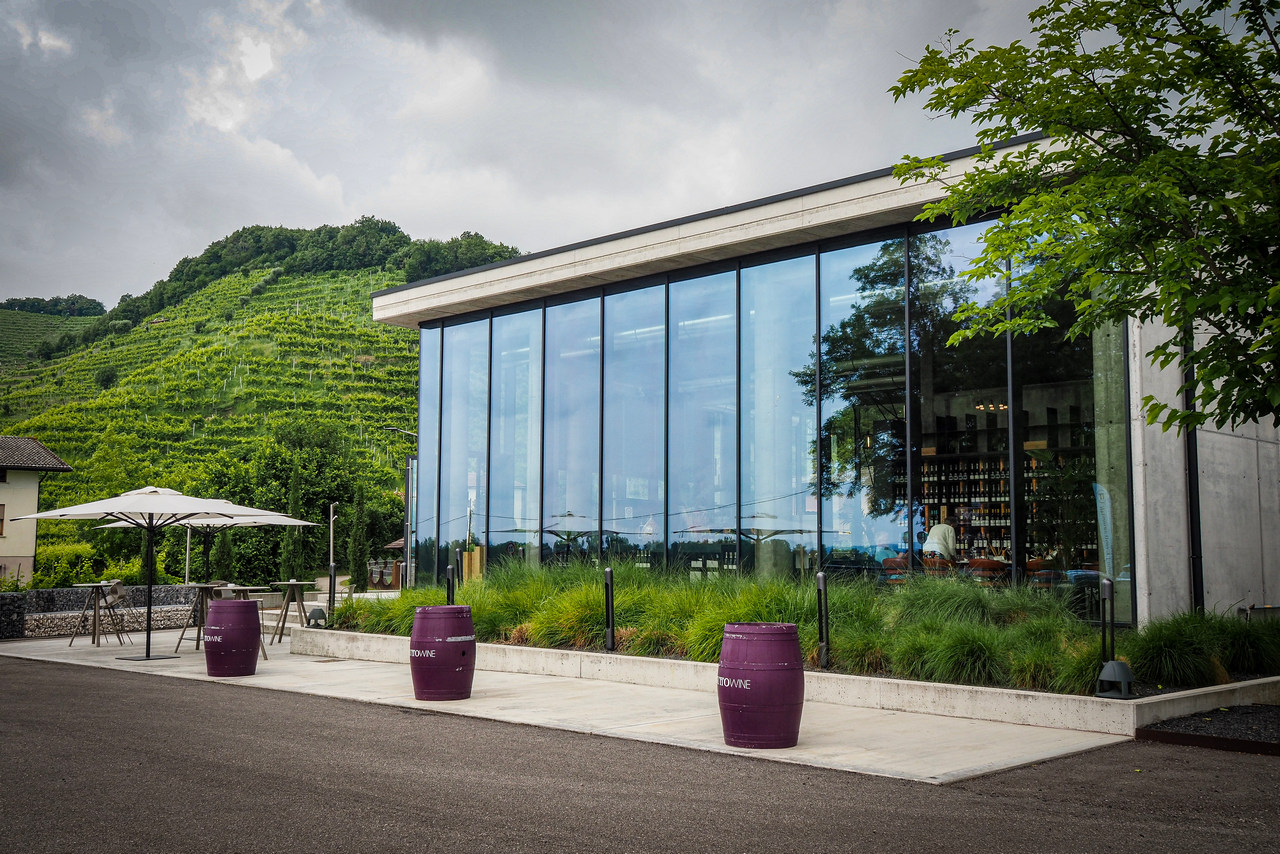
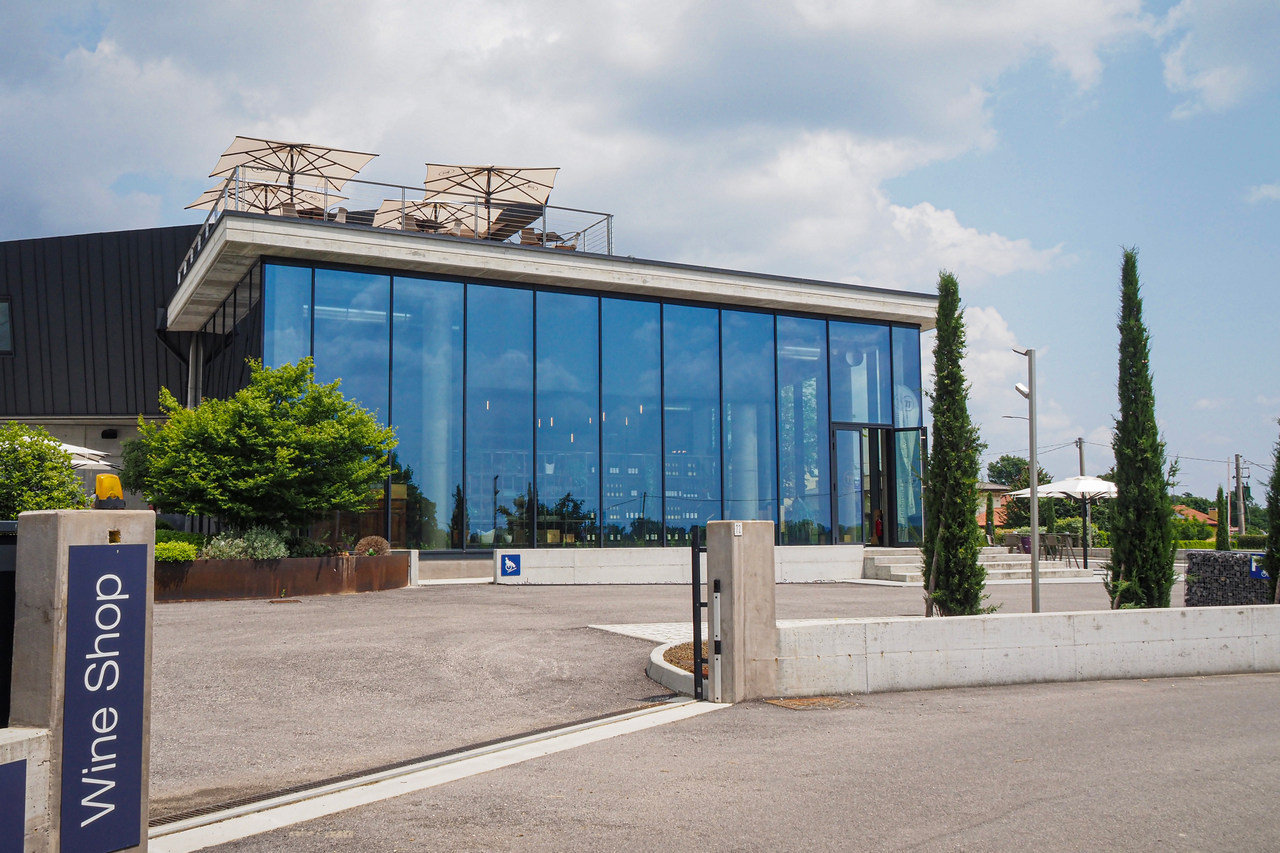
Sutto Wine today counts four different locations, including the Col San Martino Wine Shop located at the outskirts of Farra di Soligo. It is one of the areas modern tasting rooms, offering tastings but also wines by the glass accompanied by the typical cicchetti (little snacks) to be enjoyed inside the glass building or on the rooftop terrace overlooking the surrounding Prosecco vineyards.
Merotto
Piazza Rovere 16, Col San Martino
When paying a visit to the small winery, chances are high you are running into Graziano Merotto, the man who has been making outstanding Prosecco in the for more than 50 years. A leading figure in the Conegliano Valdobbiadene Prosecco Hills, he was one of the first to experiment with the Martinotti-Charmant method at the end of the 1970s.
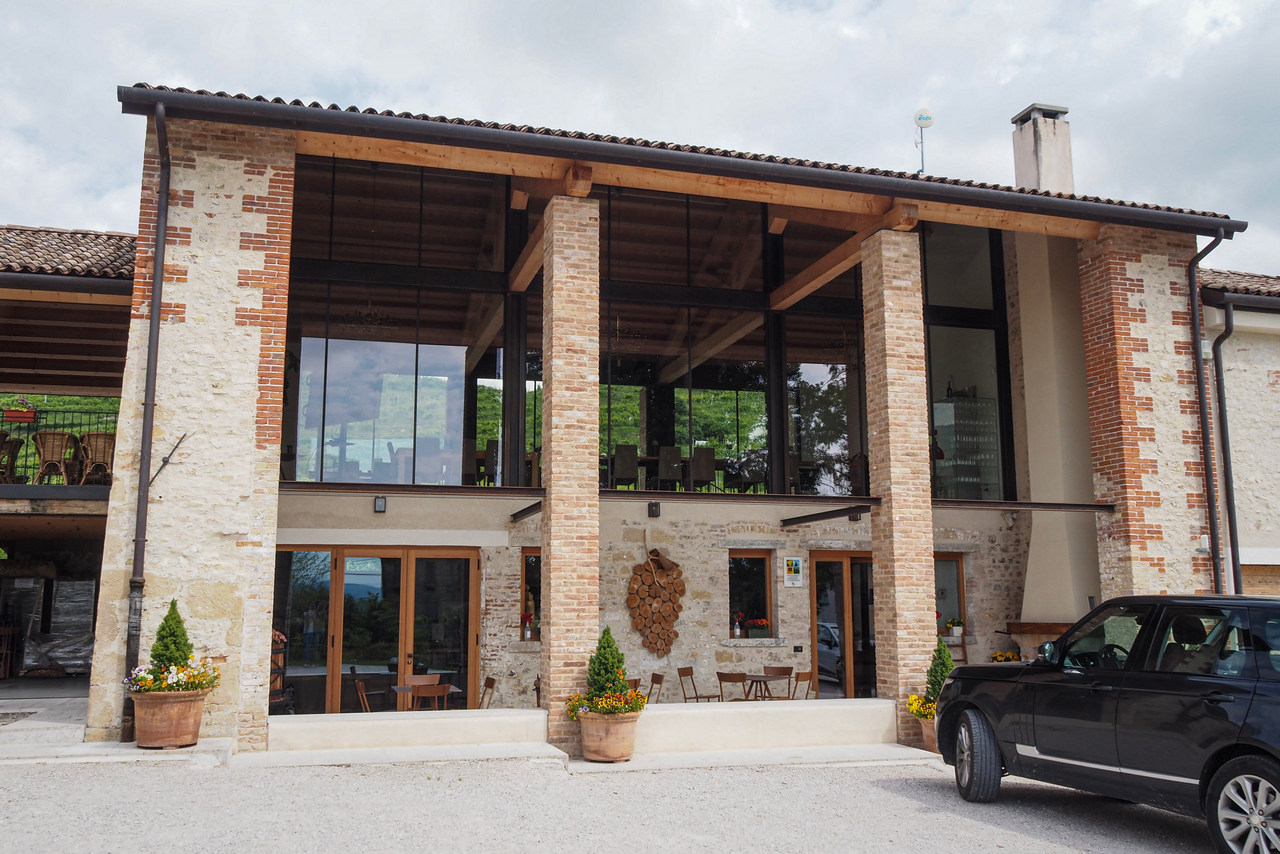
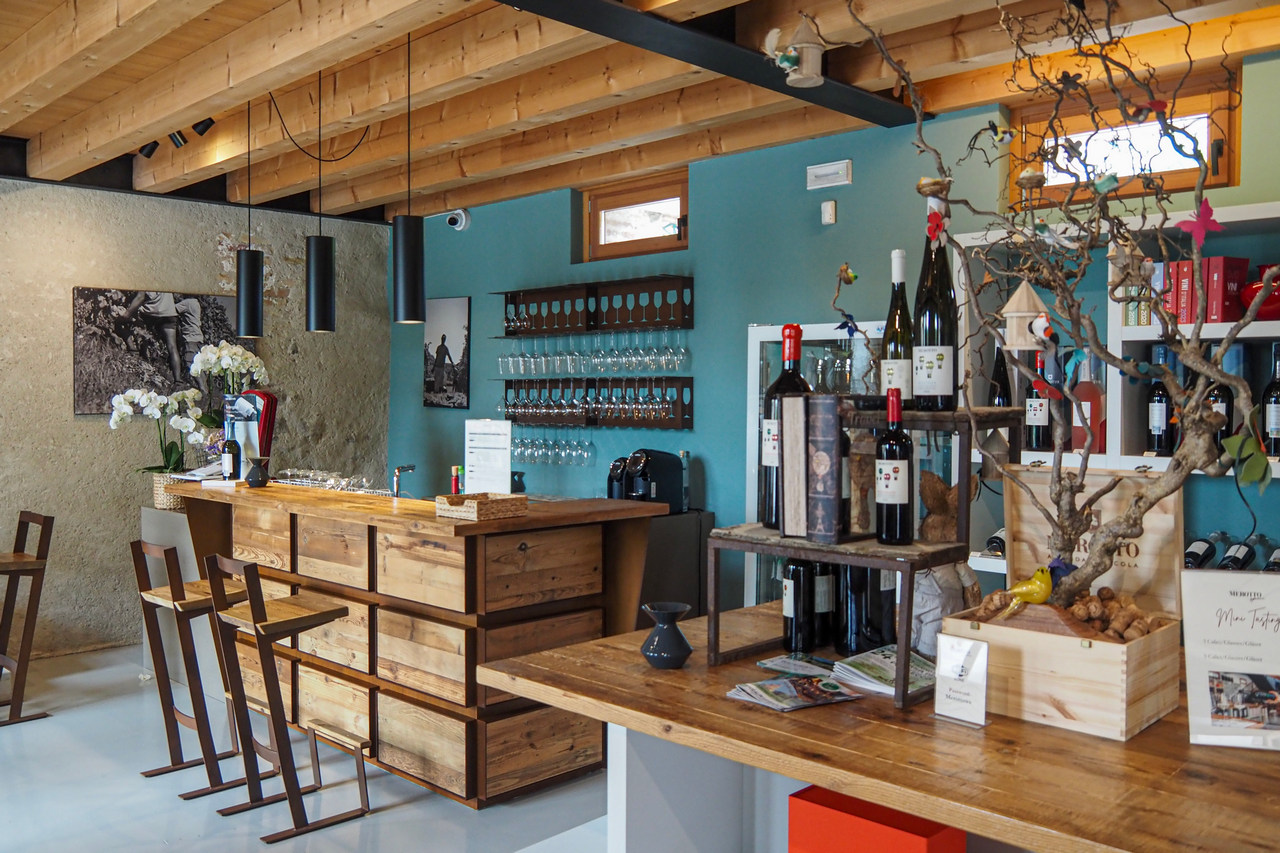
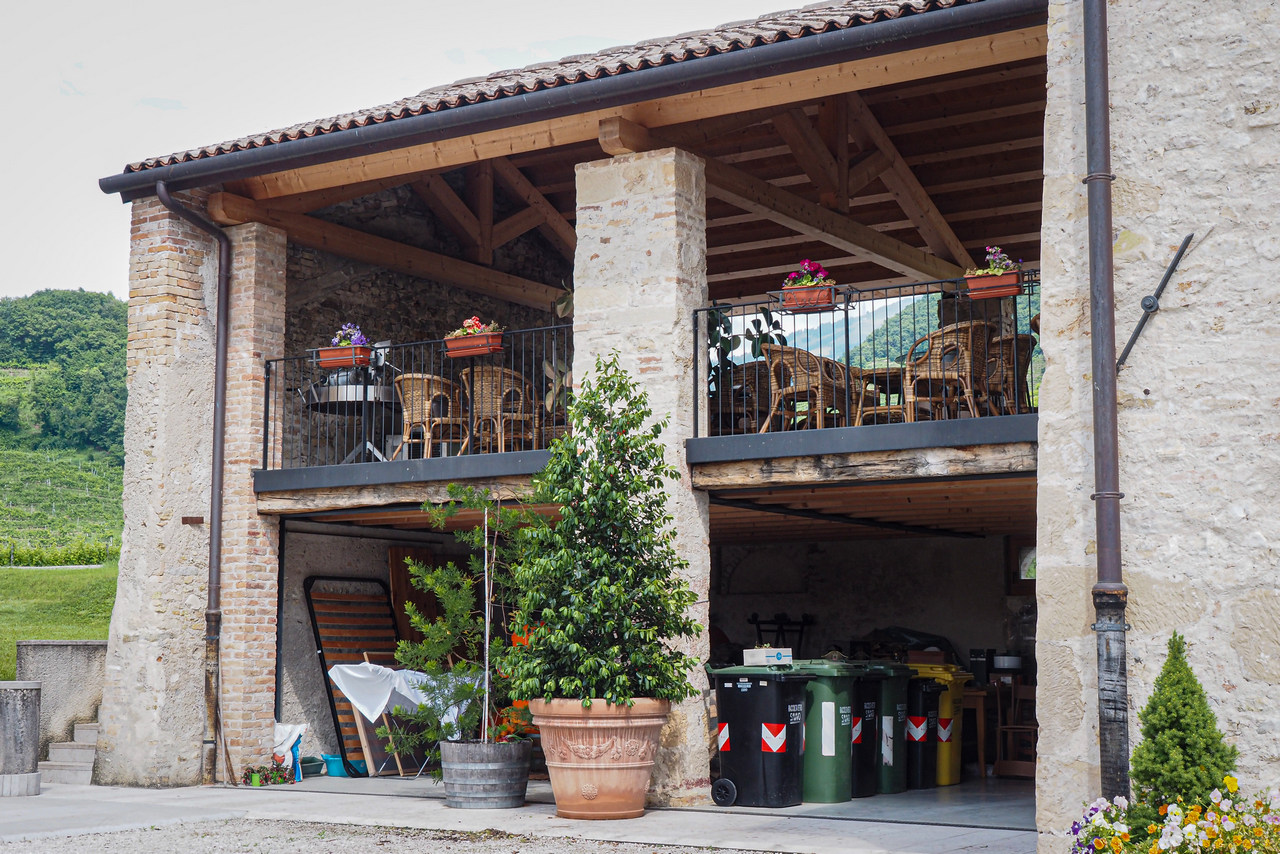
Officially registering the Merotto brand only in 2001, while the small cozy tasting room and shop opened in 2019, located only few steps from the winery itself. With all the excellent different styles of Prosecco produced at Merotto, the guided tastings organized at the venue highly deserve a spot on your itinerary.
Foss Marai
Strada di Guia 109, Guia di Valdobbiadene
Nestled in one of the most beautiful spots of the Conegliano Valdobbiadene area (though in truth, this is true from many of the local wineries), Foss Marai offers stunning views over the surrounding vineyards; and several intriguing tasting options.
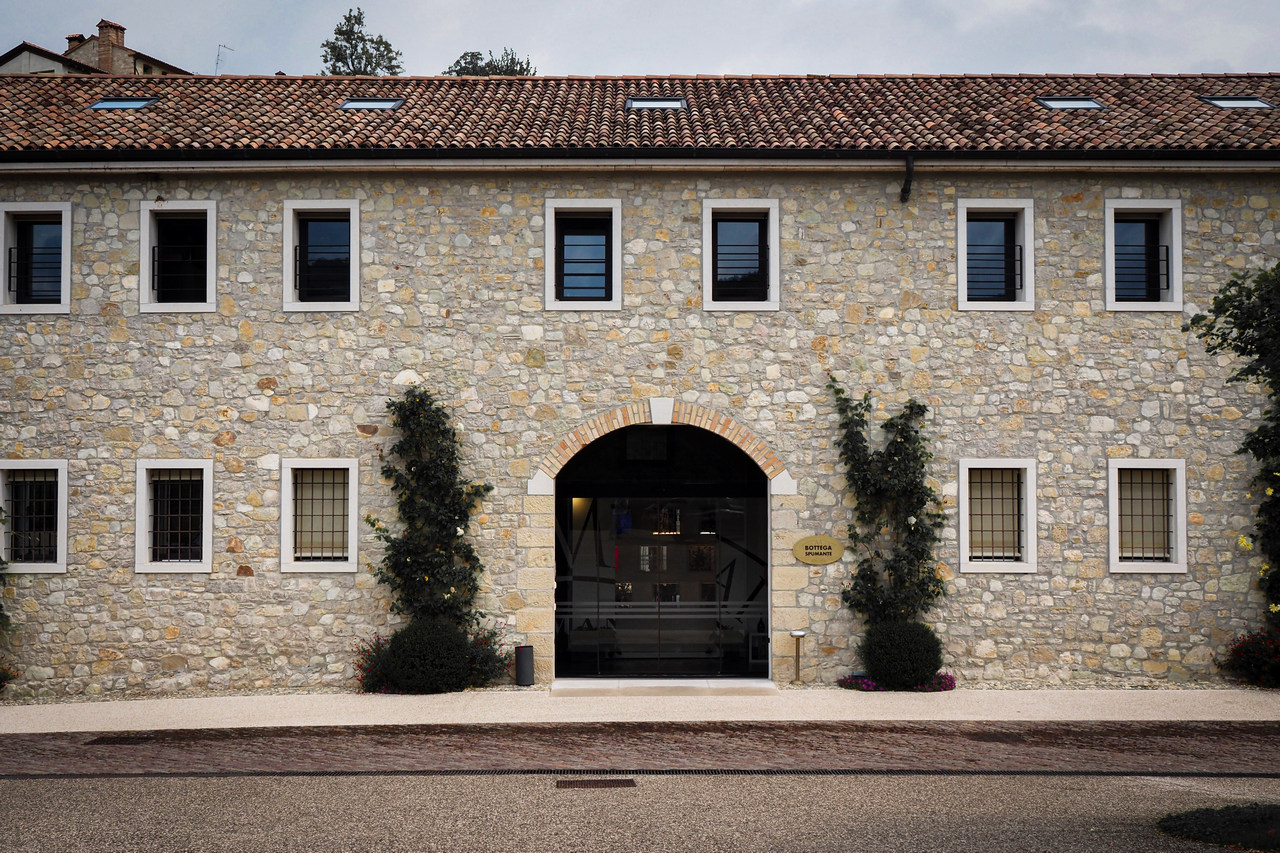
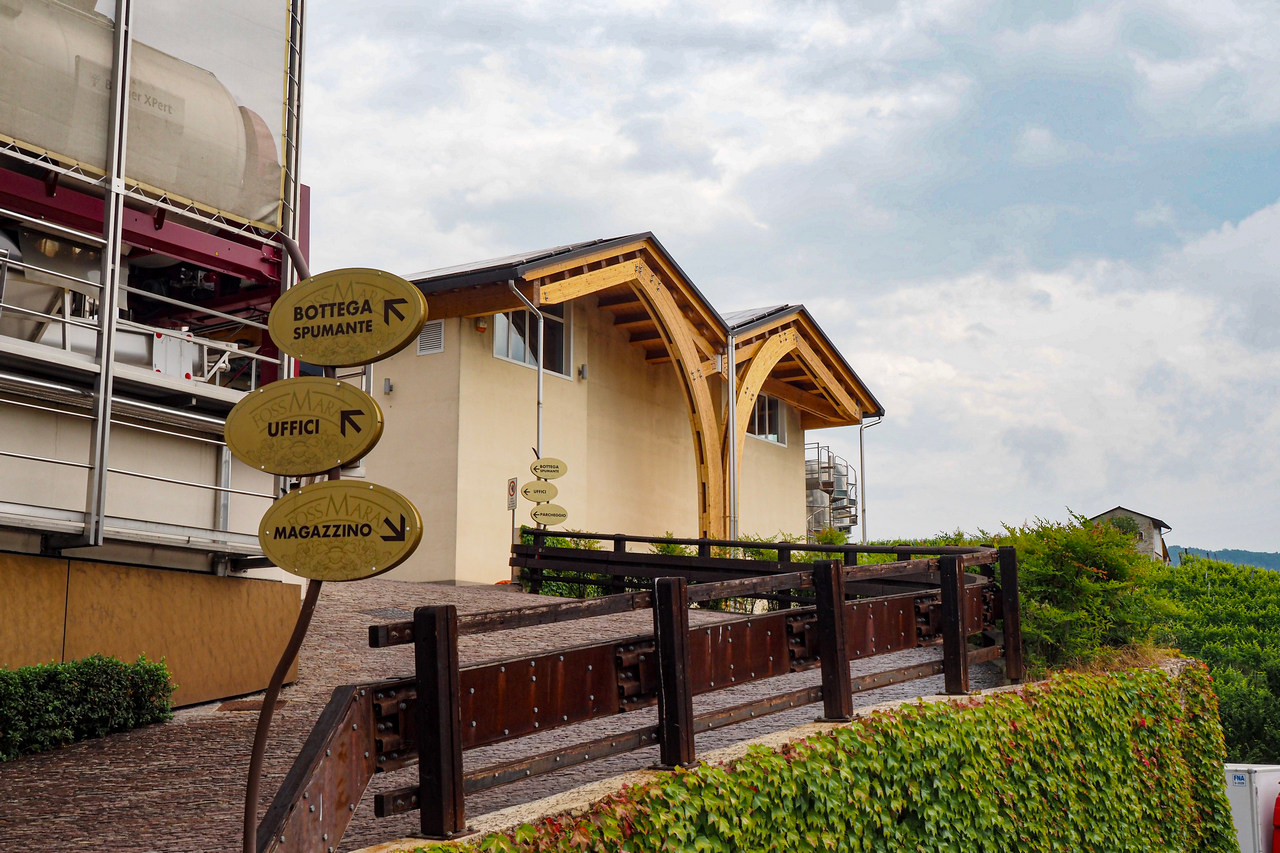
Founded in 1986 by husband-and-wife team Adriana and Carlo Biasiotto, the second generation of the Biasiotto family is now also involved, holding up the high production standards introduced by their parents and producing a wide range of excellent Prosecco according to the Charmat method.
Make sure to taste the highly awarded Cartizze, Guia Brut Millesimato, and Nadin Millesimato Dry styles.
Bival Winery
Via Rive della Senta 1, Guia di Valdobbiadene
Founded in the 1950s by Costantino Biasiotto, the small winery today is owned and managed by the Biasiotto family in the third generation. Bival only cultivates grapes in Rive vineyards. Thus, the steepest vineyards of the area, exclusively allowing manual work.
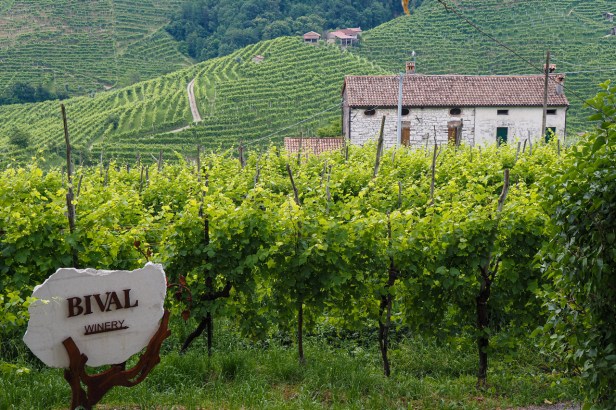
Bival produces a small but mighty range of Prosecco styles including a Brut Nature on yeasts, one of the very few Prosecco wines made according to the classic method with fermentation in the bottle.
On-site tastings are available seven-days a week although if you want to visit on a Sunday or outside of the main season (May to August), booking ahead is required. The winery is closed to visitors in September, when grape harvest means everybody is busy in the vineyards.
Bisol 1542 Winery
Via Folla 33, Santo Stefano di Valdobbiadene
Located in one of the most beautiful corners of the Valdobbiadene area, Bisol is looking back at five centuries of winemaking, involving 21 generations of the Bisol family.
That said, the present-day Bisol winery goes back to the dedicated work of Desiderio Bisol, nicknamed Jeio, who set out to purchase some of the best Conegliano Valdobbiadene vineyards after World War II. Thus today, Bisol owns some of the most prestigious locations, and produces a wide range of the best Prosecco wines the DOCG area offers.
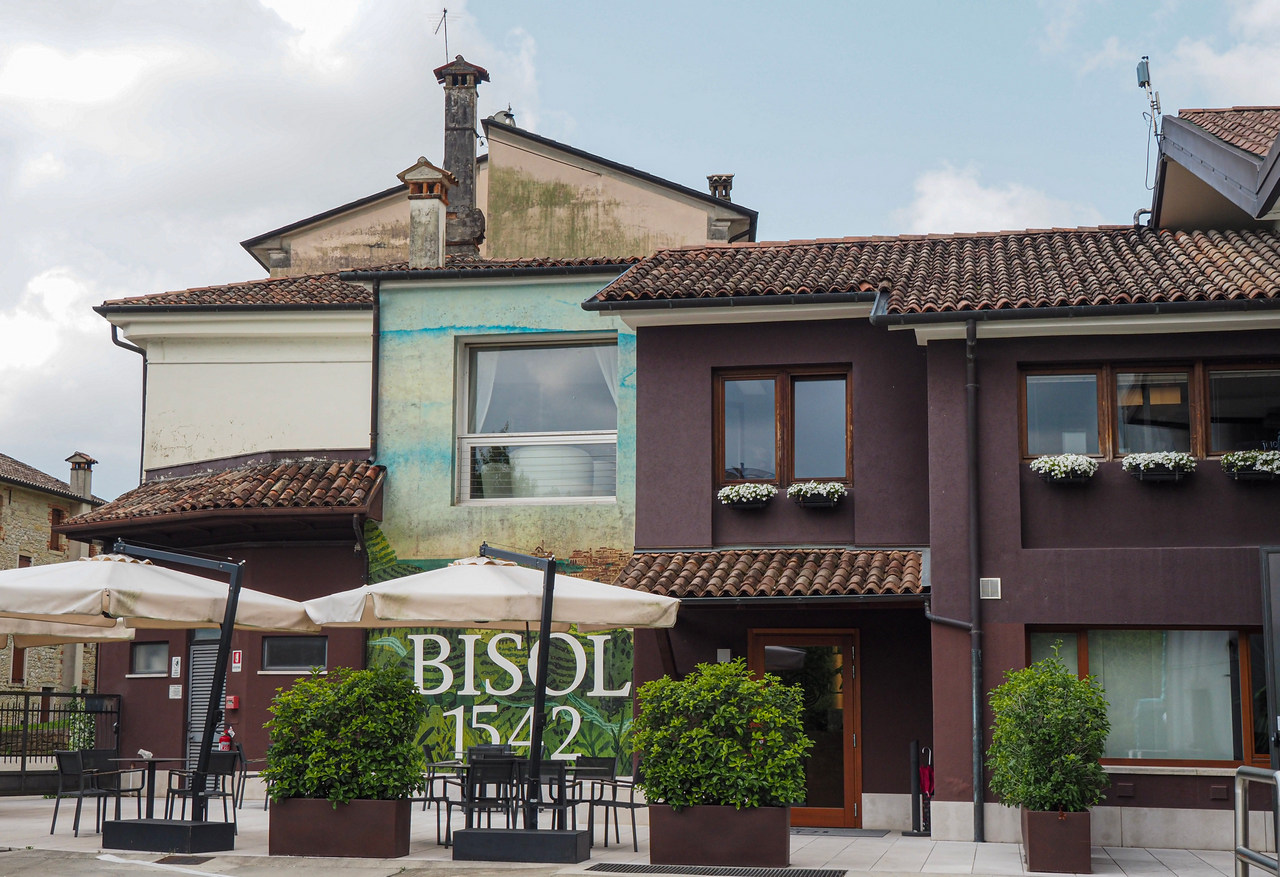
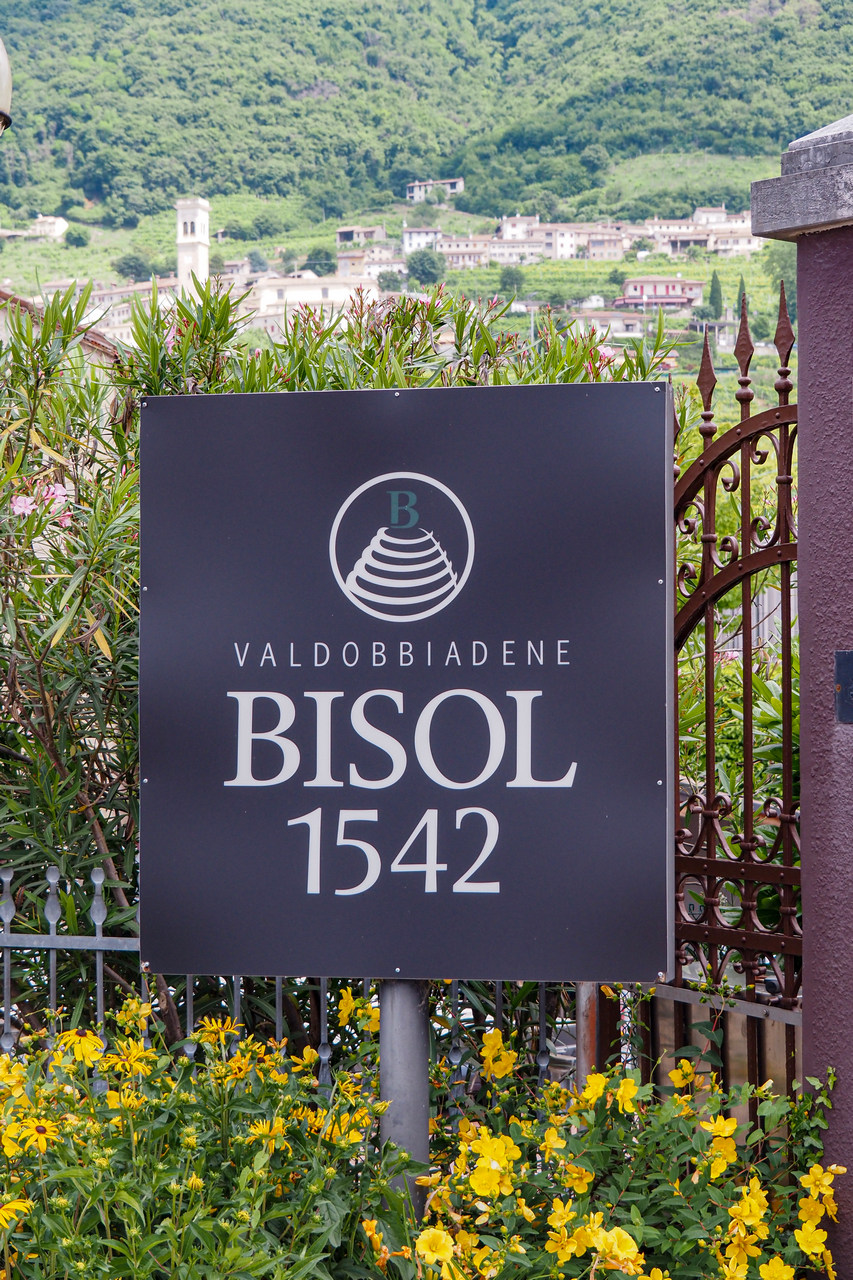
The winery’s historic wine cellar is still very much unchanged from the early days under the helm of Jeio Bisol, and one that is worth visiting. If you want to go on a cellar tour, you need to make arrangements at least 24 hours ahead of time (though I suggest to call 3-4 days before to make sure you get a slot at the desired day).
A range of different tasting experiences are also available on site (again, I recommend to book your spot a few days ahead), accompanied by some delicious snacks.
Ruggeri Prosecco Valdobbiadene
Via Pra Fontana, Valdobbiadene
This year, Ruggeri celebrates 75 years of making Prosecco even though the winery’s roots are going back all the way to the 19th century. At the time, Eliseo Bisol along with his son Luigi was among the first winemakers in the area. With winemaking running deep in the family, todays Ruggeri winery took shape thanks to Giustino Bisol. He founded the winery together with his cousin and to distinguish his brand choose the surname of said cousin.
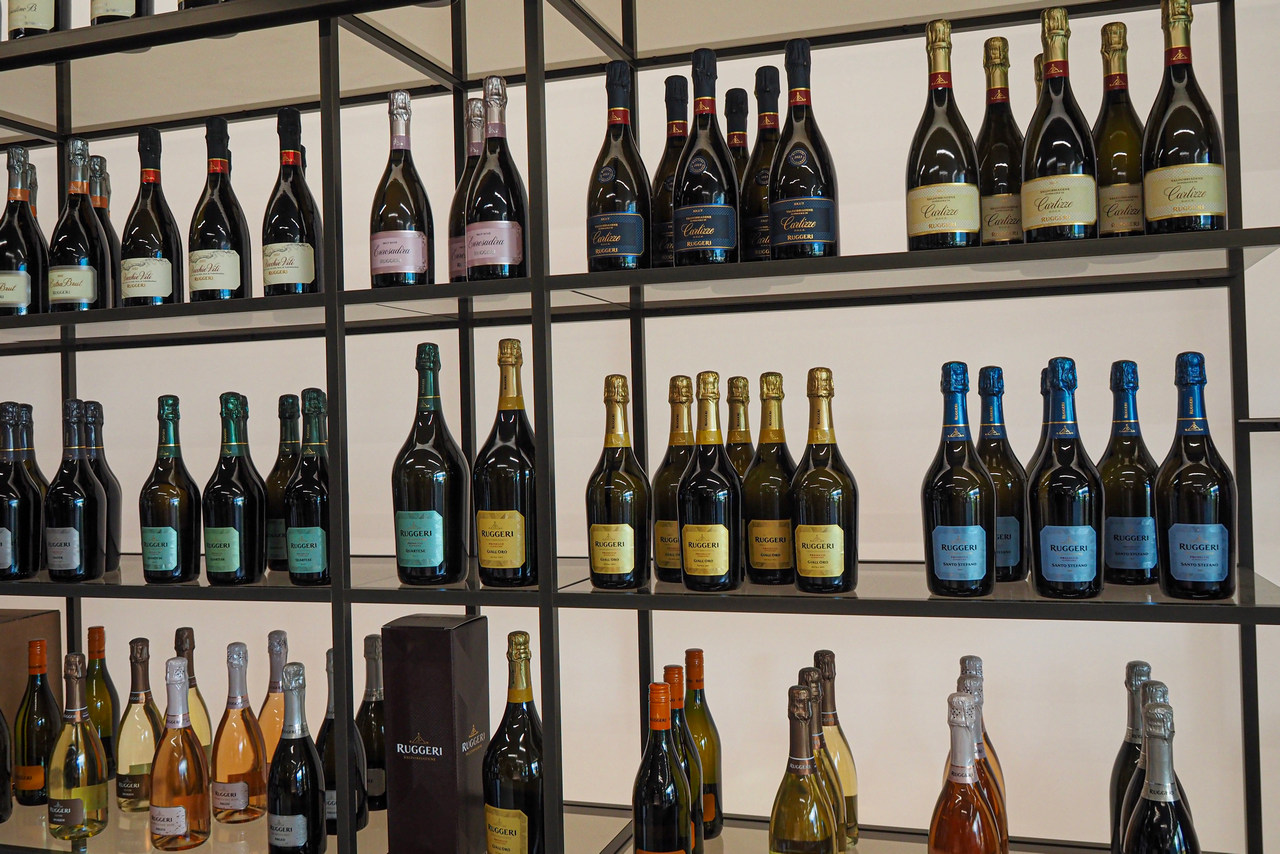
Ruggeri is among the first wineries of the area investing in the capacity of Prosecco to age and experimenting with extended lees aging.
Today, a wide range of different styles are produced, available to taste and buy in the small tasting room just outside of Valdobbiadene.
Ruggeri passed under the helm of the international Rotkäppchen-Mumm Group in 2017, though following through on high quality Prosecco production.
Bortolomiol | Parco della Filandeta
Via della Filandeta, 7, Valdobbiadene
Quite a mouthful even for those fluent in Italian, if you want to get behind the origins of Prosecco and winemaking in the area, there is no way around the Bortolomiol family.
Winemaking in the family can be traced back to Bartolomeo Bortolomiol, whose name is mentioned in documents dating back to the mid-18th century. With the wealth of winemaking knowledge in the family, it was only a question of time when the family would establish its own winery. This happed back in 1949 when ‘Fratelli Bortolomiol’ was founded by the three brothers Giuliano, Labano and Guglielmo back in 1949. The three eventually parted ways, and each went on to establish their own business.
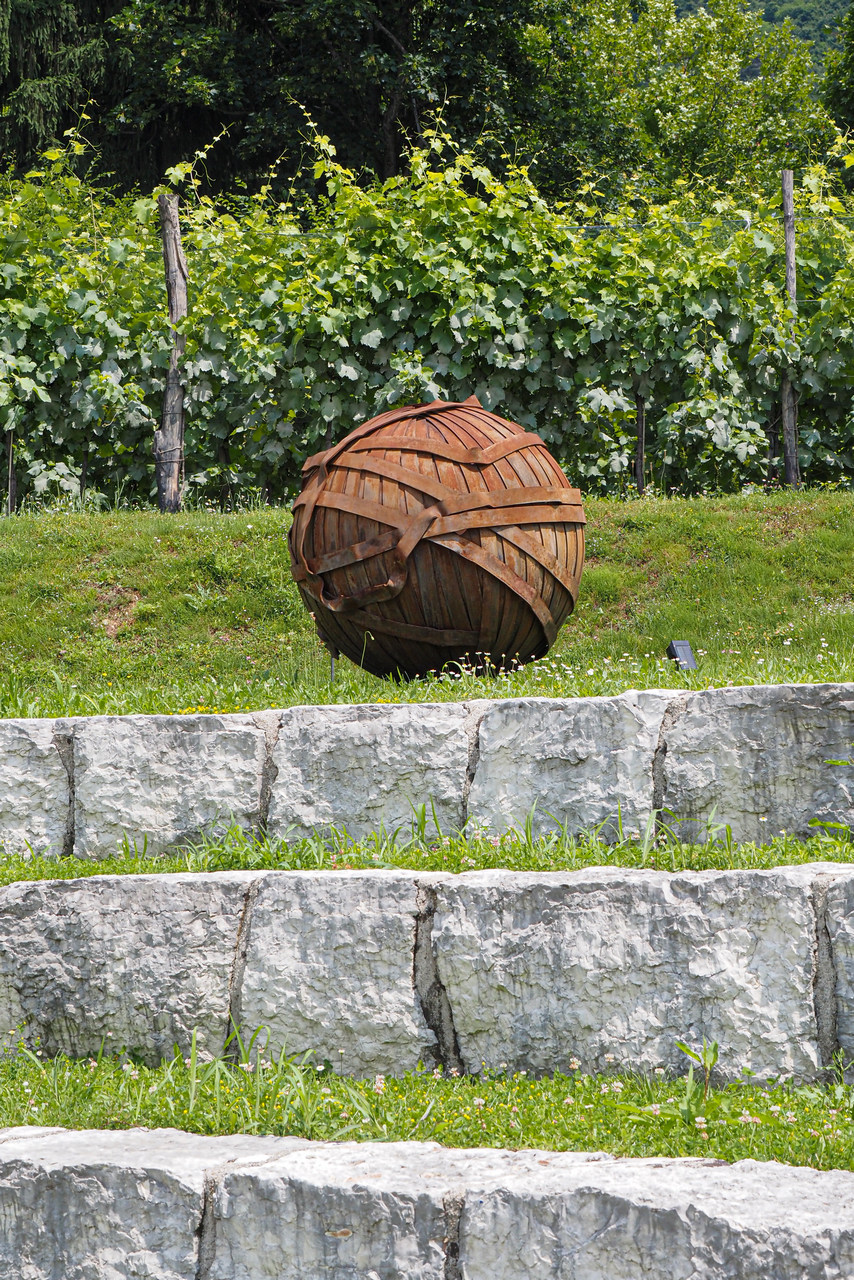
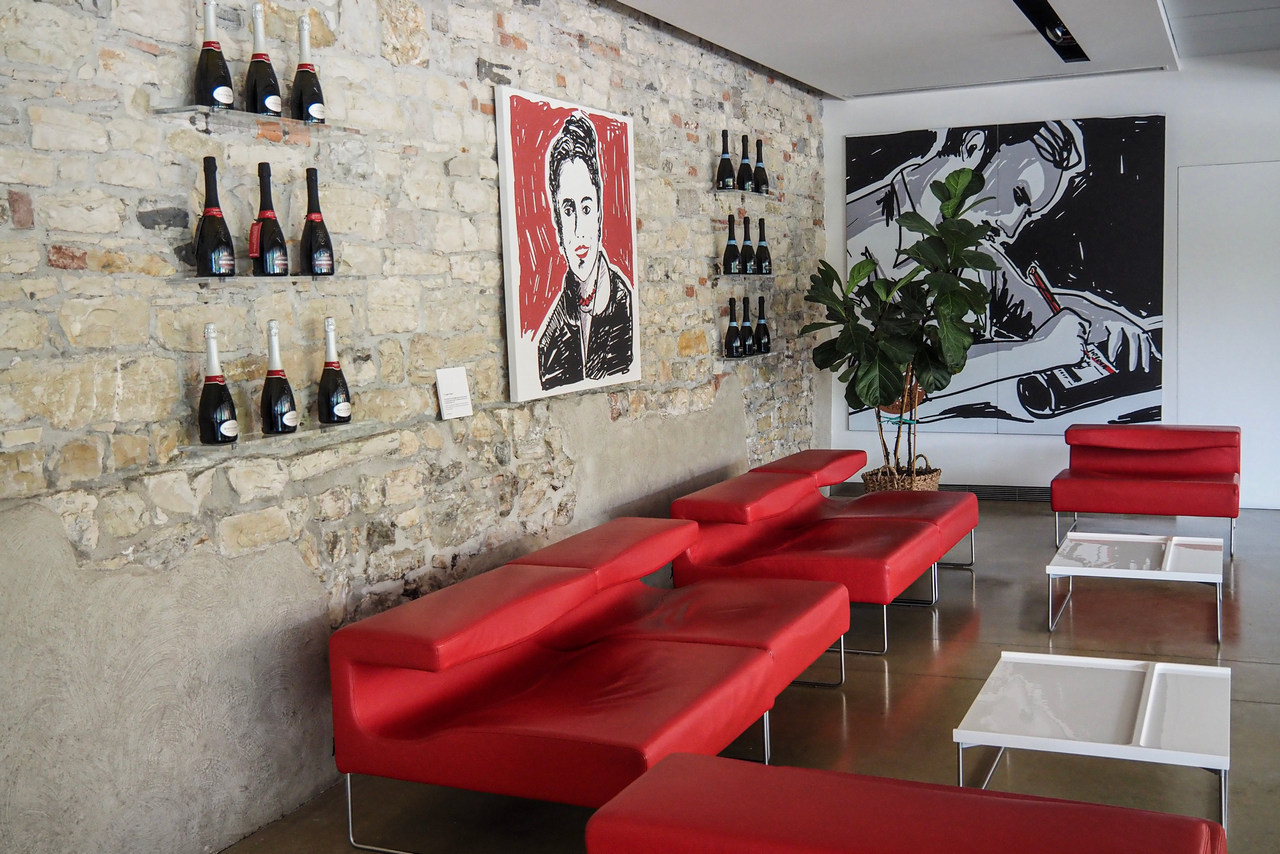
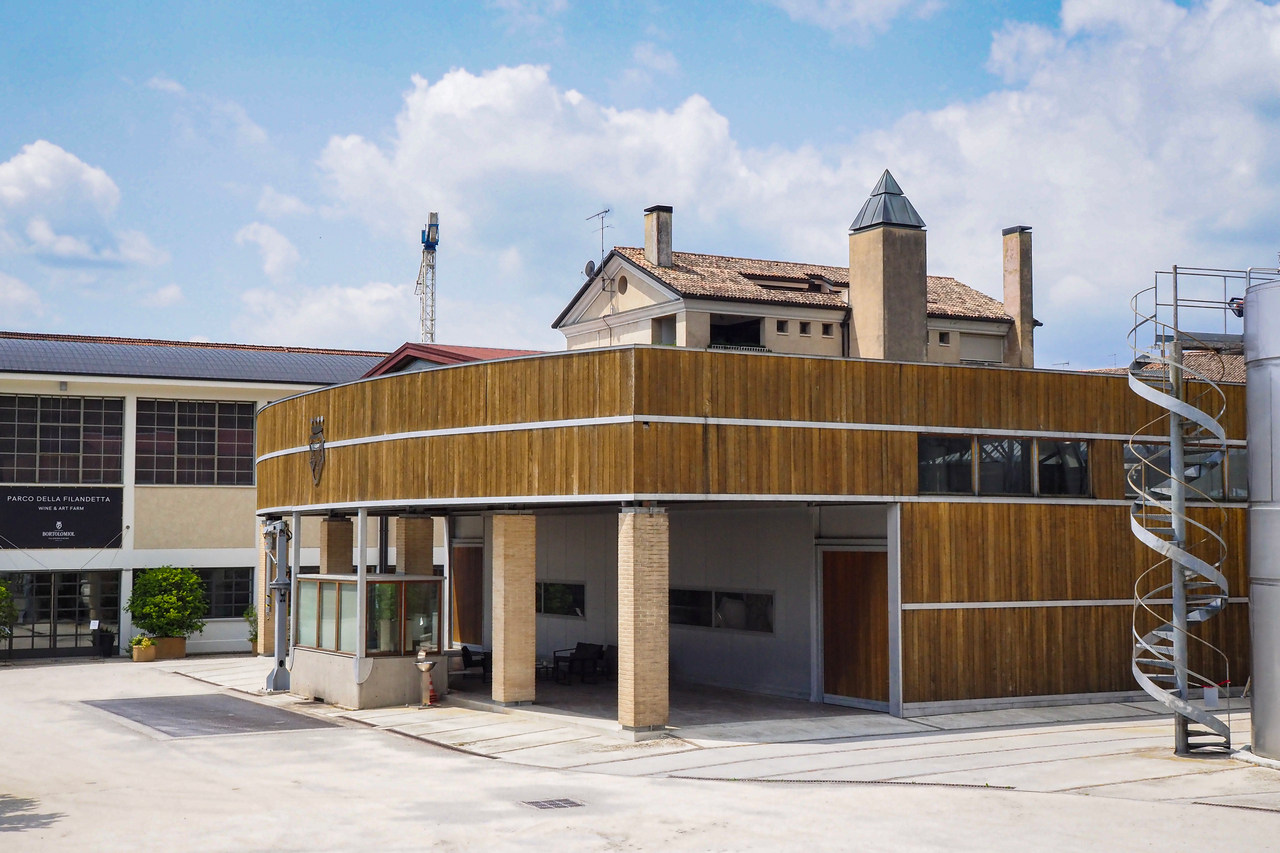
With all Bortolomiol businesses making outstanding Prosecco, the most exciting to visit is Parco della Filandeta. Founded in hour of the oldest brother Giuliano, the project is much more than a winery. Indeed, it’s called wine and art farm and next to the wine cellar hosts the tasting room in a restored industrial building once the site of a silk mill, along with a little sculpture park.
Mionetto
Via Colderove 2, Valdobbiadene
If you don’t know anything about Prosecco, you likely know the name Mionetto.
Founded in 1887 by Francesco Mionetto, the brand with the iconic orange banner today is sold around the world.
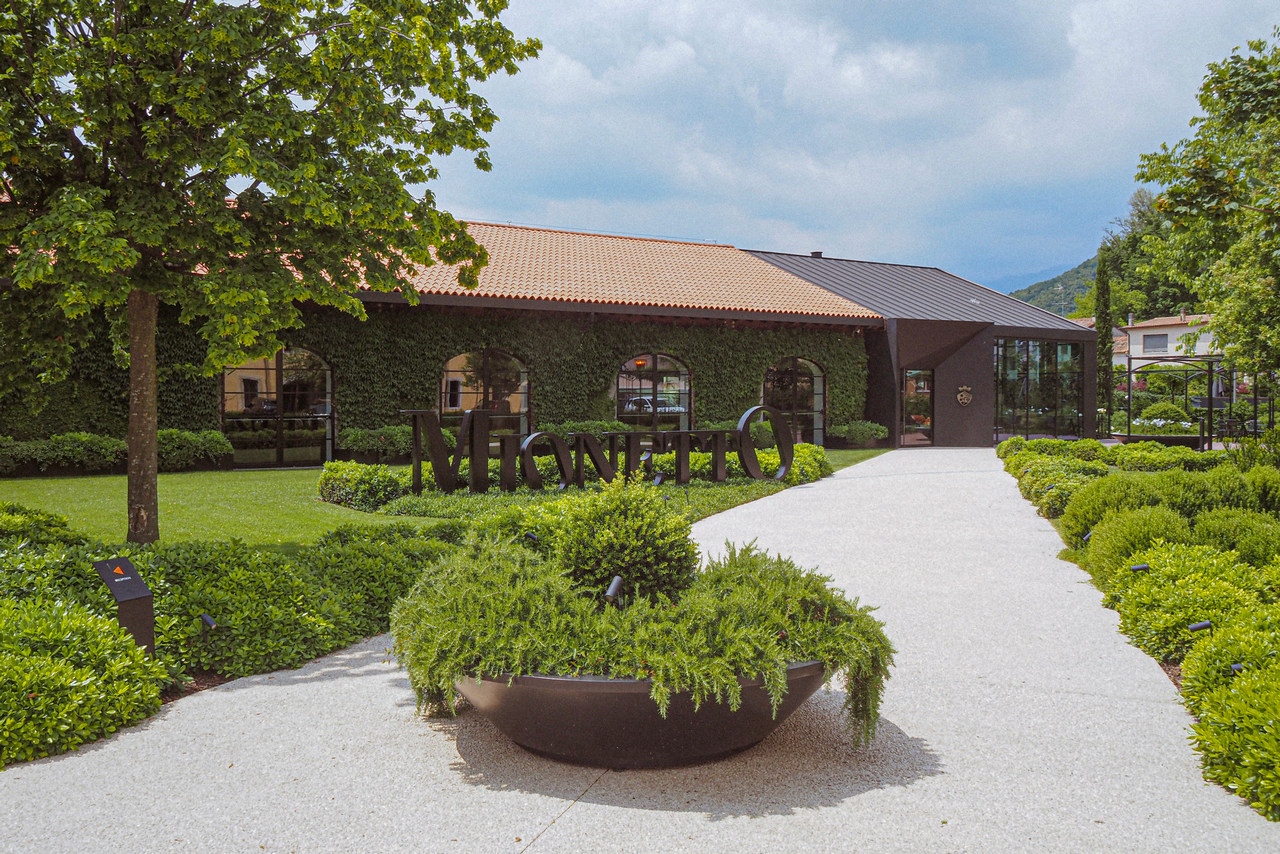
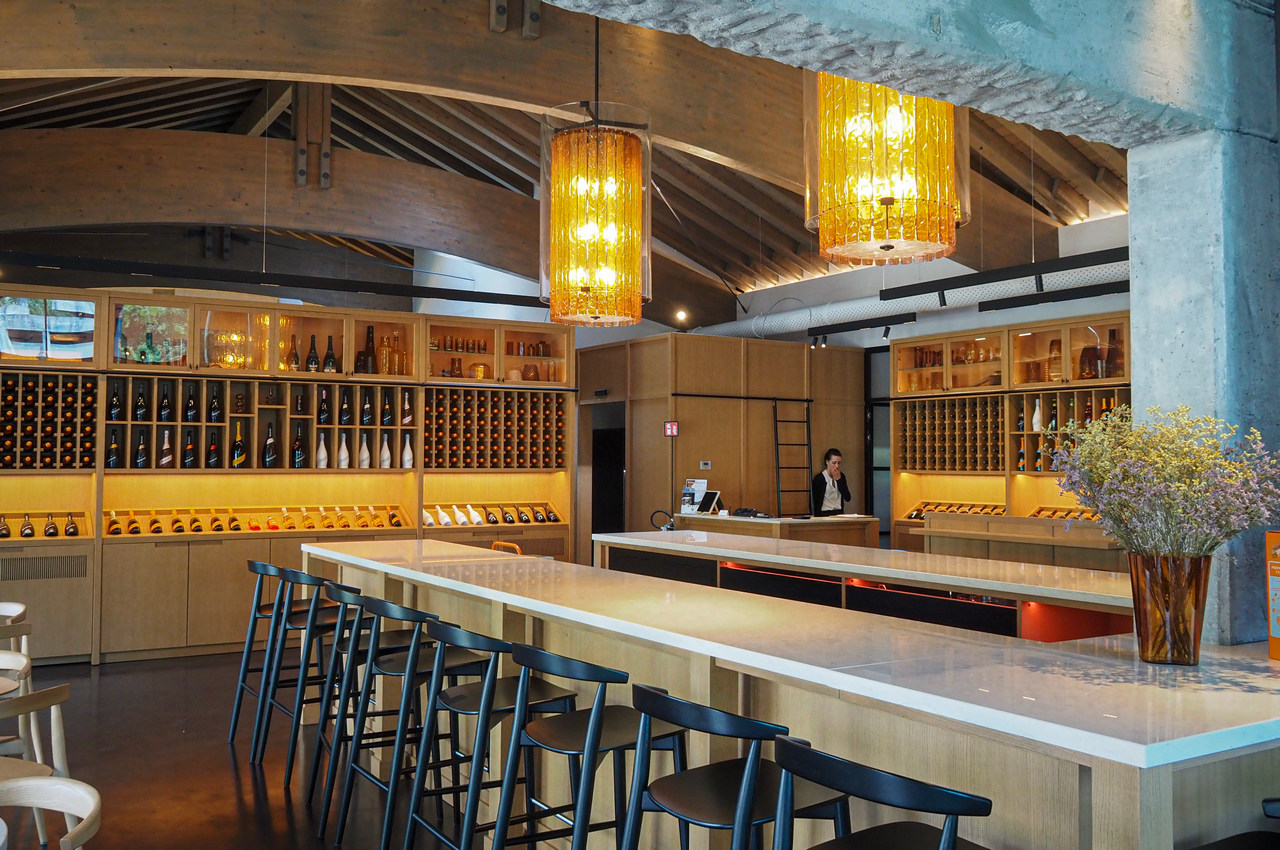
Nestled at the site of the historic wine cellar right in the heart of Valdobbiadene is the modern visitor centre. The large tasting room centres around a large wine bar for tastings, a small ‘living-room’ corner and a beautiful outdoor patio overlooking the surrounding hills.
In addition to various tasting options, visitors can embark on a guide tour of the cellar and production site.
Val D’Oca Wine Shop
Via Per S. Giovanni 45, Valdobbiadene
Driving across the vineyards of Conegliano Valdobbiadene, and more precisely within the steep hills around Valdobbiadene, you will notice various signs of Val D’Oca Winery. It is one of the few larger ones in the Prosecco DOCG, and it is among those welcoming visitors in a dedicated, modern tasting room.
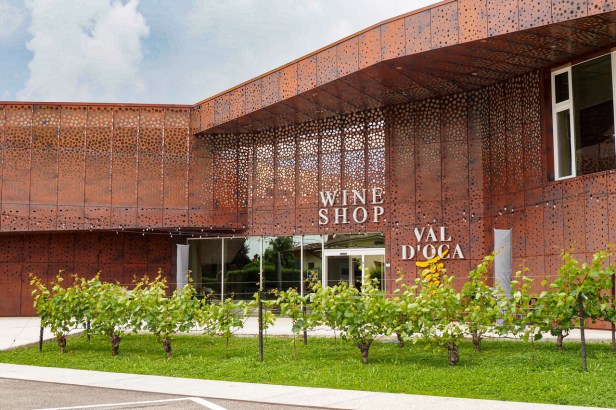
Behind Val D’Oca is one of the few wine cooperations of the Conegliano Valdobbidene region, founded in 1952 and today counts over 600 members.
Val D’Oce produces a range of different Prosecco from grapes harvested on the vineyards owned by cooperative members, and the brand is well-known as the first to introduce the iconic black satin bottle.
Final Thoughts
For a thrilling trip to one of the most beautiful wine regions in the world, look no further than Italy’s Prosecco Hills of Conegliano Valdobbiadene. Even non-Prosecco lovers will be flashed to spend time here.
 Carrots and Tigers