
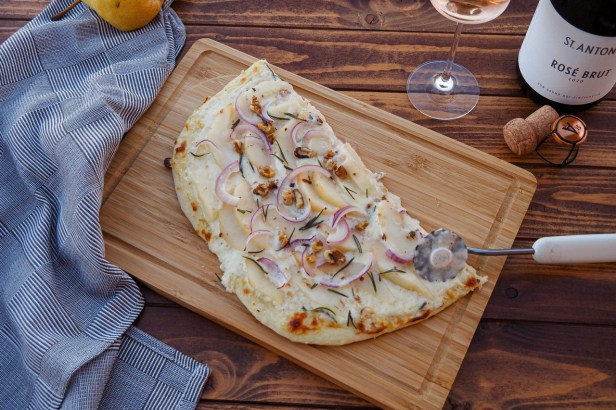
Welcome autumn/fall with this super easy, slightly sweet variation of the classic flammkuchen.
If you want to take advantage of the still warm and sunny days of early fall for a final outdoor gathering, this delicious variation of the classic flammkuchen will be a huge hit. As proven at a little aperitivo at the Carrots & Tigers house last weekend.
A quick introduction to Flammkuchen or Tarte Flambée
Often said to be originally from Alsace in France, the roots of this delicious snack can actually be traced back to a wider Upper Rhine Valley including the French regions of Alsace and Lorraine along with Baden, the Moselle and Palatinate.
The delicious snack is particularly popular during grape harvest when it’s enjoyed alongside the new seasons very first wines, or better partially fermented grape must, which in Germany is available as Federweißer during harvest season from early September through October.
Originally, flammkuchen was simply a by-product as it was used to control the heat in wood fired ovens when making bread. To test if the heat had reached the right temperature, small thin slices of the dough would be put into the oven. When the slices turned golden-brown at the edges after around 1-2 minutes, this meant the oven had reached the right temperature. And since in ancient times wasting food was not option, the slices of dough used to test the temperature would be topped with bacon (or ham), eggs and onions and eaten as well.

Over time, flammkuchen became a popular snack by its own, and a nearly unlimited number of different toppings emerged. From the classic hearty variation with bacon and onions to those topped with other meats, salmon, and seasonal ones topped with vegetables like asparagus, mushrooms, or pumpkin but also sweeter toppings like apples, pears, and grapes.
Recipe: How to make Pear Flammkuchen
The key to this slightly sweet, juicy version of the classic flammkuchen is using pears with a firm texture like Bosc, Anjou (green or red), and Concorde. These varieties will keep their shape and texture while baking.

Serves 4
15 g fresh yeast
150 ml buttermilk
4 tablespoons olive oil
380 g flour
salt
3 ripe pears, peeled, cored, and cut in small slices
2 red onions, peeled and cut into thin slices
200g Gruyère or similar, freshly grated
100 g ricotta
100 g sour cream
1 tablespoon honey
pinch of freshly grated nutmeg
pepper
2 sticks rosemary
80 g walnut kernels
In a large bowl, dissolve the yeast with 50 ml lukewarm water. Add buttermilk, one tablespoon olive oil, and one teaspoon salt and stir together until homogenous.
Add flour and knead into a smooth dough. Cover with a kitchen towel and let rise in a warm place for one hour.
Preheat oven to 250°C.
Line two baking tries with a baking sheet. Brush the sheets with the remaining olive oil.
Knead the dough again, then divide into two portions.
Roll out the dough into two thin rectangles and place each on a baking try.
In a bowl, mix Gruyère, ricotta, sour cream and honey. Season with nutmeg, salt and pepper. Spread the cheese mixture evenly on the dough, leaving a small border. Top with pears, onion, rosemary and walnuts.
Bake each try separately for 8 to 10 minutes, until the dough turns golden-brown.
Cut into small pieces and serve immediately.
 Carrots and Tigers