12 favourite places to eat out in Milan, and the city’s flagship dishes you must try at least once
Milan is the place I called home for more than eight years though ironically, I only started to fall for the city years after relocating back to Germany. It needed a world-stage event like EXPO for the city to finally reinvent itself. The good thing about it is that when I now return for a visit, I immediately feel a familiar vibe and exactly know my way while there is every time something new and exciting to discover.
While holding on to its traditions, Milan has undeniably become cosmopolitan. Nowhere does this show as clearly as in the local culinary scene. Some of the best restaurants have been around for what seems forever (and still going strong) while new ones continue to pop up, spanning the whole range of styles from traditional to modern, fusion, Asian, Middle East, vegan and more.
Perhaps unsurprisingly, Milan was voted to the Top 10 best food cities in the world by Condé Nast’s Readers’ Choice Awards 2024.
So, today I’d like to show you around to discover the best places to go for a lunch or dinner, and the iconic local dishes you must try at least once.
Where to Eat in Milan: The 12 best restaurants for traditional and modern cuisine
If you are looking for excellent food, from classic traditional dishes to international cuisine and fine dining, there is no shortage of great restaurants catering to any taste. If you wonder where to start, here is my (obviously subjective) choice of the best places.
Osteria al Treno, Via S. Gregorio
Located just a short walk from Milano Centrale main station, the small Osteria is well-known for its authentic regional dishes. The dark wooden tables surrounded by shelves filled with wine bottles very much resonates the typical Italian enoteca feeling.
Try the Risotto alla Milanese, which is one of the best in the city here. Other traditional dishes include ossobuco, Milanese meatballs, and Tortelli with braised beef. Finish off with a scoop of homemade ice cream.
Antica Trattoria della Pesa, Viale Pasubio 10
Antica Trattoria della Pesa is one of Milan’s most iconic dining places, originally opened in 1880. The name refers to the origins of the site where in the 19th century all goods that were shipped to the city were weighted for excise duty; della pesa literally means ‘of the weight’.
Today, the area slightly away from the city centre is characterised by a mixture of historic sites, somewhat uninspiring office buildings and the new Porta Garibaldi district boasting modern high-rise buildings. A great area for shopping with upscale fashion boutiques, sidewalk cafes, and pedestrian streets.
Antica Trattoria della Pesa is the place you will opt for if you crave a taste of the city’s most iconic dishes. Risotto all Milanese, Ossobuco, Cotoletta alla Milanese as well as a delicious Polenta al Brasato are among the best you can find in the city.
Trattoria Trippa, Via Giorgio Vasari, 1
If you are looking for an authentic dining experience featuring traditional Italian food at the highest quality, you should head to Trattoria Trippa. Chef Diego Rossi focuses on classic meat dishes which he presents with a modern twist. The menu will change according to the season, but you can expect signature dishes like fried tripe (a popular dish made from the stomach lining of ruminant animals) and vitello tonnato to be a staple most of the year.
Located in the Porta Romana area, a vibrant district in the central part of Milan with a particularly vibrant nightlife, thus Trattoria Trippa is the perfect start if you are planning a night out.
The place is hugely popular with locals and tourists, so make sure to reserve your table well in advance.
Trattoria Masuelli San Marco, Viale Umbria 80
There is no better place in the whole city to order a classic Cotoletta alla Milanese. The perfectly soft meat served in a crispy envelope of breadcrumbs and panko will make you want to come back here for every meal during your visit.
Otherwise, this upscale trattoria in the Porta Romana area boasts a relaxed, straightforward style reminiscent of the 1930s area with focus on high quality food and an excellent wine selection.
Nobu Milano, Armani Hotel, Via Gastone Pisoni 1
Opened in 2000, the year I moved to Milan, Nobu Milano was one of the first upscale international dining places that attracted locals like the light does the mots, setting new standards at the time and it clearly remains one of the best till this day.
Sophisticated Japanese-Peruvian fusion cuisine, you can expect such iconic dishes like Black Cod Miso, Tuna Matsuhisa Salad, various sushi and sashimi variations and the popular Wagyu Tacos.
Nobu Milano is located in the exclusive Armani Hotel, boasting a sleek, high-end, and stylish atmosphere, just like you would expect from a place designed by the late Giorgio Armani.
Hugely popular, so make sure to make reservations well in advance.
Cracco / Café Cracco
Looking for a fine-dining experience? Head to Galleria Vittorio Emanuele II. The Michelin-star Cracco restaurant features a carefully composed seasonal tasting menu along with a la carte options of modern reinterpretations of classic Italian dishes.
The only downside? The restaurant comes with a fairly extensive price tag. If you do not want to spend a little fortune, Café Cracco just downstairs from the restaurant offers an excellent bistro-style alternative. The menu features many of the traditional Milanese classics, prepared with a modern twist.
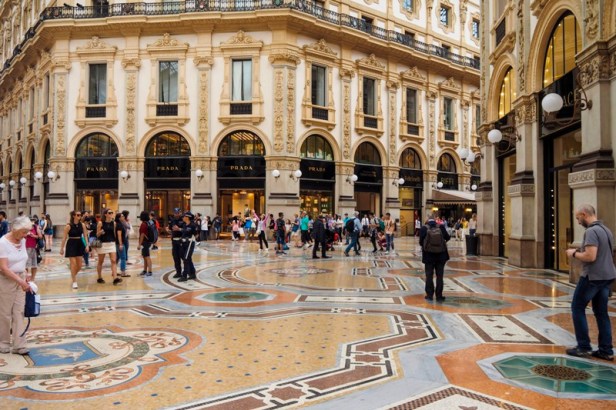
Locals will usually head here for lunch which is available seven days a week. Café Cracco does not take reservations, so either come early or expect some wait time. Which however is totally worth it.
Armani/Ristorante, Via Manzoni 31
You do not need to love Armani fashion (though no harm if you do) to fall in love with this place. Located on the 7th floor of Palazzo Armani along one of Milan’s major fashion streets, count on the place to be minimalist chic, featuring black marble and backlit onyx. Add to that lots of natural light through the large panoramic windows and a view over the skyline from the stunning Duomo to the modernist skyscrapers of Porta Nuova and you are set for a true spectacle.
The menu is likewise fashionable, featuring modern interpretations of Italian dishes with an Asian twist. However, there will be nods to the traditional Milanese cuisine, including Risotto alla Milanese, and focus will be on high-end ingredients.
There is a minimum of two courses required if you chose from the a la carte menu while the tasting menu is available for the entire table only.
The restaurant is open for dinner only, from Wednesday to Saturday and booking ahead is required.
Locanda Perbellini, Via Moscova 25
A firm favourite of mine, though I usually go to Giancarlo Perbellini’s original place in Verona. That said, you can be sure to find the same dedication to quality and sustainably sourced ingredients at his spot in Milan’s Brera district.
The menu is reflective of various Italian regions, blending northern and southern flavours and featuring traditional dishes in a new, innovative way. The menu changes according to the season but expect such classics like Vitello Tonnato, Risotto allo Zafferano (the famous Risotto Milanese), and Ravioli alla Bolognese.
Pacifico, Via Moscova 29
Small, intimate and stylish, featuring Latin American, and particularly Peruvian dishes with an Asian twist, Pacifico if the perfect place for both lunch (weekdays only) and dinner.
Focus is on fresh seafood. Order a ceviche, which is sublime. Other staples here are tiraditos, tacos, and grilled fish/meat.
It’s the perfect place if you want to start your evening with a classic Italian aperitivo which you can take at the restaurants Pisco Bar. Or finish your visit here with a late-night cocktail.
La Cantina di Manuela, Via Carlo Poerio 3
The modern, vibrant ambience is somewhat misleading as the food here is leaning on the traditional Milanese side, at least if you come for dinner. Expect modern interpretations of the traditional Cotoletta Milanese along with a classic Risotto Milanese.
Doubling as a wine bar, the wine list is expertly curated and extensive, including Italian and international labels.
Torre, Via Giovanni Lorenzini 14
Fondazione Prada is one of the hippest places since it was founded in 1993 by Miuccia Prada and Patrizio Bertelli. Located in a transformed distillery dating back to the 1910s, blending existing industrial structures with new buildings like the golden tower, the complex hosts temporary shows and permanent collections of 20th and 21st-century art.
Like many fashion houses, who now run their own restaurants, Fondazione Prada is home to a stylish restaurant too. Torre (taking its name from the golden tower where it is also located) offers unparalleled views of the Milan skyline thanks to its prominent location on the sixth floor.
The menu is based on authentic Italian flavours, reinterpreted in a modern style with interesting tweaks. Which extends to the wine list, where you will find a large number of natural wines, a high attention to indigenous grape varieties along with the leading Italian names in winemaking.
Bu:r di Eugenio Boer, Via Mercalli 22
The elegant, small place located in the Ticinese area at the edge of the city centre offers a fine-dining experience based on traditional Italian dishes yet given a new, modern and highly creative touch, incorporating international influences. Ingredients are sourced locally with preference given to small-scale producers.
The restaurant offers two tasting menus with the option to order the full six course menu or to select three or four courses of which one should be the sweet (dessert) course. An optional wine pairing is offered too.
The price per menu looks quite reasonable, particularly for a city like Milan. Nevertheless, you are in the fine-dining range here which means there is a price tag attached to your dinner.
If you want to experience some of the celebrated chefs creations without spending as much, Bu:r now offers a three-course fixed lunch menu which changes weekly at a significantly lower price, available Tuesday to Friday.
The traditional food to try in Milan
If you are planning a trip to Milan, look out for the city’s traditional signature dishes.
Like other northern Italian regions, traditional food in Milan/Lombardy features butter over oil (Italy’s commercial olive groves are located further south), risotto and polenta over pasta, and considering winters are colder and longer, hearty meat dishes
Risotto alla Milanese
Perhaps the most famous of all risotti, the traditional Risotto Milanese is cooked with bone marrow and butter and is flavoured with saffron. The latter was introduced to Italy by Arab traders around the year 1000 and while initially limited to the wealthy its usage started to spread during the Middle Ages.
While probably created already earlier (with the most recounted legend claiming it was created in 1574 during the construction of the Duomo, credited to glass painter Valerio di Fiandra and his assistant), the first documented recipe of Risotto alla Milanese is dated to 1829.
The recipe has not significantly changed since and the dish remains a popular ‘primo’, which means first course.
Cotoletta alla Milanese
Breaded veal cutlet is one of the most popular traditional dishes, and if you are reminded of Wiener Schnitzel, you are on the right track. The Milanese version of this world-famous dish is indeed considered the original recipe. Different to the perhaps internationally better-known version from Vienna, it is usually prepared using a veal rip chop.
The dish was first mentioned in a document describing a dinner menu in the 12th century and has not changed much since.
Ossobuco
Another classic is ossobuco, a popular dish particularly during the cold months of the year. The name goes back to the specific cut of veal that is used, veal shin from the lower leg in which the round section of bone is surrounded by meat. The original recipe for ossobuco was first documented in the 18th century.
To prepare the dish, the veal shanks are cooked in red wine for a long time. The dish is traditionally topped with a type of green sauce called gremolata and served with risotto Milanese or polenta on the side.
Vitello Tonnato
Originally from nearby Piemonte region, Vitello Tonnato is hugely popular in Milan too, and at least in Milan considered to be a local dish.
It is typically served in its classic style (though you will also find some modern twists): thinly sliced veal topped with a powerful tuna sauce and capers.
Panettone
There is no Italian Christmas without Panettone. At least not in the northern part. Except perhaps in Veneto where the local Pandoro is the local favourite.
This dome-shaped sweet bread filled with dried raisins and candid fruits was originally created in Milan. Now famous all over the world, where mostly mass-produced versions are sole, it’s worth seeking out the handmade versions offered at the city’s leading artisanal bakeries (where you can find them now also outside the festive season).
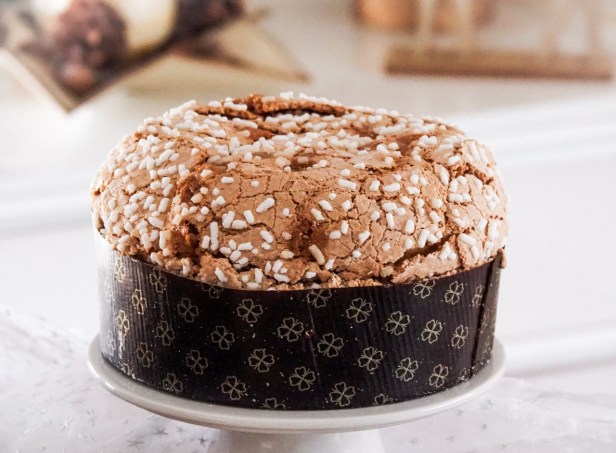
Local restaurants will serve panettone typically during the festive season and perhaps extending to the winter months. These dessert versions are often accompanied by zabaglione (a light custard incorporating sweet wine, typically Marsala) or ice cream.
 Carrots and Tigers