15 must-try traditional dishes when visiting the Italian Alps
If you’d ask me to name my favourite destination in Italy, I would have a hard time to answer. There are many stunning places that it is literally impossible to name just one. That said, the Italian Alps are truly one of the most magical places, boasting a dramatic landscape of mountain peaks, verdant green valleys, clear blue mountain lakes and beautiful mountain villages.
Italy’s stunning alpine region is the perfect year-round destination, while dramatically changing over the seasons.
Spring (April and May) is particularly perfect for hiking in the lower areas where spring flowers will abound while festivals celebrating the arrival of spring along with Easter parades are taking place in many locations.
Summer (June to August) is peak season for hiking, with all the mountain huts open, including an abundance of wildflowers and potential wildlife spotting. Temperatures are the highest but still mild, particularly at the higher elevations. However, visitor number will be high, and certain places are getting crowded.
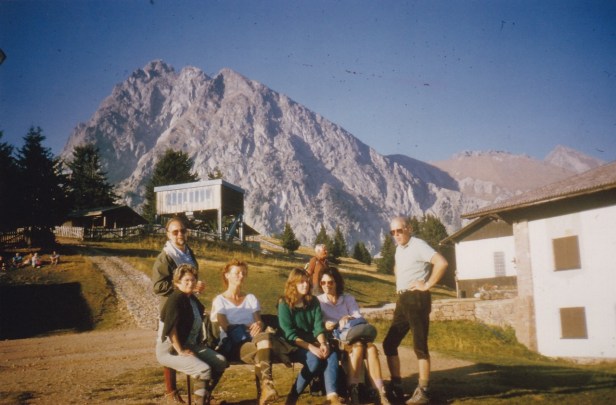
Autumn (September-October) still offers plenty of hiking opportunities, stunning autumn colours and pleasant weather, with most mountain huts open till mid-end October. Visitor numbers will start to go down despite this is the main season for local autumn and harvest festivals.
Winter (December to early March) is peak skiing season, with the best chance of snow and January and February, while December boasts a stunning festive scenery and many Christmas markets.
This year, there is another reason to visit. The 2026 Milano-Cortina Winter Olympics will kick-off on 6th February, running till 22nd February. This is followed by the Paralympics from March 6th to March 15th. That said, this is not a last-minute event and if you are planning to attend you already need to have travel, accommodation and tickets to attend competitions booked.
If that is the case, or you are planning a visit later this year, you might fancy some recommendations about the traditional local foods you need to try. Trust me, you would be very sorry not to try the iconic local dishes.
What are the traditional foods of the Italian Alps?
When visiting the Italian Alps, you will quickly realize the local food is not quite what you probably expect to see in Italy. While in recent years the local cuisine has undergone a significant evolution with Mediterranean and international influences becoming more commonplace, menus continue to evolve around local ingredients and a strong dedication to preserve the local culinary heritage.
The proximity to neighbouring countries, in particular Austria, Slovenia and Switzerland, and the fact that large parts of the region, particularly South Tyrol and parts of Friuli once belonged to Austria, have significantly influenced the regional cuisine. Add to that a local climate that is typically much rougher compared to the more southern parts of Italy, with cold winters and lots of snow (though that is less and less the case in the lower areas) and it is no surprise the local cuisine is leaning towards heartier dishes.
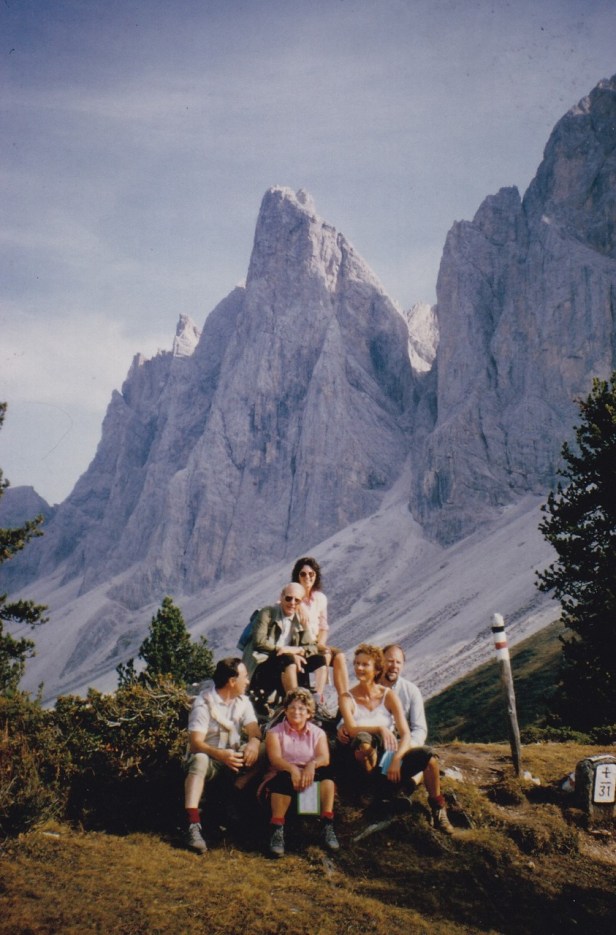
Talking about the Italian Alps, you also need to keep in mind the region includes a large part of the Italian north, stretching from Valle D’Aosta (bordering France) in the west to South Tyrol and Friuli-Venezia Giulia in the north and east along with parts of Lombardy and Veneto in between. This again means, there is a broad variety of traditional local dishes.
Overall, the cuisine of the Italian Alps is heavily influenced by a difficult mountainous environment with shorter ripening seasons. Rather than growing vegetables and herbs, a lot of the produce used in local dishes comes from foraging. Milder and typically sunny weather in the lower valleys along with rich green meadows on the other hand are perfect for the cultivation of fruit orchards and to grow livestock. The region is particularly renowned for its outstanding cheesemaking traditions and producing charcuterie, particularly the well-known local speck. Add to this a vast apple production while other fruits like pears, cherries, plums and of course wine grapes.
Local dishes are usually prepared with butter rather than olive oil, dairy is more commonly incorporated in local dishes, and there is much less usage of tomatoes comparted to central or southern Italy.
15 foods of the Italian Alps you must try on your next visit
Italy’s alpine region is particularly renowned for excellent dining experiences, from the simple traditional local dishes offered by mountain huts through to the fine-dining menus at the many local Michelin-starred restaurants. What all of them have in common is the strong focus on locally sourced, seasonal produce and the highest of quality.
When visiting the Italian Alps, make sure to try at least a couple of the region’s hugely popular traditional dishes.
Speck: The famous salted, spiced, and dried ham from South Tyrol is made from pig’s hind leg. It is traditionally marinated in a spiced brine for two weeks, then dried and smoked for two weeks and hung for four months. It is typically enjoyed with bread or as part of a charcuterie board. Think of it as an extra flavourful, saltier and thicker version of prosciutto.
Lardo: Originating from the Valle D’Aosta, lardo or lard is made from the fat from pigs back. It is cured in salt and a mixture of herbs (who sometimes remain visible in the finished lardo) over several months. The final product offers a rich pork flavour while the aromatic mix of herbs and spices adds a slightly sweetish note. Lardo is typically served as thin slices accompanied by fresh bread, almonds, olives or figs.
Fontina: One of the most popular local cheeses made from cows’ milk, which is either consumed young, when it is still soft (which makes it perfect for a classic fondue) or mature, when it is hard. Fontina has a creamy, buttery texture and nutty, savoury flavour.
Fonduta Valdostana: A popular local version of fondue originally from Valle D’Aosta, fonduta is made with melted fontina cheese, cream and eggs. The result is a Silky, creamy, and dense mixture that is typically enjoyed as a dip with toast bread (pane casereccio) or served as a particularly thick soup with bread cubes. In autumn, fonduta is often served topped with thin slices of the famous black Alba truffles.
Schüttelbrot: Literally translating into shaken bread, this popular bread takes its name from the way it is prepared. The very thin, crispy flatbread made from rye flour, water, yeast, salt, and spices, and its origins go back to the past when bread was made only few times during the year and wheat was a precious ingredient. Thus, the bread needed to have a long shelf life. This was obtained by using rye flour and the treatment of the dough, which once it had risen by around two-thirds was flattened and shaken on special wooden boards. This creates the iconic thin and irregular shape along with a crunchy consistency and low moisture, which makes it ideal to be stored for months without decaying and loosing flavour. Schüttelbrot is typically served with speck or cheese for lunch or a snack in between meals.
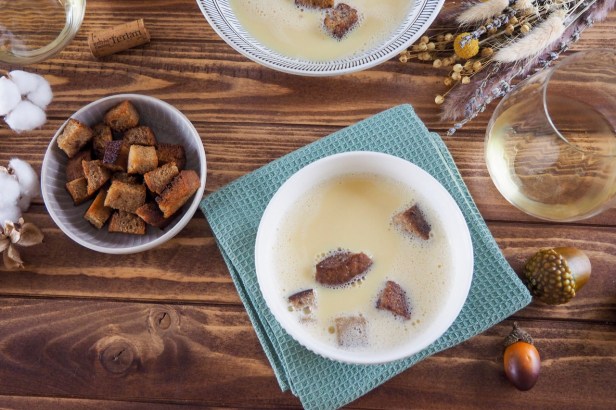
Terlaner Wine Soup: A creamy and flavourful soup made from South Tyrolean Terlano Pinot Blanc. The soup presents a masterpiece of three renowned South Tyrolean chefs who elaborated on old regional recipes to create something innovative yet incorporating the traditional local flavours for an event showcasing specialities from South Tyrol that took place in Berlin (Germany) in 1965. The dish is nothing for the fainthearted, with wine being indeed a major ingredient. Otherwise, it’s made of chicken broth, egg yolks, heavy cream, butter, cinnamon, and nutmeg.
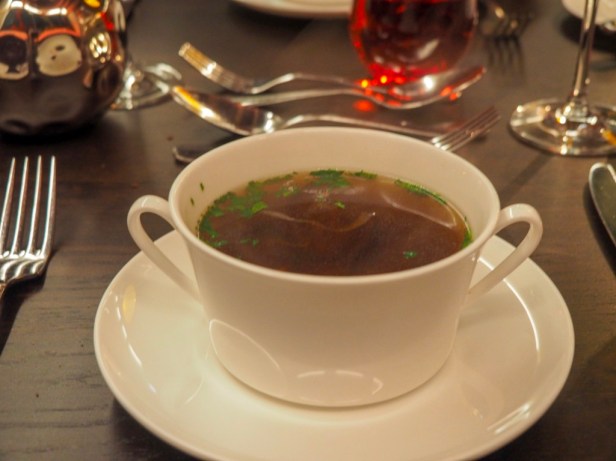
Frittatensuppe: Called frittatine in brodo in Italian, this soup is a popular starter in Trentino and South Tyrol while you will also find it quite often across other destinations of the European Alps. It is a rich, clear beef or vegetable broth filled with thin strips of savoury unsweetened pancakes (frittaten) and srinkled with chives. The pancakes absorb the broth which lends them a soft texture. The soup is traditionally served very hot and often comes in a cup rather than a bowl. It is easy to prepare (and was originally created to use leftover pancakes) and today it is a staple particularly at alpine huts but can be also often found at restaurants across the region.
Canederli/Knödel: The famous dumplings enjoyed all over the European alpine areas and beyond have been a staple since the Middle Ages. They do even adorn a fresco in South Tyrol’s Hocheppan Castle which is dated to the 12th century. You might be surprised but dumplings are a hugely versatile food in the Italian Alps. Either served as a starter, often as an inlet for a hearty Speckknödelsuppe (bacon dumpling soup), first course or single dish, or as a side for a main. And last but not least, there are even sweet versions served as dessert.
Speckknödel (bacon dumplings) are made with stale bread, which is soaked in milk and then mixed with eggs, aromatic herbs, onion and speck (hence the name) are the most common type of dumplings found in the Italian Alps. However, there are variations and a common dish on local menus might be the tris of dumplings. In addition to the classic Speckknödel, there will be two additional varieties, typically spinach and cheese dumplings while sometimes you will also find beetroot dumplings instead of cheese, which results in an interesting three-coloured dish.
Sweet dumplings are typically boiled, or steamed dough balls filled with fruit (usually apricot or plum) and served as a dessert or sweet main course (particularly at the local mountain huts).
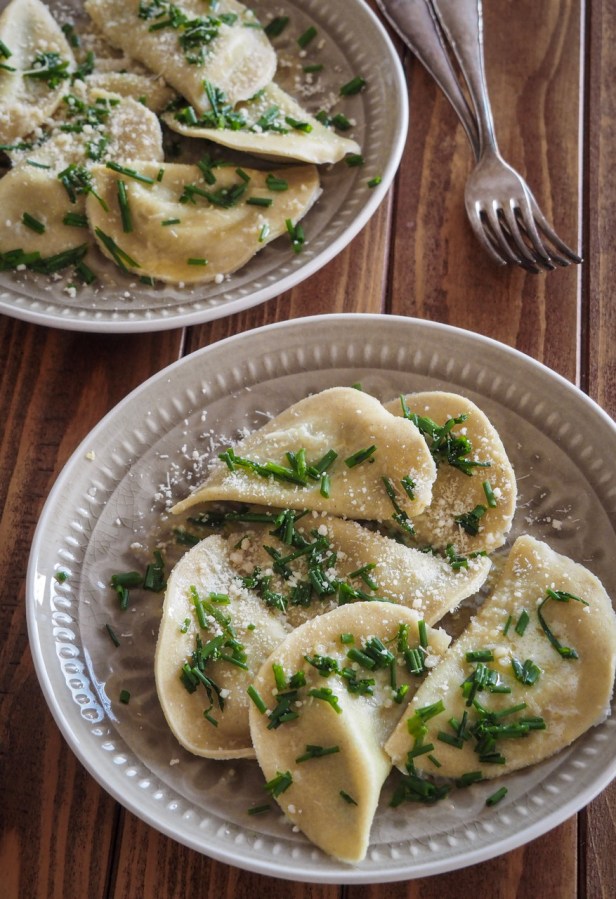
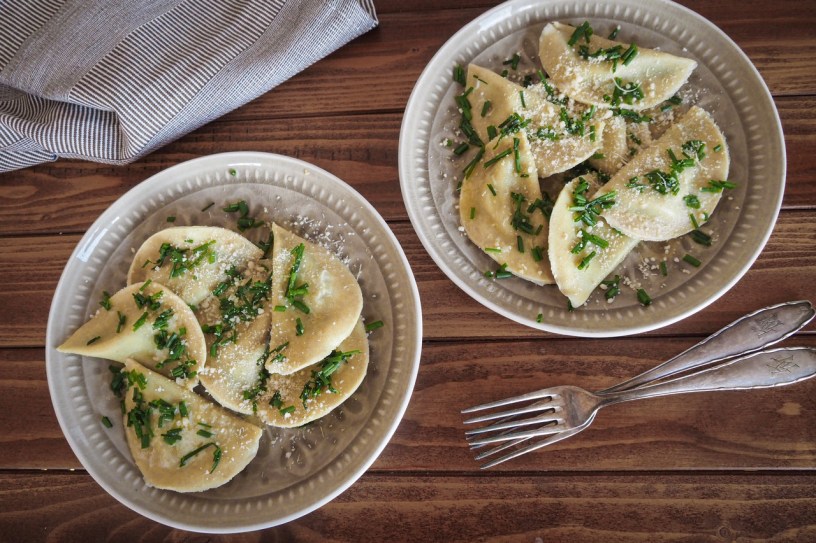
Schlutzkrapfen (mezzelune): Resembling the classic Italian ravioli, Schlutzkrapfen are originally from Val Pusteria in South Tyrol where they have been documented for the first time around 300 years ago. The dish takes its Italian name, mezzelune, from the half-moon shape of the pasta. The dough is made from rye or buckwheat flour, with the filling typically made with spinach, parsley and ricotta cheese. That said, you will also find versions stuffed with potatoes, meat, mushrooms, and turnips. Schlutzkrapfen are boiled in water (just like ravioli) and traditionally served drizzled with melted brown butter and sprinkled with chives.
Bauerngröstel: This popular local version of roasted potatoes is widely served at the alpine mountain huts and usually considered a single dish for lunch. Pan-fried with onions and crisp bacon or other meat, it is typically served with a fried egg on top.
White asparagus with Bozner sauce: The dish features the tender, white asparagus stems grown locally across South Tyrol (which are locally in season from the end of March to the end of May) The sauce takes its name from the city of Bozen (Bolzano), where it was originally created. It is made from finely chopped, hard-boiled eggs, mustard, salt, pepper, plenty of chives, lemon juice and butter. The dish is often served accompanied by boiled potatoes and ham. Locally, the dish is particularly popular for Easter.
Polenta with stew or sausage: Polenta, the popular dish of ground cornmeal originating from the northern part of Italy is traditionally cooked in a copper cauldron, and can be served either creamy and warm, grilled or fried until crispy. Particularly in the alpine areas it is often mixed with local cheese or butter for richness and served with a rich game stew (typically venison, deer, or wild boar) or a hearty sausage.
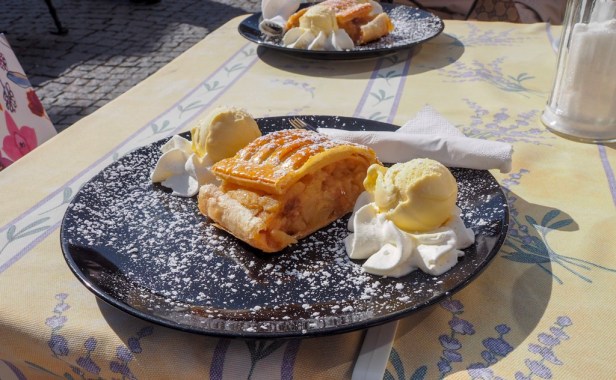
Strudel di Mele (apple strudel): South Tyrol is one of Europe’s major apple growing areas. Visit in spring and the valleys will be a sea of light pink and white blossoms. Thus, it’s not surprising apple strudel is among the most popular local desserts. Made of thin layers of crisp puff pastry and filled with juicy, succulent apples, raisins, pine nuts, and cinnamon apple strudel is typically served with vanilla ice cream or a still warm vanilla sauce.
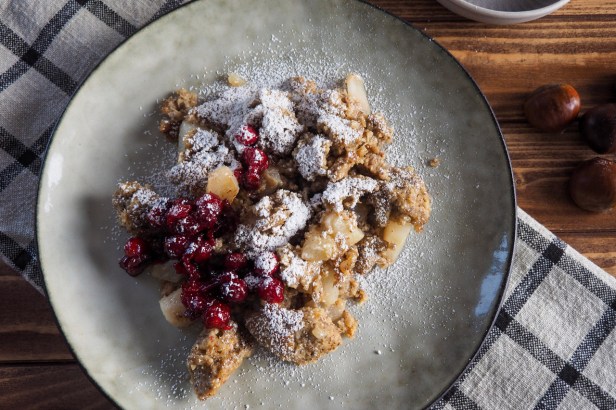
Kaiserschmarren: This hugely popular dessert is essentially a shredded pancake. The name goes back to Emperor Franz Joseph of Austria who allegedly asked his cook to prepare him a crepe. However, the cook forgot the crepe on the oven as he was busy to finalize dinner for the royal family. The crepe burned (slightly) and then even broke when the cook tried to flip it to the other side. So, he tore it completely apart, covered the pieces with sugar and jam. It became the emperor’s favourite dessert, and once you have tried you will know why. Kaiserschmarren is traditionally served with cranberry or black currant jam, but over time many different versions have emerged. Today, it will be served all sorts of jams, fruit compotes, and chocolate or vanilla sauce.
Monte Bianco: This delicious dessert takes its name from Monte Bianco or Mont Blanc (depending on which side of this famous mountain spanning Valle D’Aosta in Italy and France you are) as the base of cooked chestnuts topped with stiff peaks of whipped cream resemble the snow-capped mountain.
Are you familiar with any of these traditional local dishes? Which ones would you like to order on your next trip to the Italian Alps?
 Carrots and Tigers
Obsessed with kaiserschmarren
LikeLike