The popular Easter dishes to try when you travel in Europe, or when looking for a twist to your Easter menu at home.
Six weeks to go until Good Friday. This year, the long Easter weekend arrives particularly early.
So, it’s about time to dust off your spring and particularly Easter decorations, from colourful painted eggs to wooden Easter bunnies, colourful baskets and more to refresh your home and add the vibe of new beginnings.
And while six weeks sounds like plenty of time, if you are planning to entertain at home this year, it is never too early thinking about the food you want to put on the table.
For those traditionally celebrating Easter, this might be a no brainer as you will opt to prepare a traditional Easter menu with the popular local Easter dishes. On the other hand, if you are anything like me, you might want to add something new or surprise your family with an entirely different menu this year.
Or perhaps you are planning to travel during the Easter period, visiting new destinations and wanting to explore the local cuisine.
So, let me take you on a journey through the different countries across Europe celebrating Easter and the traditional dishes you can expect to find on local menus.
From sweet to savoury, these are the most popular dishes served for Easter around Europe
A holiday that has its roots in old pagan rituals celebrating the arrival of spring clearly means the focus will be on fresh seasonal spring produce.
Otherwise, each country has its own unique traditions, and this is clearly mirrored in the traditional Easter dishes you can expect to find across Europe.
Despite all the regional and local differences, eggs, sweet breads and lamb are popular stables across most European countries celebrating Easter. Along with lamb and bunny shaped cakes.
In many European countries, Easter Sunday starts with a sumptuous breakfast or a extended Easter brunch, combining breakfast and lunch.
Chocolate eggs and bunnies
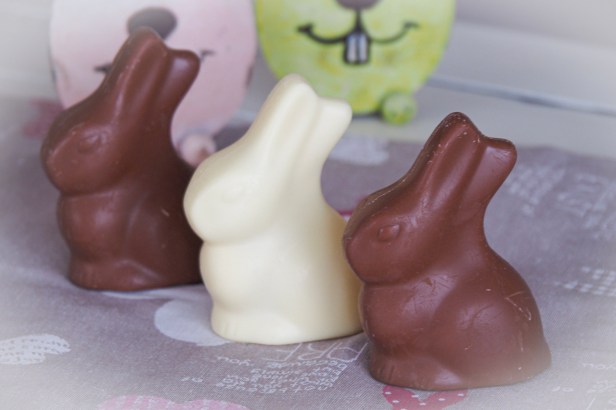
Who is not familiar with these sweet delicacies? Chocolates shaped like bunnies, chicken and eggs are popular around the world. They come in all sizes and with different chocolate flavours. Particularly the eggs are often stuffed with salted caramel, pistachio cream, passion fruit, buttercream, tropical coconut, and anything else you can imagine.
Various egg dishes
Eggs are clearly a centrepiece during the Easter period, and a wide range of egg-based dishes are served across Europe over the long Easter weekend. In pagan times, they were considered to represent new life, rebirth, fertility, and the beginning of spring.
The most popular include hard boiled eggs, either dyed or painted in a variety of shades.
Otherwise, eggs are a stable for breakfast on Easter Sunday made in all sorts of styles from scrambled to fried, eggs Benedikt, omelettes and more.
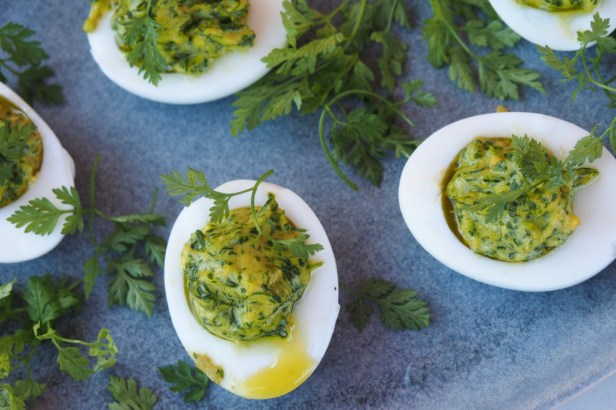
Meanwhile, devilled eggs are another popular way to serve eggs during Easter. They come in nearly unlimited variations, and the sometimes colourful decorations make them another beautiful showstopper on the table.
Sweet Easter Breads
Found across almost all of Europe, sweet Easter breads follow a similar pattern though some very specific regional differences exist. Typically, these sweet breads symbolize the awaking of nature and new life and will be often decorated with coloured hard-boiled eggs.
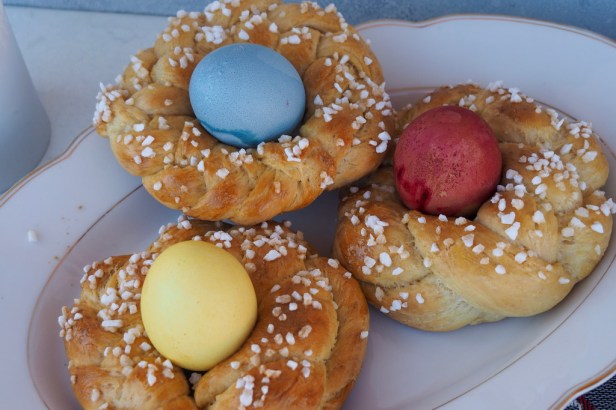
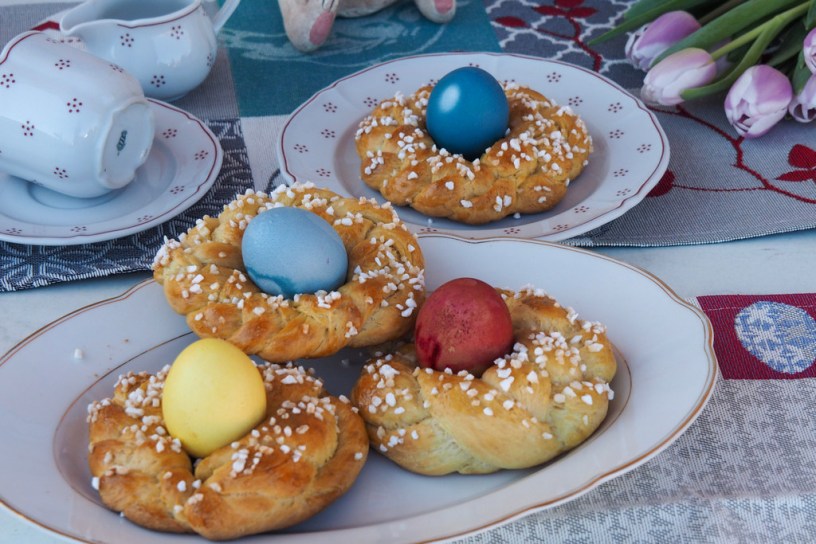
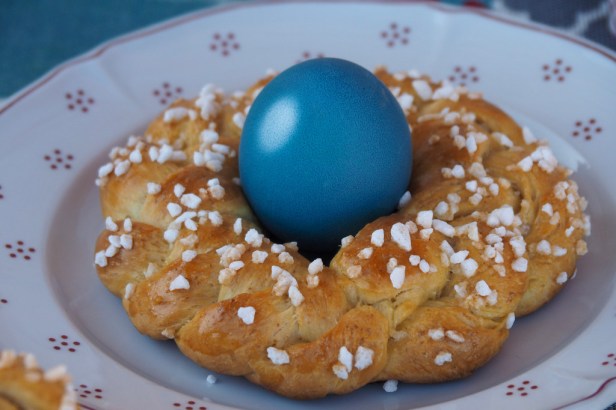
Osterzopf (Germany) are sweet breads traditionally decorated with painted hard-cooked eggs. They come in two distinct shapes, either a long braid or formed into a wreath. In addition, the bread is prepared either plain or stuffed with raisins, hazelnuts, candid fruits, poppy seed, and marzipan. Sometimes, there might be even savoury fillings like bacon or herbs like wild garlic. These sweet braids or wreaths are not only delicious, but they are also a stunning decoration for the Easter breakfast or brunch table.Get the recipe here.
Colomba Pascale (Italy), the dove-shaped sweet bread the picks up on the famous panettone and pandoro popular during the Advent and Christmas period. It is made with sourdough fermentation methods to create a light, soft dough which is shaped into a dove to symbolise peace and the Holy Spirit. Traditionally flavoured with candied orange peel and dried fruit, newer variations now include a wide range of different custard fillings, from the classic vanilla to chocolate, lemon, and pistachio. That said, Colomba di Pasque is one of the Italian foods regulated under Italian law, determining the ingredients and characteristics of this sweet bread.
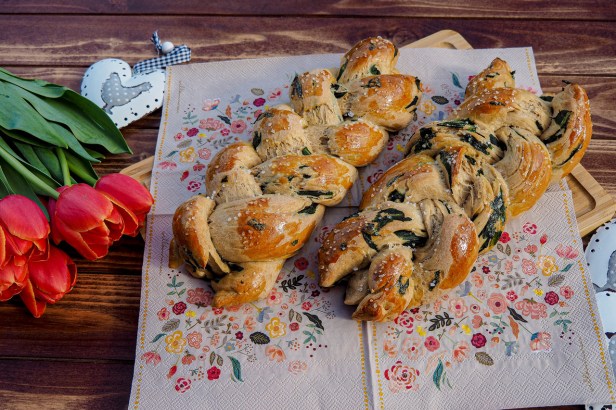
Osterpinze (Austria), while originally from the Veneto and Friaul regions of northern Italy, today is a popular sweet bread made during the Easter period in Austria, and nearby Croatia and Slovakia. The sweet bread is based on an enriched yeasted dough that is slightly sweetened and typically flavoured with anise and perhaps citrus peels and aromatic liqueurs.
Hot cross buns are popular in the UK. These yeasted sweet buns filled with raisings and often lightly spiced, are sait to cement friendships when shared, while another legend claims the buns will protect the kitchen from evil spirits, preventing fires and ensuring all breads will rise.
Tsoureki (Greek Easter Bread) largely follows the braided sweet bread found in other countries. This variation is particularly rich in eggs and often flavoured with lemon zest and mahleb (seeds of ground cherry pits). It is traditionally decorated with one single red dyed hard-boiled egg placed at one end.
Paska, a rich, and slightly sweet egg-based bread is traditionally served across Eastern Europe (mostly Poland, Slovakia, Romania and Ukraine) for Easter. It consists of a brioche-like dough, sometimes studded with raisins or citrus, and usually, it is taken to church to be blessed.
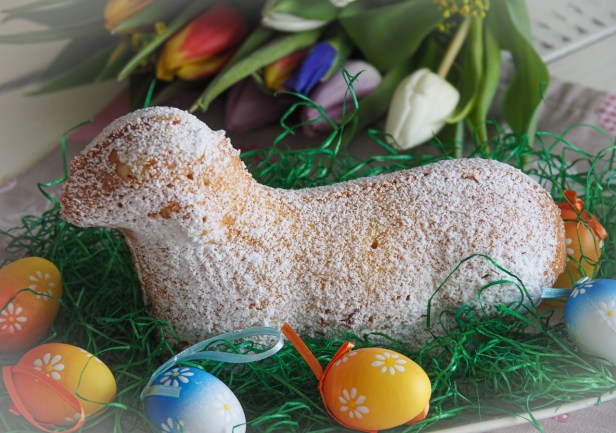
Easter Lamb Cakes are popular in many countries across Europe. They are baked in special lamb-shaped moulds and dusted with powdered sugar.
Carrot Cake is another staple in many European countries for the long Easter weekend. The origins are a bit obscure but considering the Easter bunny is typically pictured with carrots (or at least often) it sort of make sense to associate carrots with Easter. Plus, this is the time the first fresh carrots are harvested across Europe. Thus, it is no surprise that this vegetable is served in many spring dishes around Europe.
Babka Wielkanocna, the popular Easter cake from Poland very much resembles a Gugelhupf. Though it has a special ingredient, rum.
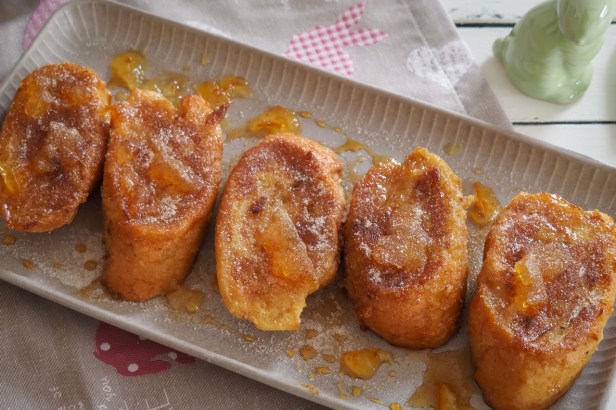
Torrijas represent the Spanish version of French toast. The biggest difference to the classic French toast is the addition of sherry to the soaking milk, and the bread is separately soaked first in milk and then eggs. The result is a much softer version of the French Toast with a distinct citrusy flavour to it. While this traditional dessert is particularly popular during Semana Santa (the week running up to the long Easter Weekend), you can usually find it on Spanish menus during the whole year. Find the recipe here.
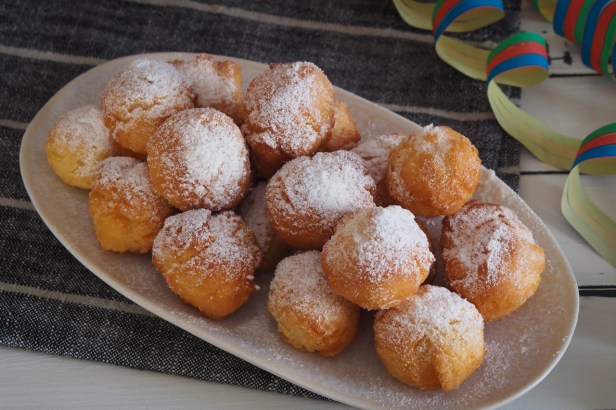
Bueñelos are another popular sweet enjoyed during Semana Santa in Spain – and many other Spanish speaking countries in South America. With different regions and countries adopting their own variations, in general bueñelos are fried dough balls covered in cinnamon and sugar. If they look familiar, you might have seen the various local Italian version made predominantly during the Carnival season!
Minestra di Pasqua, or Italian wedding soup, typically made with green vegetables, pork, beef and Italian sausages. It’s a local staple on the Easter menu, and the name symbolizes the flavour created by the marriage between the vegetables and the meat.
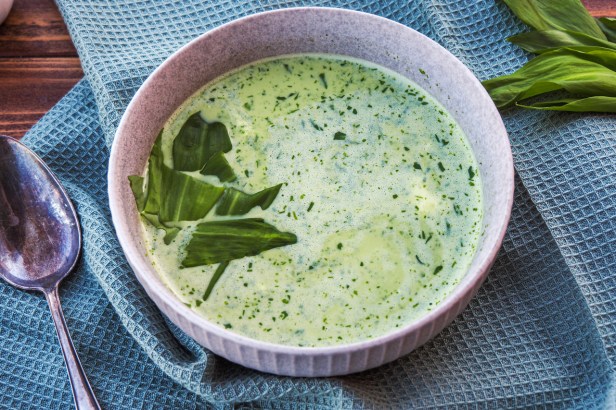
Wild garlic cream soup is a popular starter in Austria and increasingly Germany for Easter and the short timed wild garlic season in early spring. There are many variations, but this recipe is definitely my favourite
Asparagus soup is another staple that is starting to appear on menus around Easter when the first fresh stems of the season are harvested. Particularly popular in Germany, but it is usually found on menus across Europe.
White borscht or sour rye soup is popular in Poland. White borscht consists of a sour base, often made from fermented wheat flour (zakwas), and is typically served with sausage, bacon, potatoes, and hard-boiled eggs. Meanwhile, horseradish is often used for an extra kick.
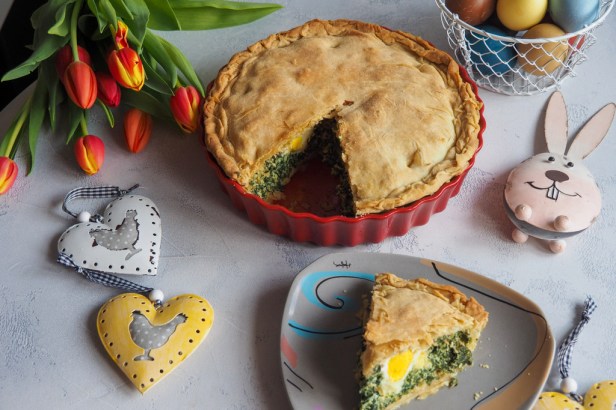
Torta Pasqualina, literally translated Easter cake, is a popular Italian savoury spinach and egg pie that was originally made with artichoke but today is usually made with chard leaves or spinach along with ricotta and parmesan cheese. The highlight of the pie consists of the hard-boiled – or in this case hard-baked – eggs folded into the pie. Originally from Liguria, the dish is now served on Easter Sunday across the whole country. See the recipe here.
Roast Easter Lamb is a traditional Easter meal in many European countries, often served with herbs and seasonal vegetables. Variations include slow-cooked leg of lamb (popular in France and the UK), and the Italian milk-fed, roasted suckling lamb called abbacchio.
Easter ham is popular in several European countries. The dish goes back to the old tradition curing pork over the winter for consumption in early spring. It either comes glazed using combinations of brown sugar, honey, mustard, orange marmalade, or pineapple juice to create a sweet-savoury, caramelized crust or wrapped in bread dough. It is usually accompanied by young potatoes and green beans.
Bacalhau com natas, a creamy salt cod, is quite popular in Portugal. The dish consists of flaked salted cod, onions, and fried potato cubes simmered in a creamy béchamel sauce. Baked in a casserole until golden and bubbly, it is often seasoned with nutmeg and white pepper, creating a savoury, creamy, and pleasing dish.
Heading over to Scandinavia, several types of pickled herring (infused with spices, cloves and onion, or mustard) heavily feature on a traditional Easter menu.
Jansson’s temptation (Janssons frestelse) is also very common across Scandinavia and particularly Sweden. The dish resembles a gratin made from potatoes cut into strips and layered with onion and anchovies.
Curious to taste the different flavours of Easter around Europe? Safe this list for you next Easter family gathering at home, or when travelling over the Easter period.
 Carrots and Tigers