From ancient Roman architecture to world-class wine, Verona is arguably one of the most romantic cities in Italy.
Verona, the beautiful historic Italian city of Romeo and Juliett, just made headlines hosting the closing ceremony of the Milano-Cortina Winter Olympics, shortly after followed by the opening ceremony of the Paralympics.
While the transmissions of the two ceremonies predominantly centred on the choreographed event inside the Arena di Verona, there has been some additional footage revealing the outstanding beauty of the historic Italian city.
So, if what you spotted on television made you wonder if a visit to Verona would be worthwhile, let me tell you, this city has so much to offer that is absolutely deserves a spot on your bucket list.
To be honest, I am much likely biased, having called the nearby Valpolicella home for a while, including trips to Verona on a nearly daily basis for language courses over a couple of months. But the city’s medieval charm, featuring an amazing Roman, medieval, and Renaissance architecture coupled with the lively atmosphere of its major town squares lined with cafés and restaurants never stopped to amaze me.
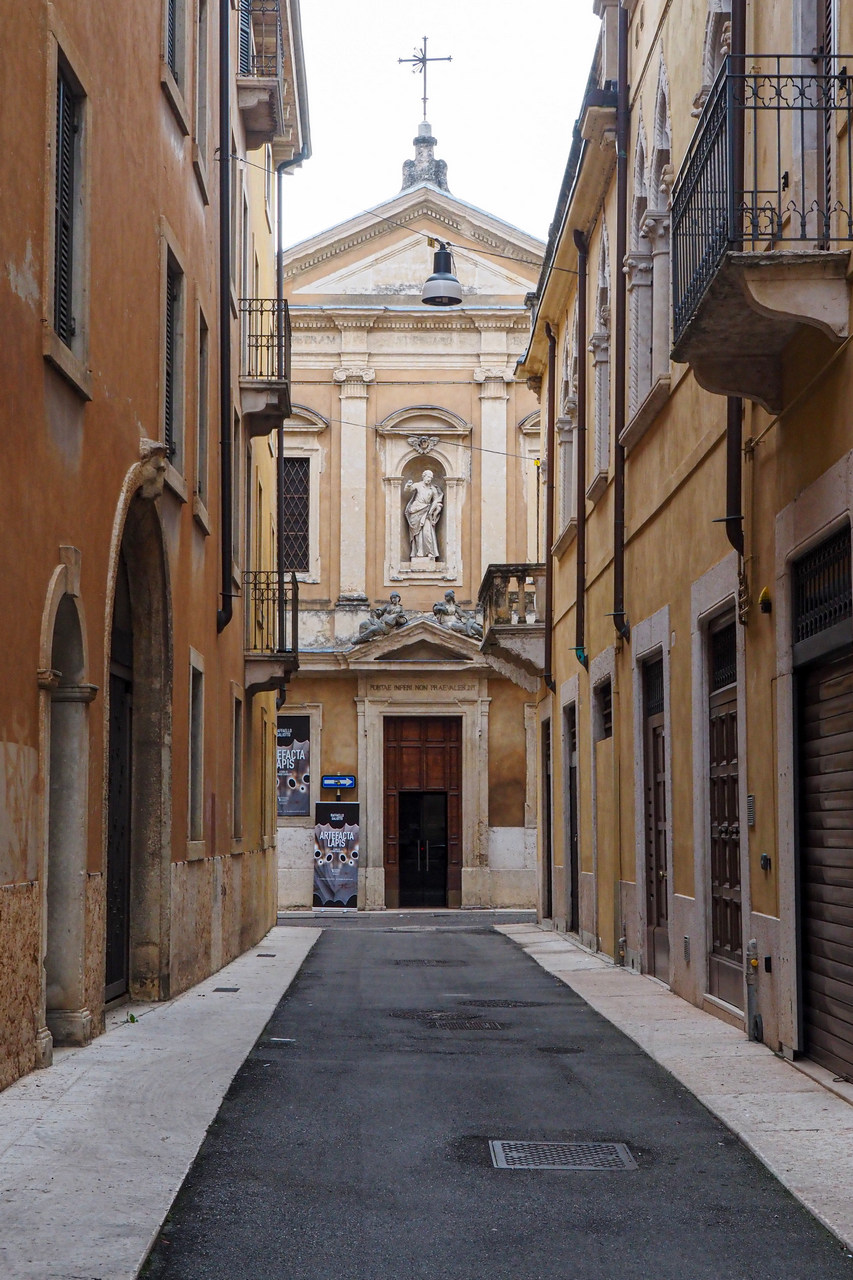
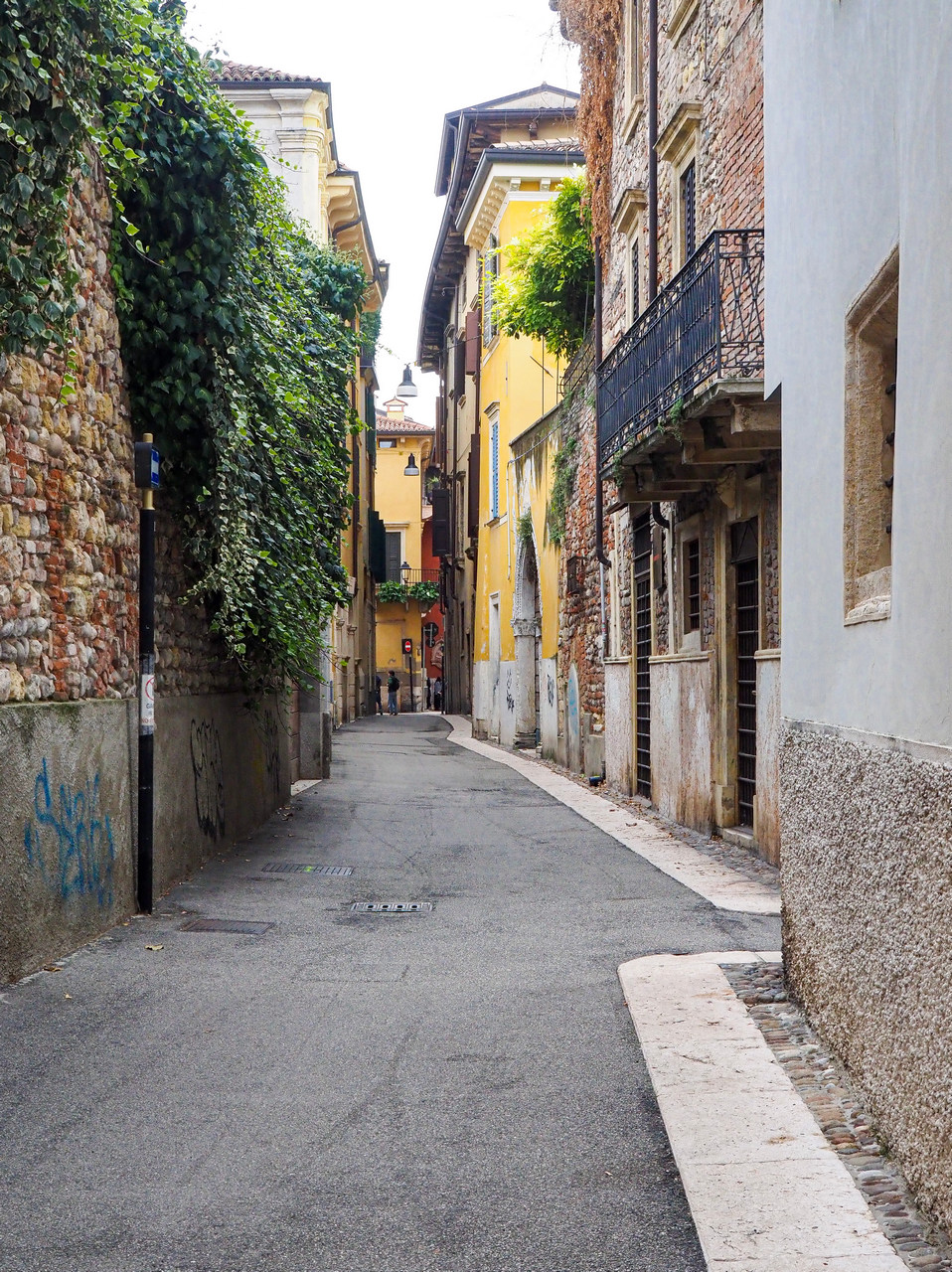
The city of Romeo and Juliet is certainly not an unknown one. Considering the number of tourists during the peak summer season, it is also far from being a hidden gem or lesser-know destination. But the beautiful city nestled on the Adige River boasting an UNESCO World Heritage listed historic core offers such a wealth of exciting things to discover, it absolutely deserves a spot on your bucket list.
Key Facts
- Located in the Veneto region in the northern part of Italy around 30 minutes from Lake Garda and 1.5 hours from Venice.
- The UNESCO-listed historic core boasts stunning Roman, medieval, and Renaissance architecture, along with lively beautiful squares, shops, cafés, wine bars and restaurants.
- From iconic local dishes to the excellent wines of the nearby Valpolicella, Soave and Lake Garda vineyards, Verona delivers an outstanding culinary experience.
How to reach Verona
The city located nearly halfway between Milan and Venice in the northern Italian region of Veneto has its own airport, Verona Valerio Catullo Airport, which is still widely known under the name Verona Villafranca Airport. There are numerous daily connections to many European international airports, so it is easy to reach Verona also from outside Europe without much hassle.
Otherwise, you can fly into Milan Linate or Venice and take the train to Verona. It takes around 20 minutes from Milan with the high-speed connection and one hour and 15 minutes from Venice.
What is the best time to visit Verona
As most cities, Verona is a year-round destination. That said, there are a couple of thinks to consider when picking the best time to visit.
The city usually experiences hot summers and mild winters, with the shoulder season typically warm and sunny. The summer months are clearly the most popular, coinciding with the open-air opera festival taking place inside the Arena. Meanwhile, winter, especially the month of December features the beautiful annual Christmas market.
What to do and see in Verona
Founded in the 1st century, the city which once was an important military stronghold started to thrive under the Scaliger family (during the 13th and14th centuries) and later as part of the Republic of Venice.
Today, the compact, walkable historic core is full of historic palazzi, churches, monuments and above all Italy’s third largest Roman amphitheatre.
Juliette’s balcony located on Via Cappello is clearly one of the main attractions, so be prepared for people queuing in front of the entrance to the courtyard where the balcony sits. I did not queue for a photo, considering the wait time on the day I was back in Verona. Passing the large crowd waiting, I could not but remember the many late mornings I passed the entry gate walking from the river where I had parked my car up to Piazza Erbe. There was barely anybody around in the small alleys away from the main squares and central Via Mazzini at the time (though we are talking 30 years ago).
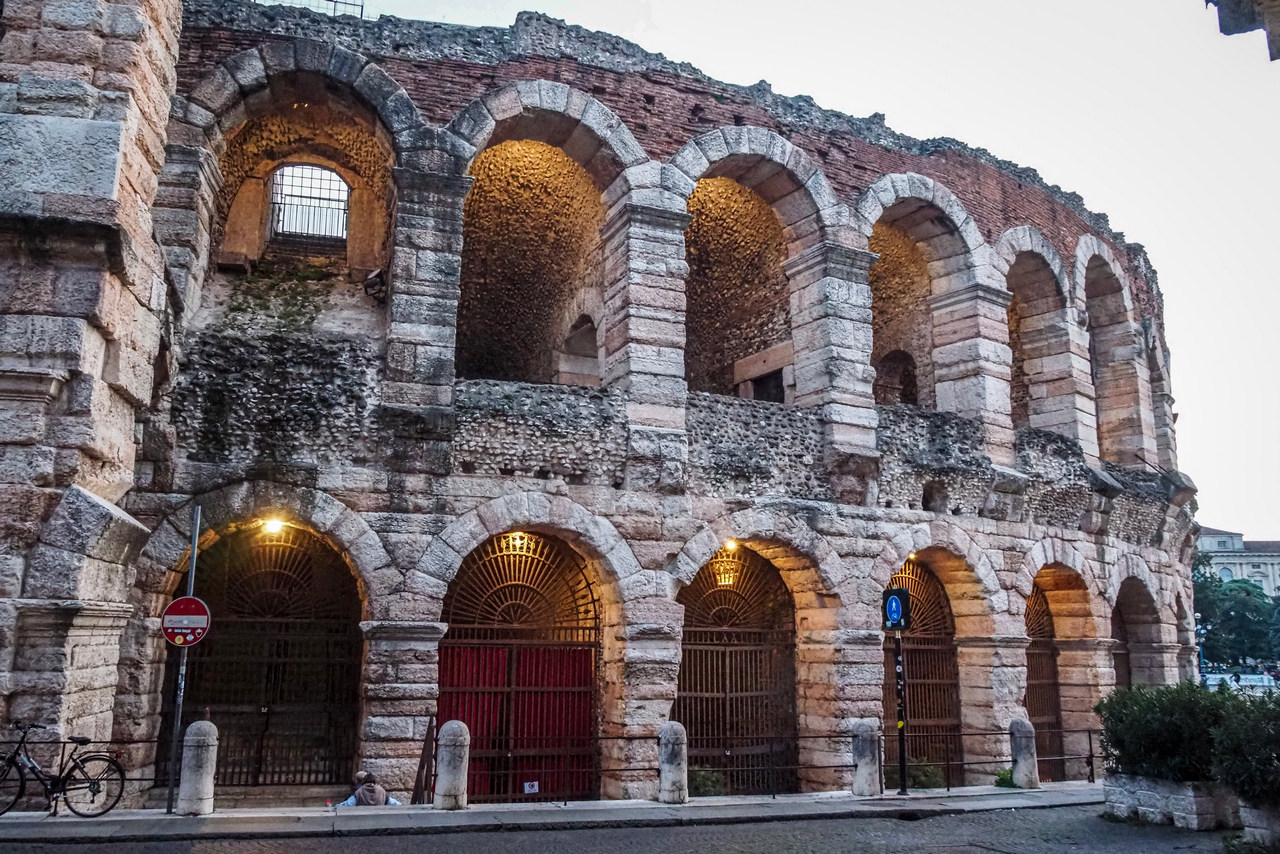

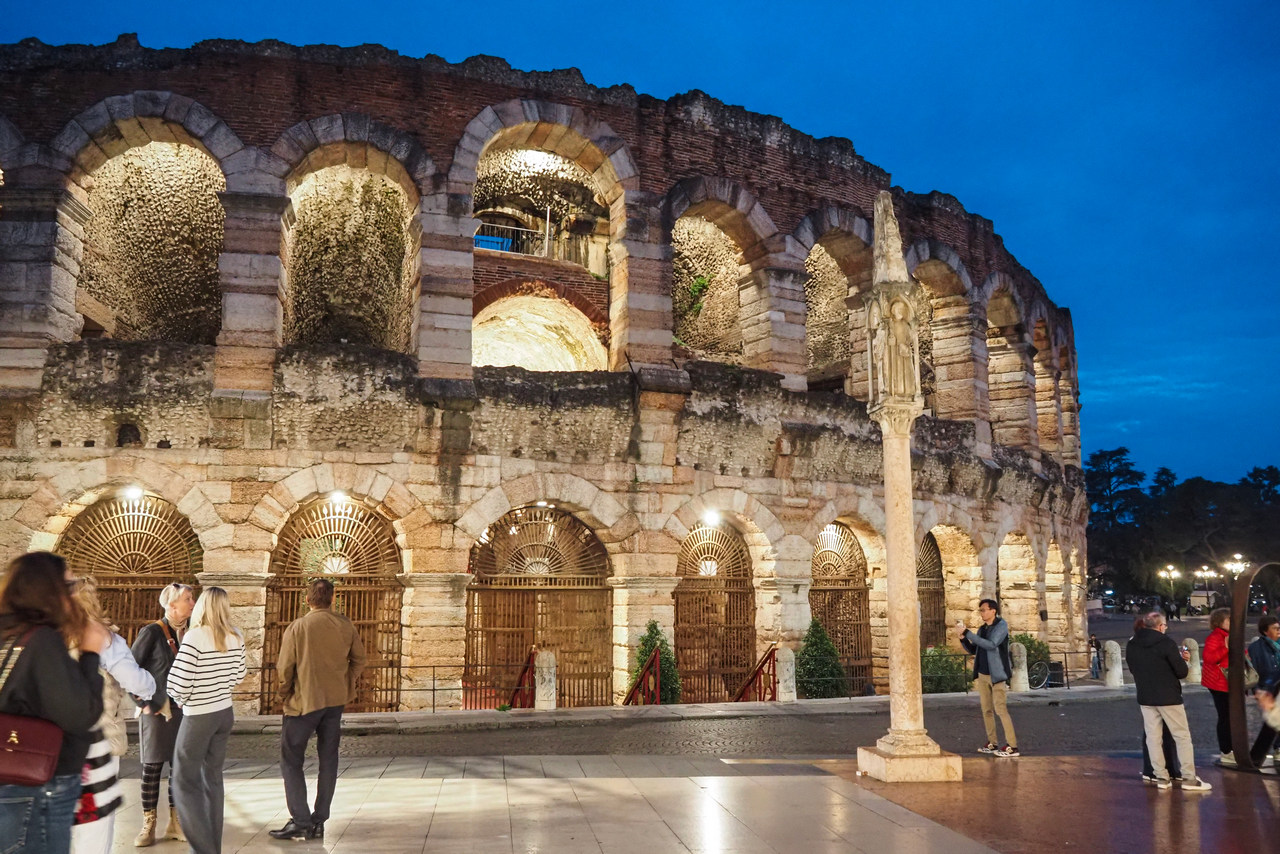
The other perhaps best-known landmark clearly is Verona Arena (Arena di Verona), a well-preserved Roman amphitheatre in Piazza Bra dating back to the 1st century. The site, where just a few weeks ago the fantastic closing ceremony of the Milano-Cortina Winter Olympics have taken place, is particularly famous for hosting world-class opera performances during the summer months. The elliptical shape makes sure the acoustics are phenomenal.
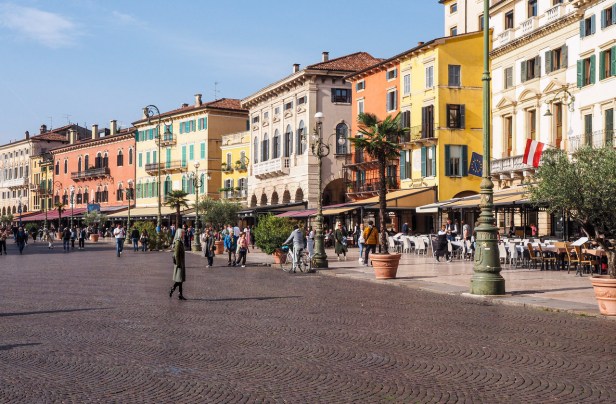
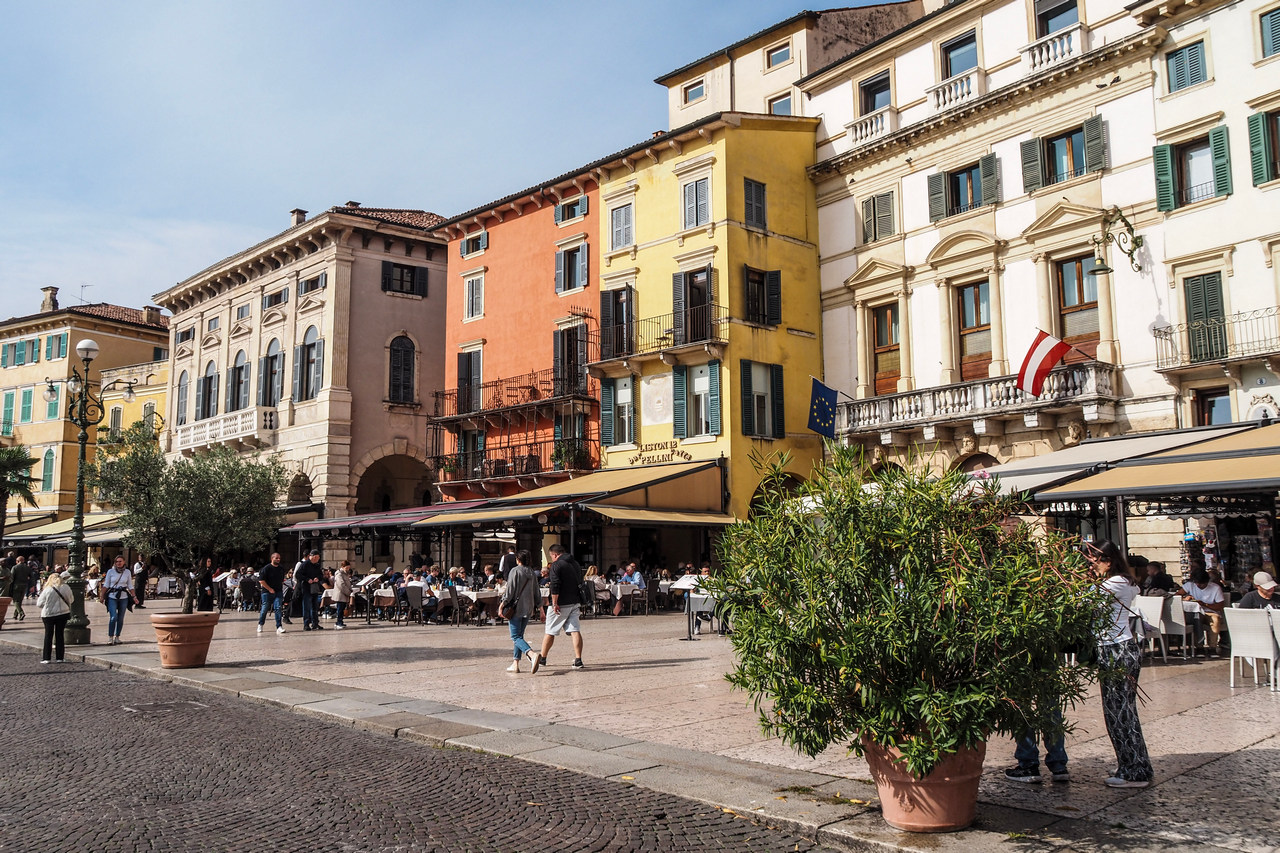
Piazza Bra itself features a row of colourful palazzi and a broad boardwalk built in the 18th century with pink marbles lined with outdoor cafés and restaurants. It is the perfect spot for people watching while enjoying a nice cappuccino or gelato.
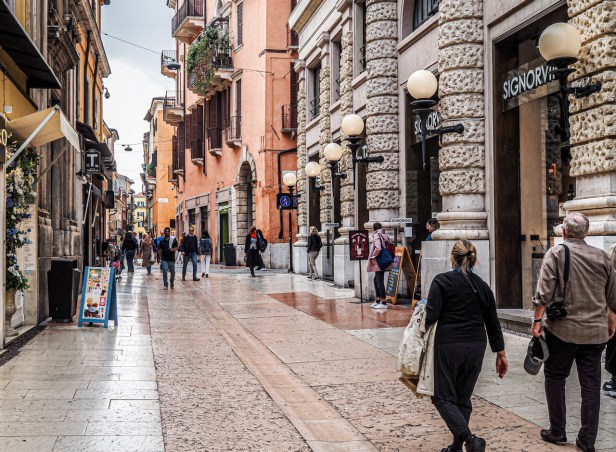
From Piazza Bra, take a stroll along Via Mazzini, the main shopping street. Today, it is mostly lined by international brands, including some designer names. In case you are looking for handcrafted local fashion or art, simply step into the alleys leading away from Via Mazzini. You will find some awesome stuff there.
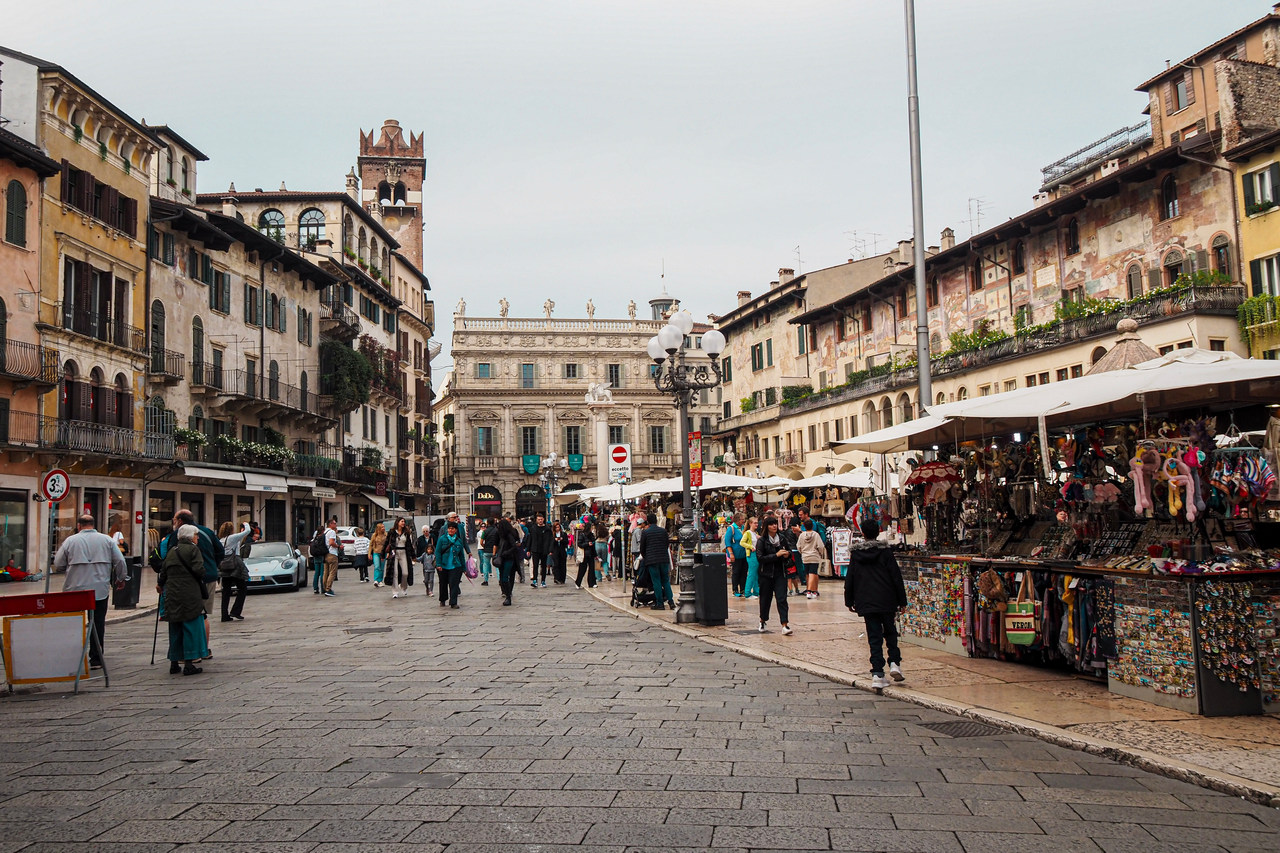
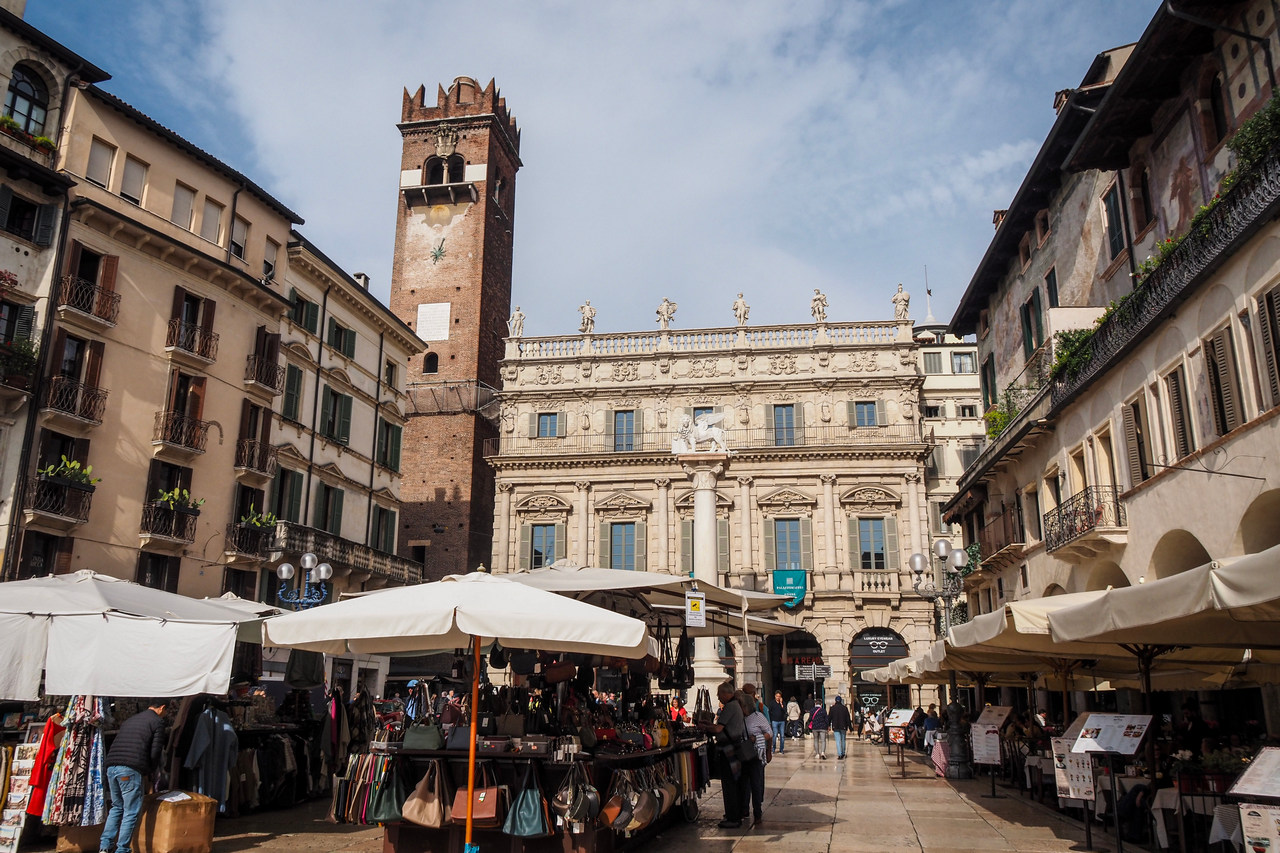
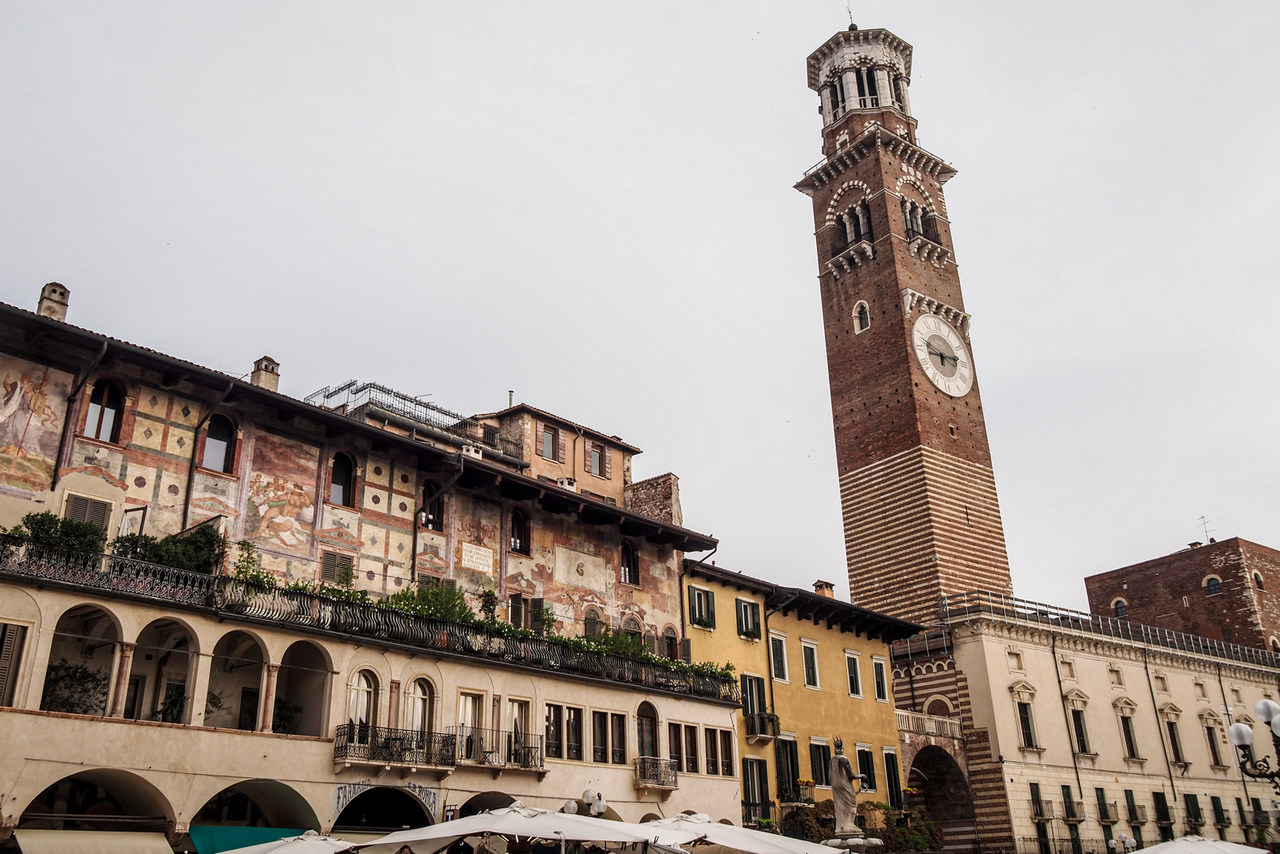
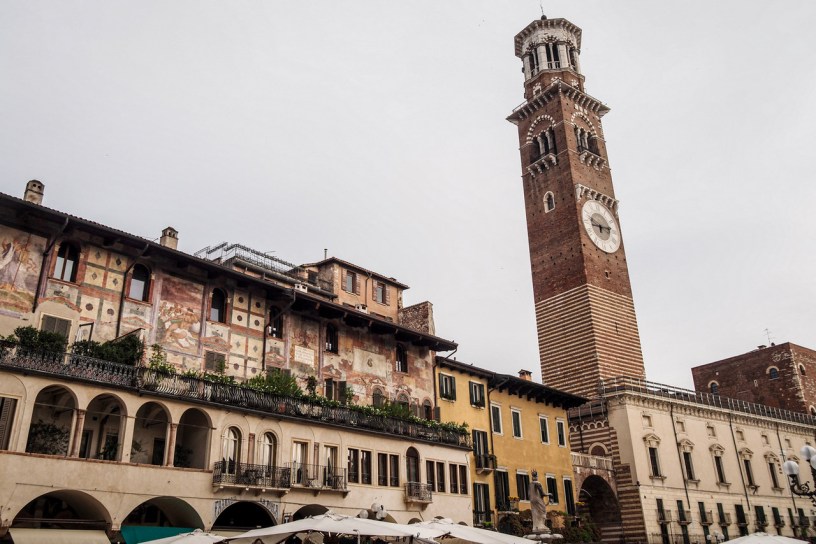
Piazza delle Erbe, translating to herb’s square is the historic heart of the city surrounded by frescoed buildings and lined by cafés and restaurants. It is the city’s oldest and most scenic square, once the home of the Roman Forum and later the city’s daily market, today the stalls sell mostly touristy items. Still, it’s worth taking some time to stroll around.
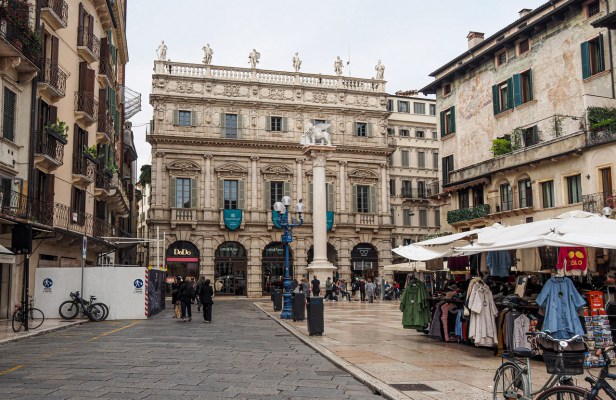
At the northern end of Piazza Erbe towers the stunning Baroque 17th century Palazzo Maffei featuring statues of gods. It is home to a ‘house museum’ featuring over 600 pieces from the Luigi Carlon art collection which spans 4,000 years and includes such masters like Picasso, Magritte, and Kandinsky, alongside ancient Veronese art and modern works.
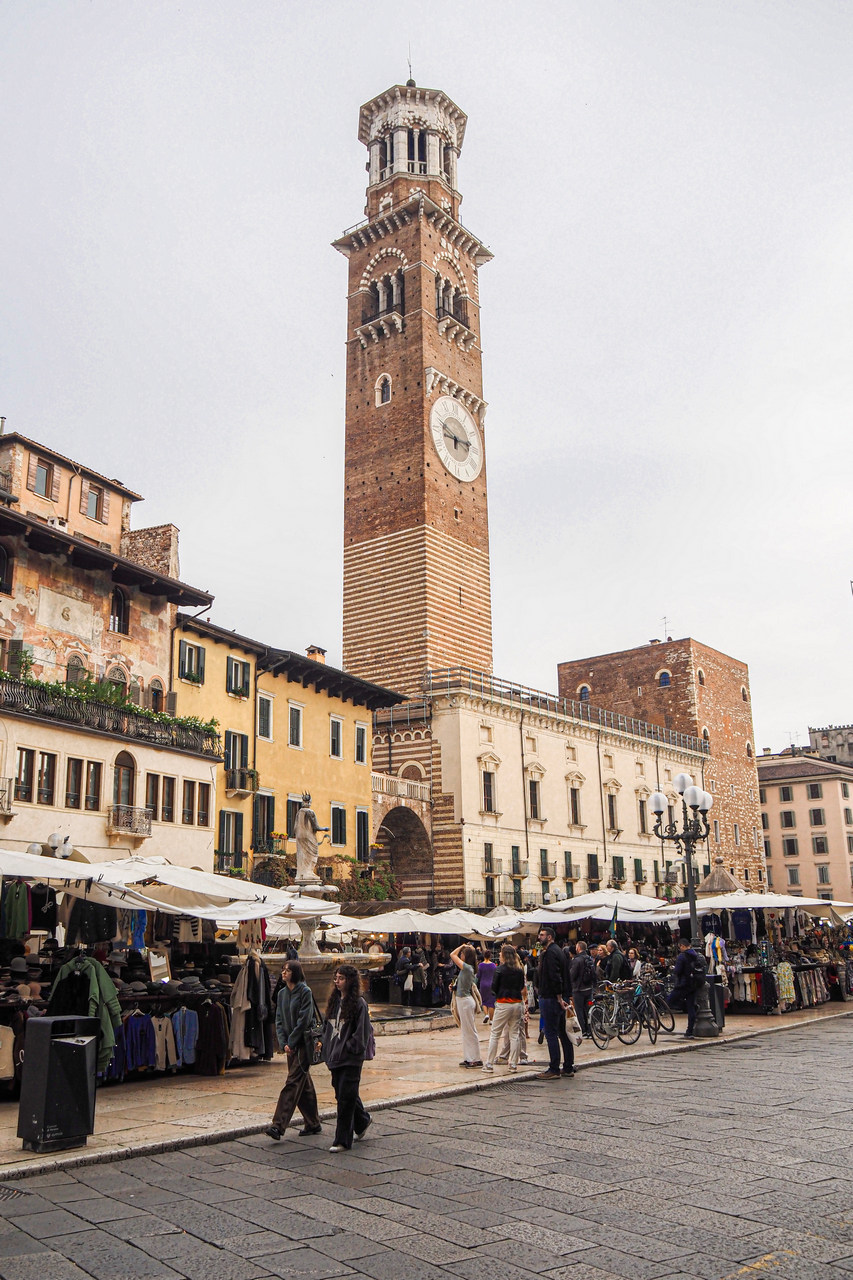
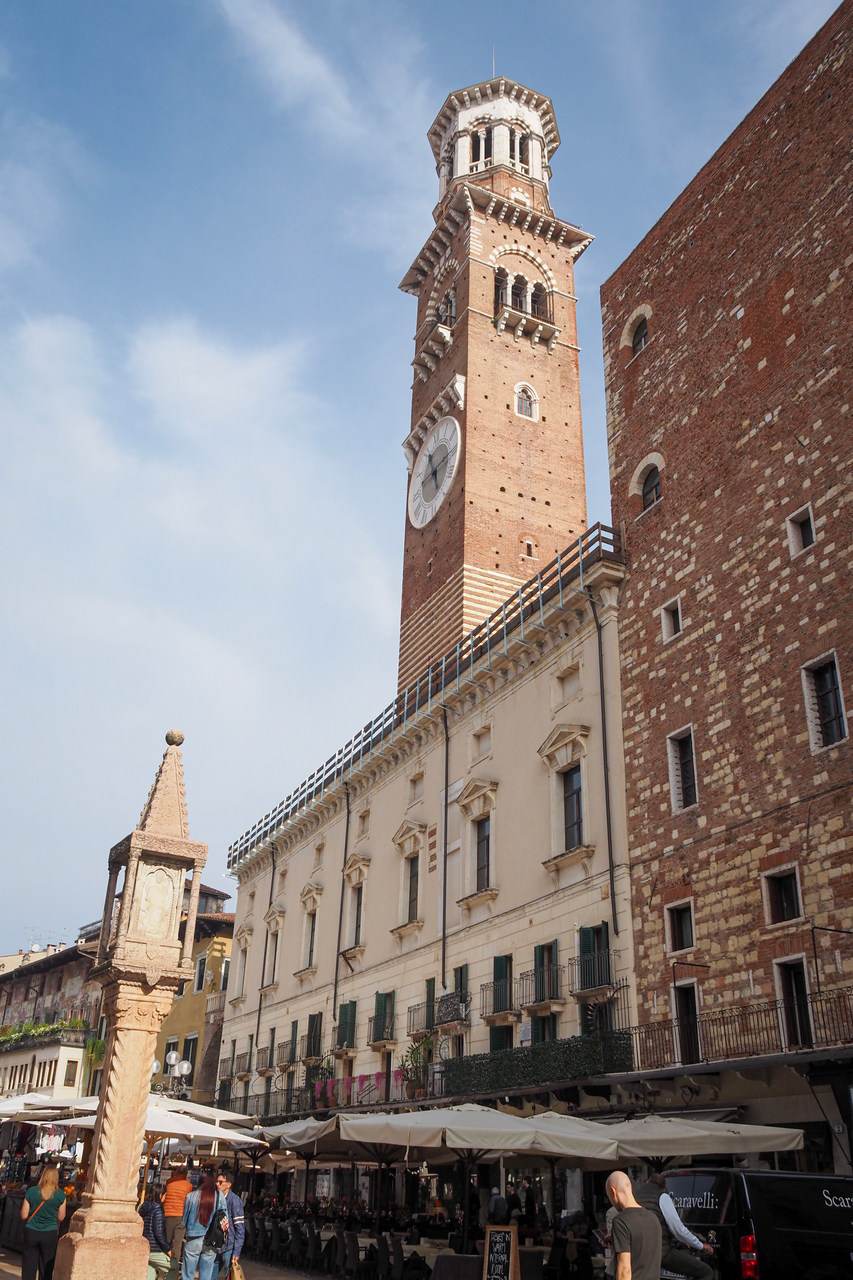
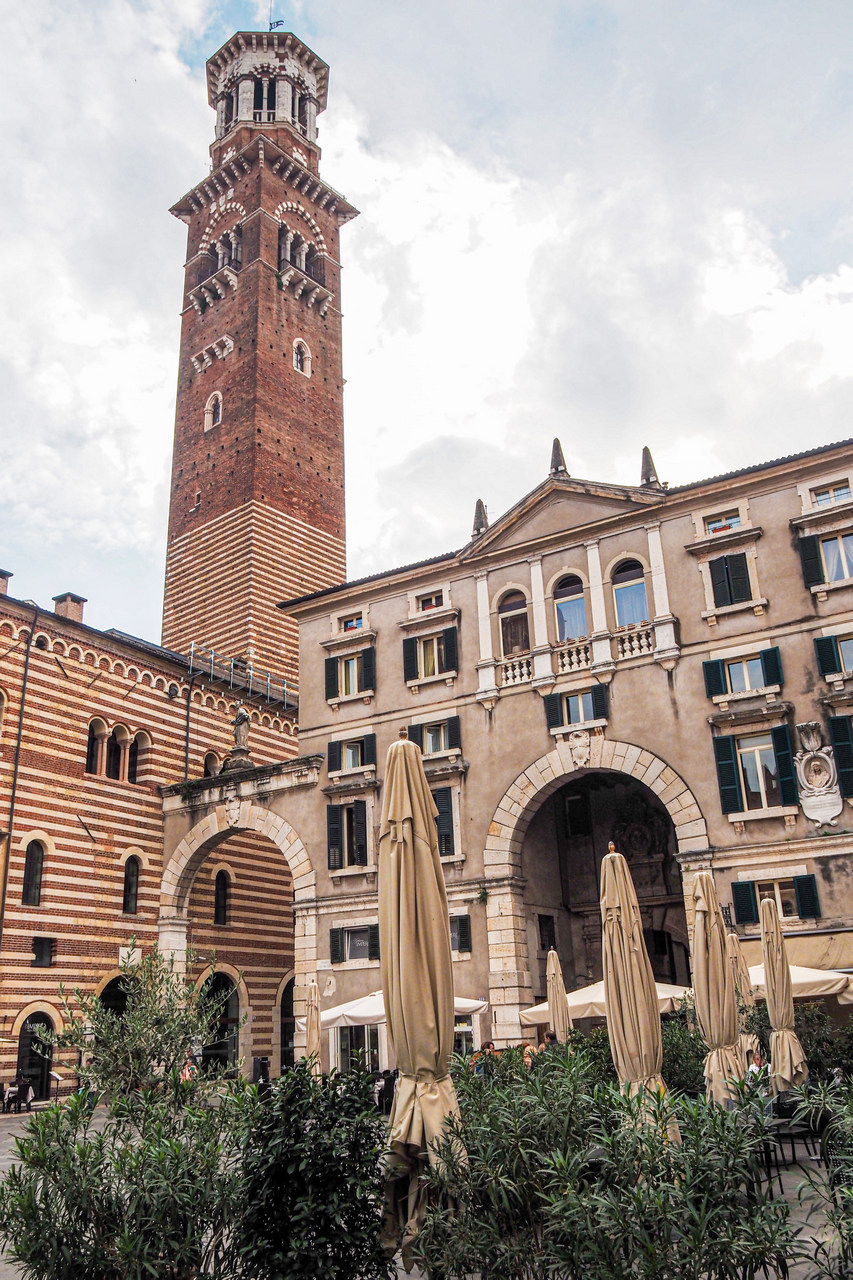
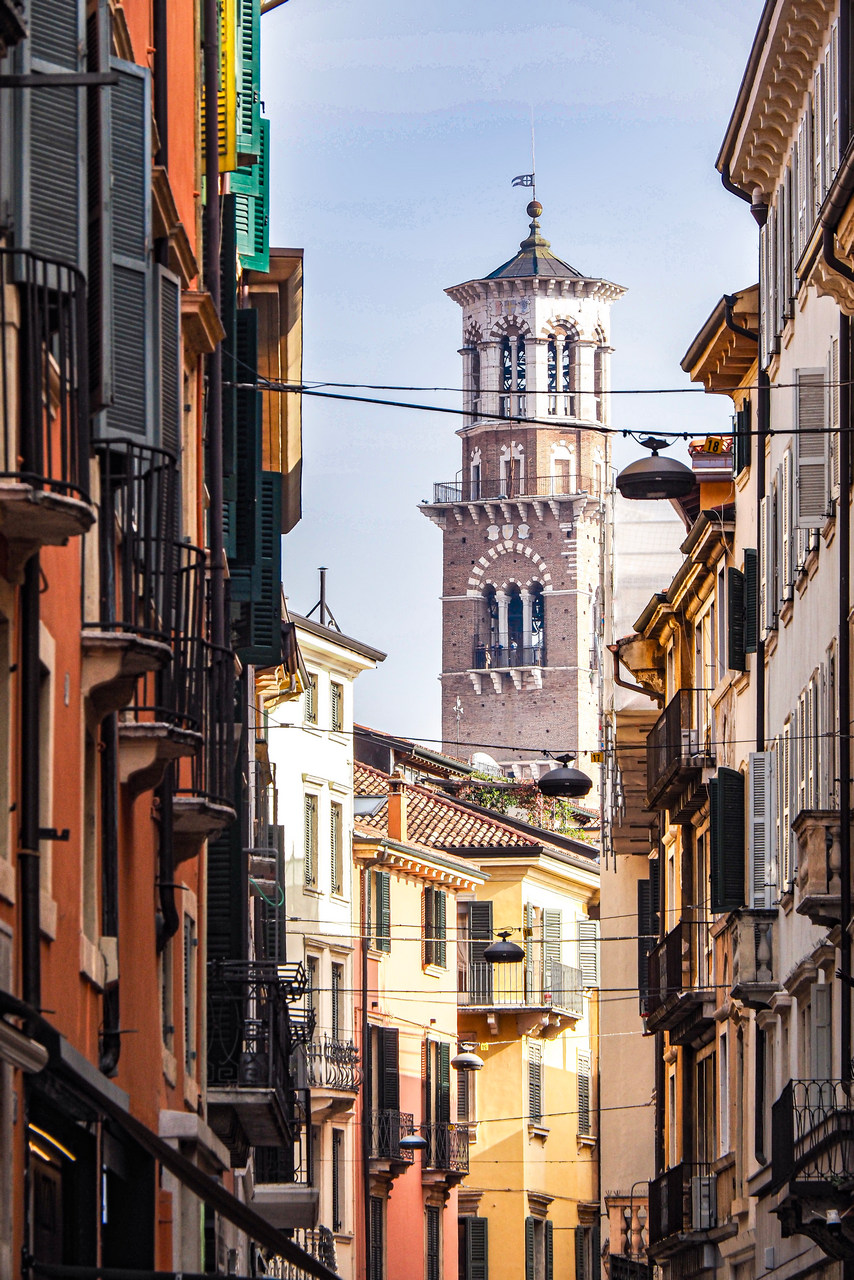
Take the elevator up Torre dei Lamberti (or if you are up to it, walk up the 238 steps). The 84-meter tower overlooking Piazza delle Erbe is the city’s highest tower and offers amazing panoramic views of the city and the surroundings.
On to Piazza dei Signori, hidden behind the busier Piazza delle Erbe. With less tourists venturing through the gates leading away from Piazza delle Erbe, this is where you start to see a more authentic Verona. Historically, the square served as Verona’s political and administrative hub and is surrounded by Renaissance and medieval palaces.
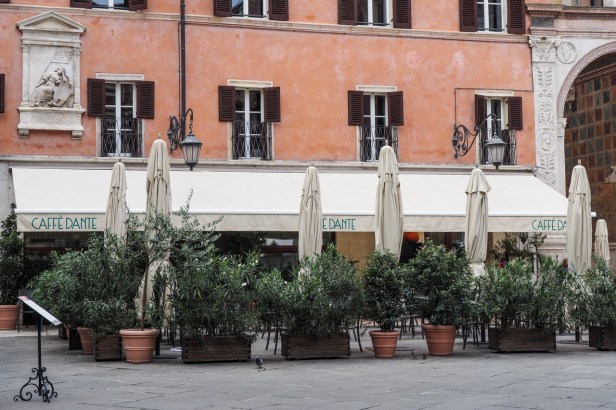
Sit down at one of the usually less crowded cafés, order a cappuccino and admire the beautiful statue of Dante Aleghieri.
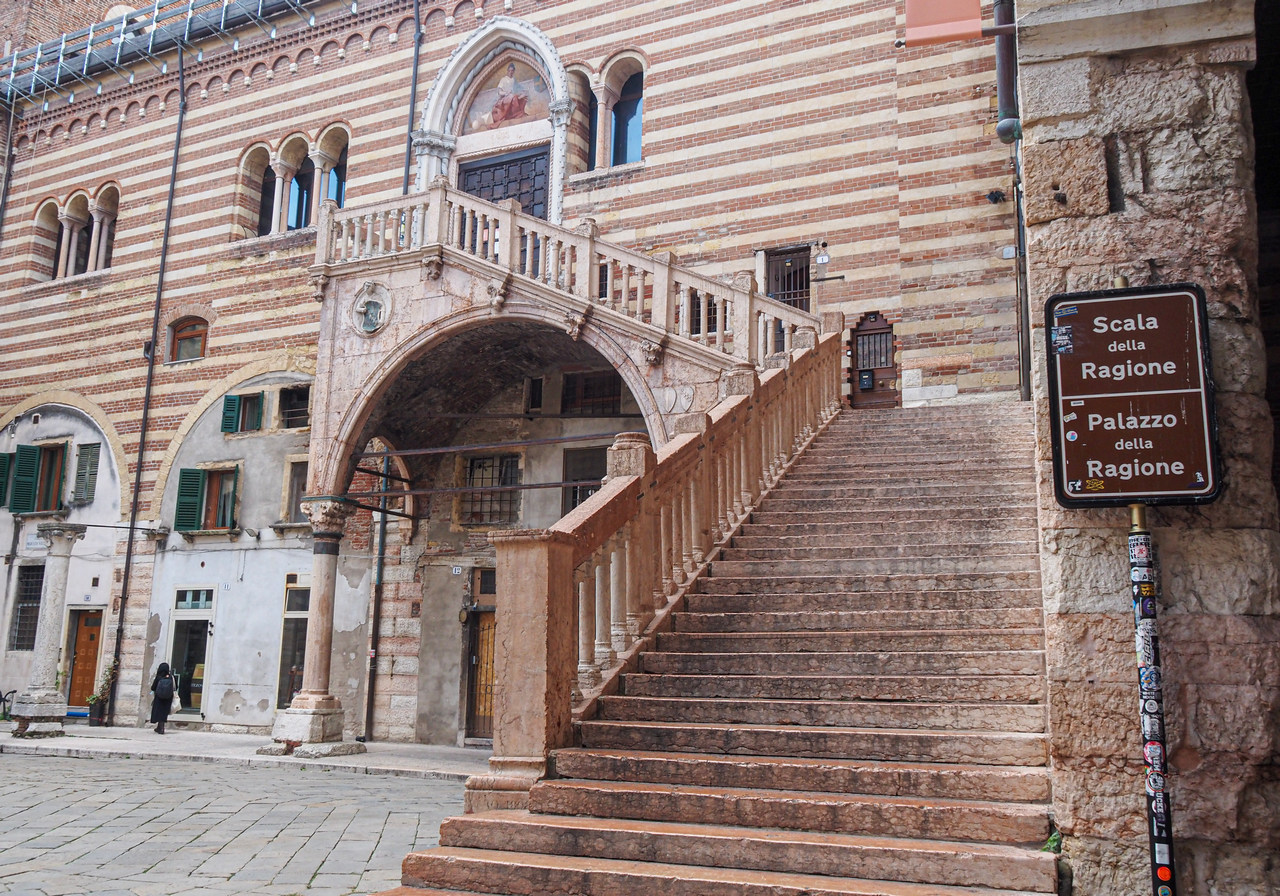
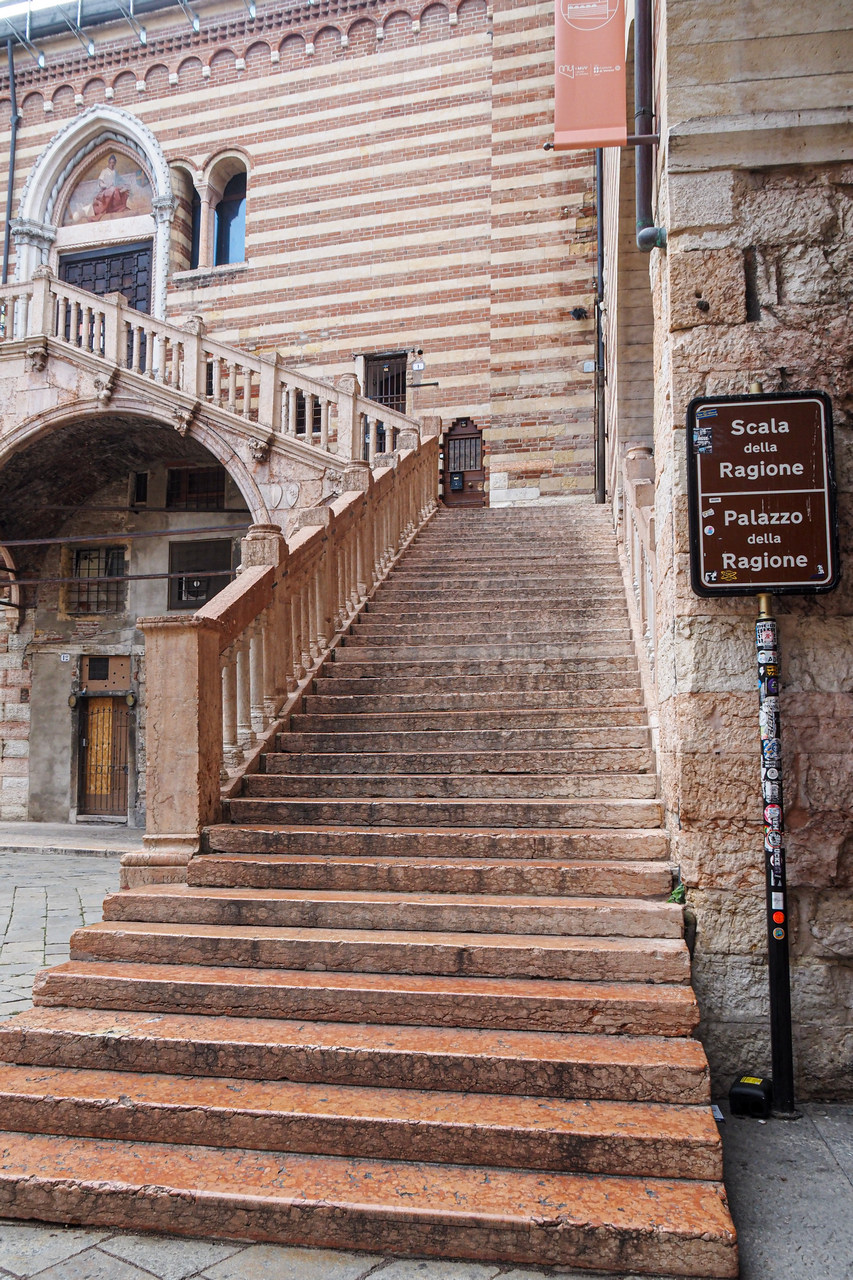
Directly next to Piazza dei Signori sits Palazzo della Ragione, a historic 12th-century Romanesque palace. Once the city’s administrative centre it features a striking facade of alternating tuff stone and brick along with the late-Gothic Scala della Ragione, a marble staircase.
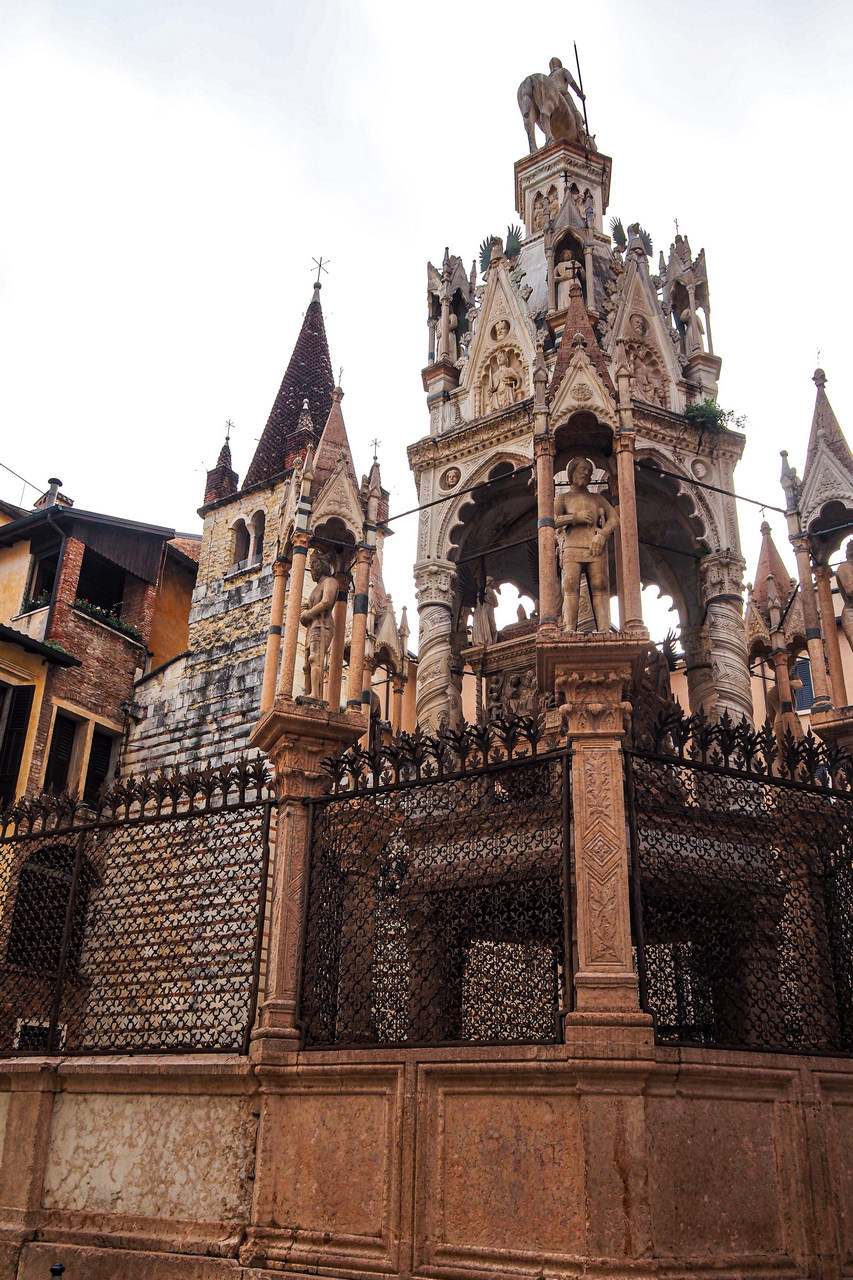
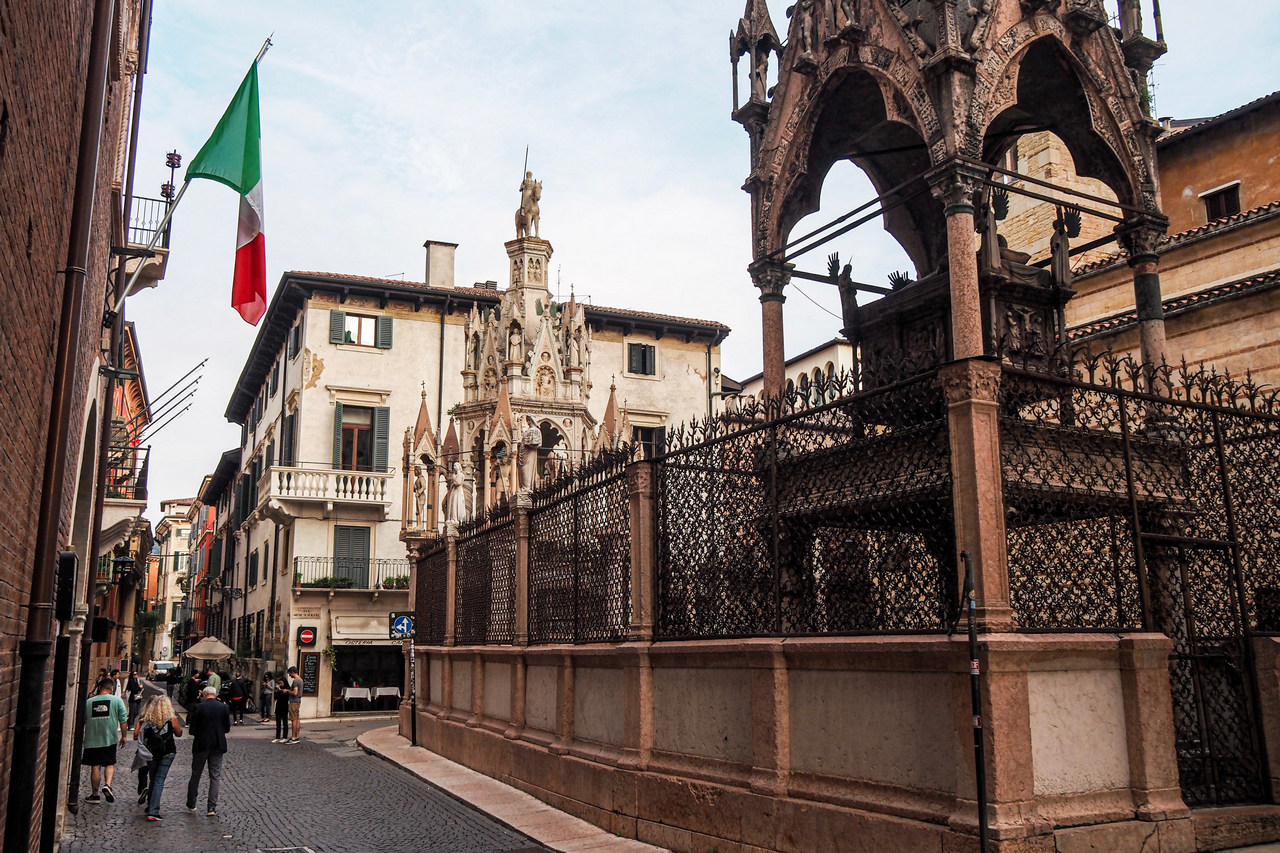
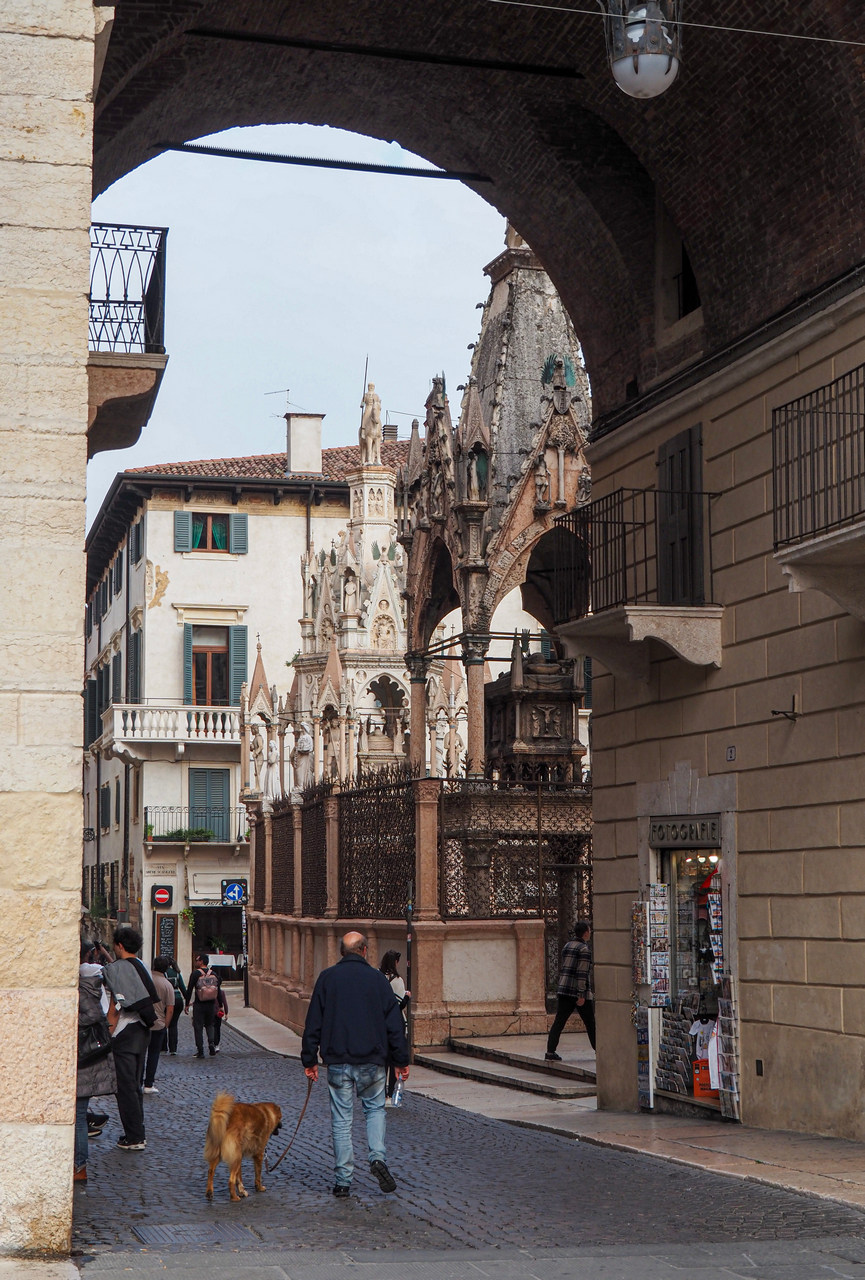
Just behind Piazza dei Signori, you will find the stunning Scaliger Tombs. Build by the former ruling Scaliger family (the Della Scala) the tombs are considered some of the finest pieces of Gothic architecture across all of Italy.
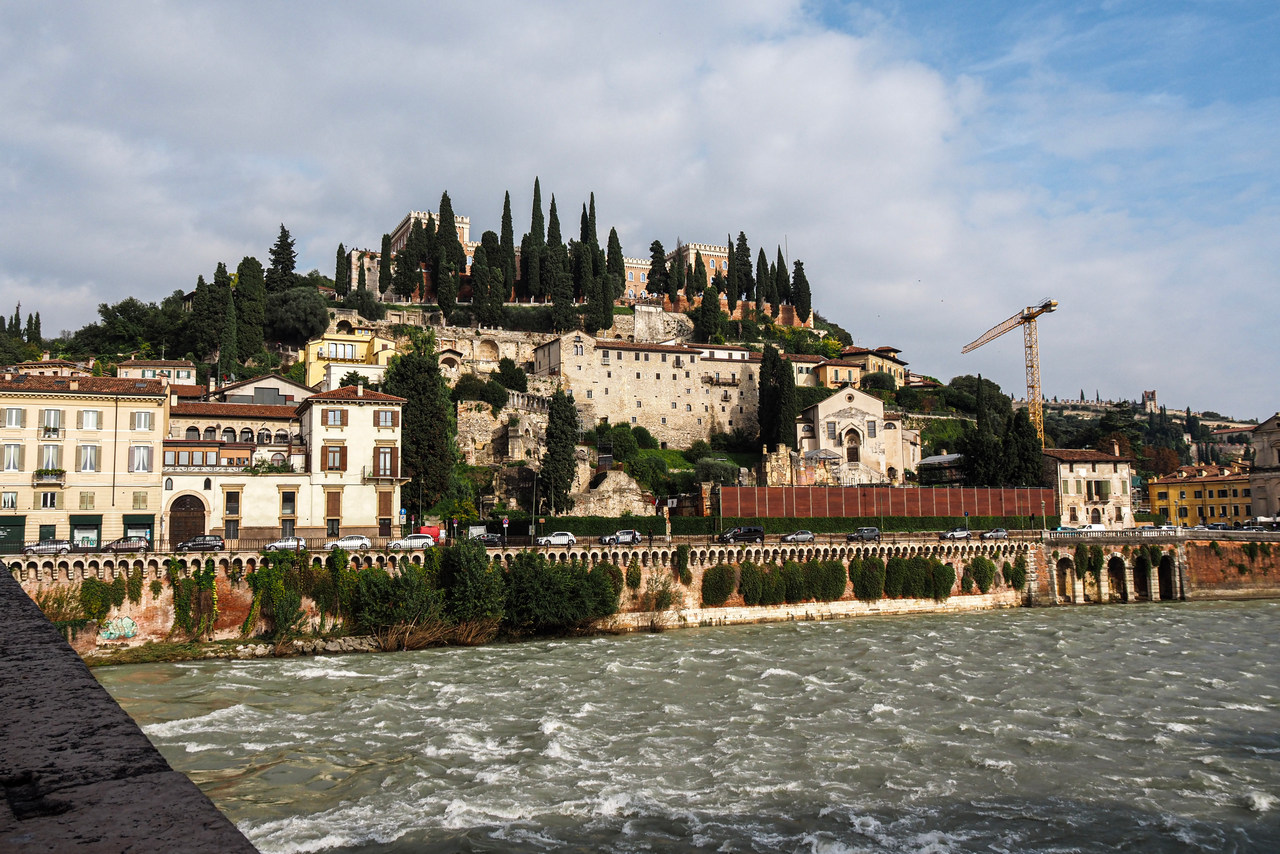
Stroll over the city’s oldest bridge, Ponte Pietra for a view over the river. The stone bridge was built by the Romans in 100 BC, though it has been rebuilt since various times. It is the main bridge connecting the historic core with Castel San Pietro.
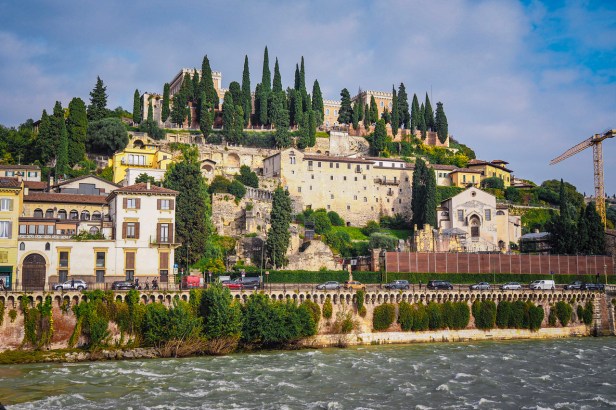
Head up to Castel San Pietro on the other side of the Adige River to take in the beautiful views over the city and Adige River. If you do not walk all the way up, there is a small funicular. A great time to visit is for sunset to watch the city turning a golden orange. It’s also the perfect time for an aperitivo at the resident bar up at the viewpoint. When visiting during the day, come in the morning to have the sun shining over the city.
Located right next to Castel San Pietro, perched between the hill and the Adige River you will find Teatro Romano, a picturesque open-air Roman Theatre which is still used for some performances today.
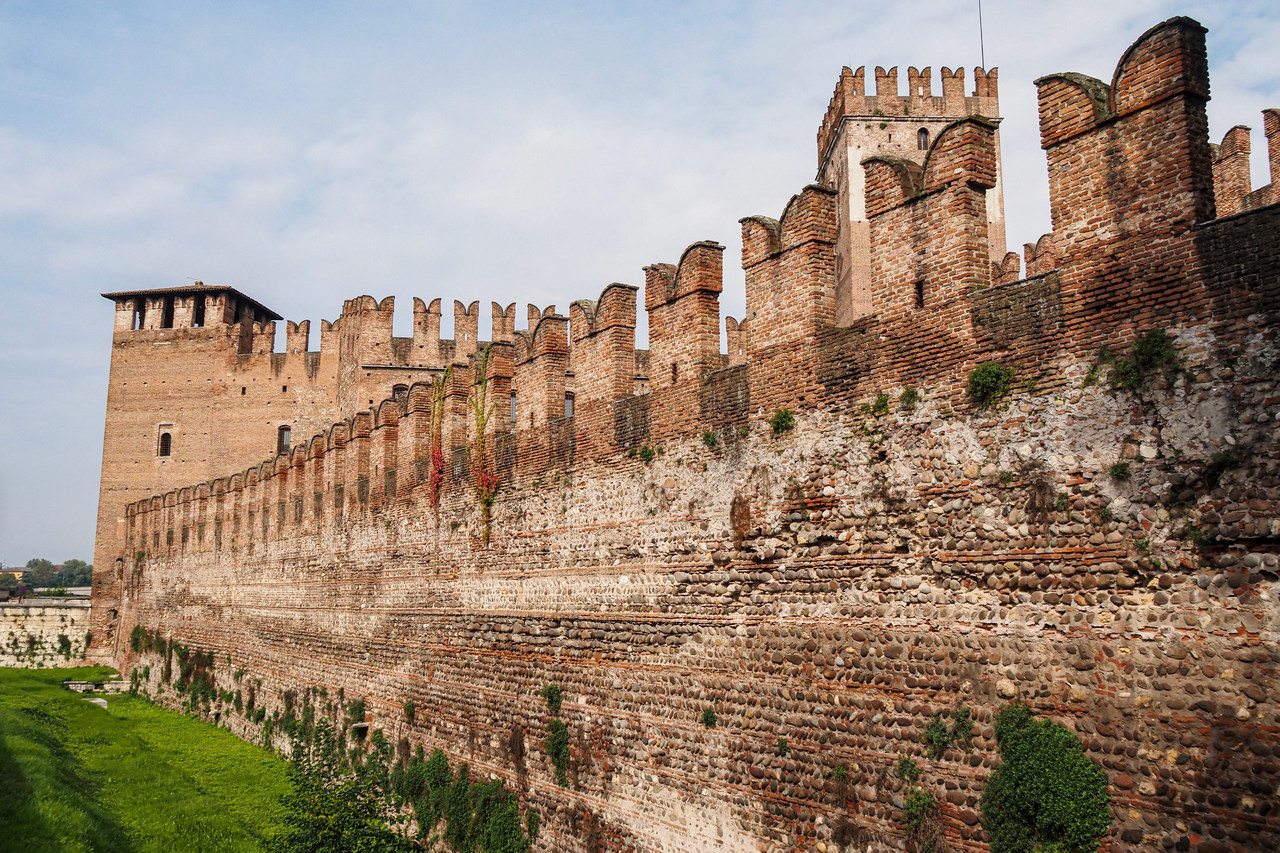
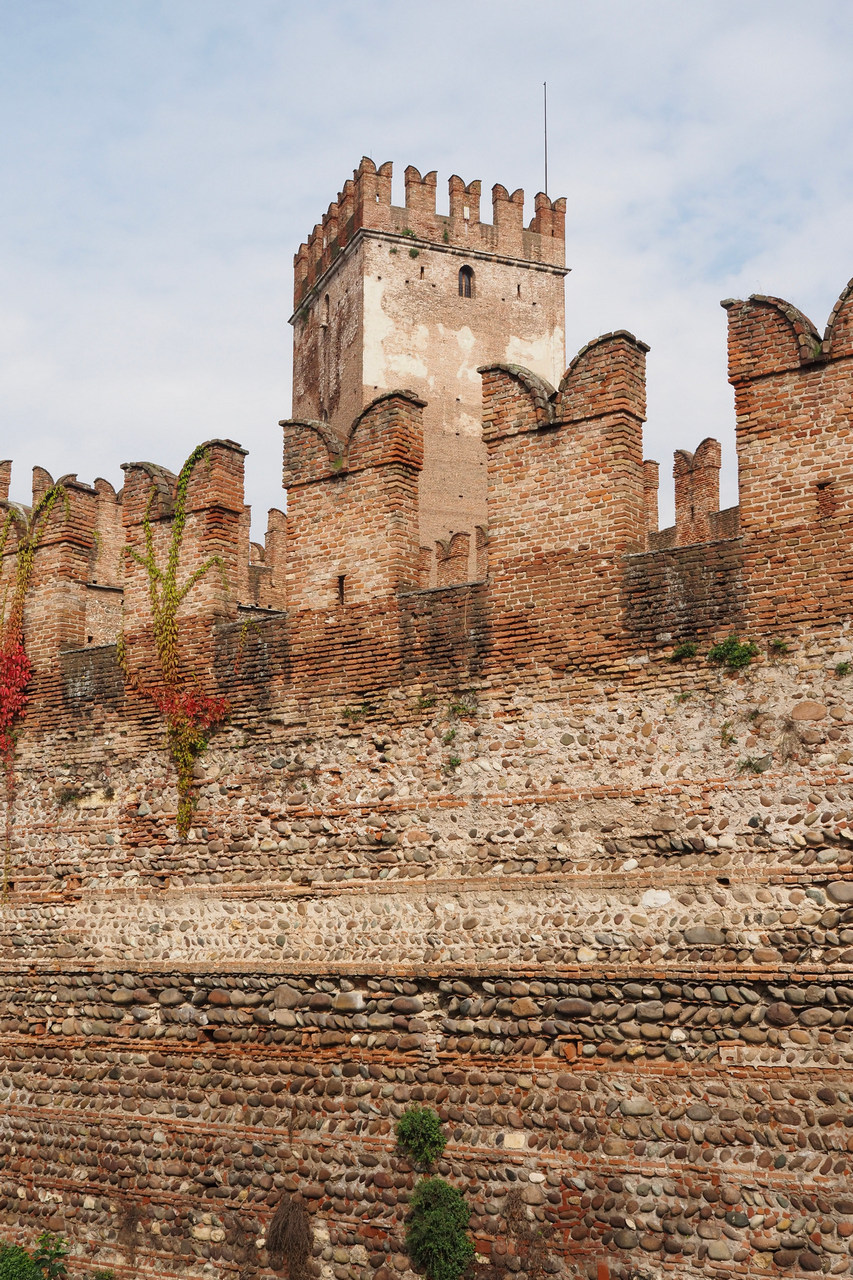
Walk along the Adige River towards Castelvecchio, the 14th century stronghold constructed by the ruling Scaliger family as a military base. The red-brick, Gothic fortress features seven towers and a fortified bridge. Located inside the fortress is a museum featuring art, sculptures, medieval weaponry and archaeological finds from the Scaliger area.
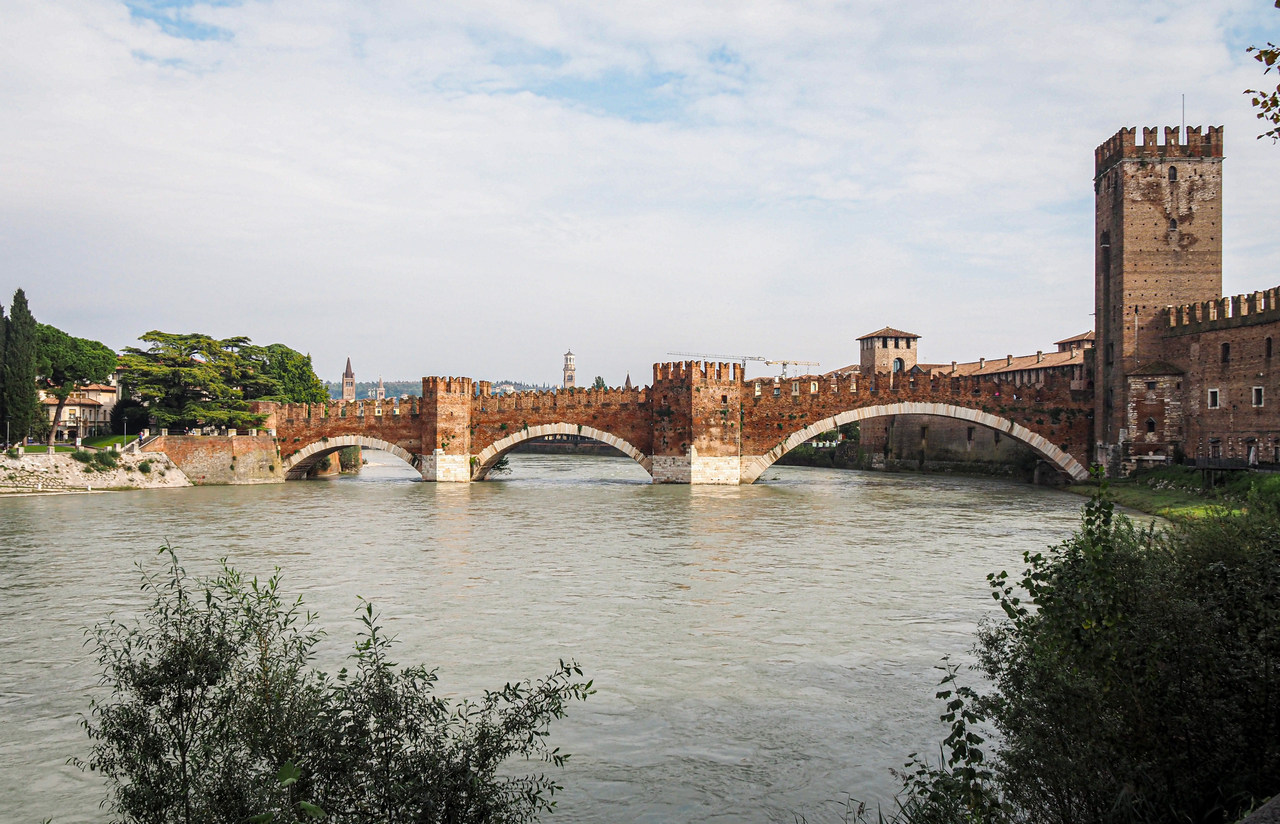
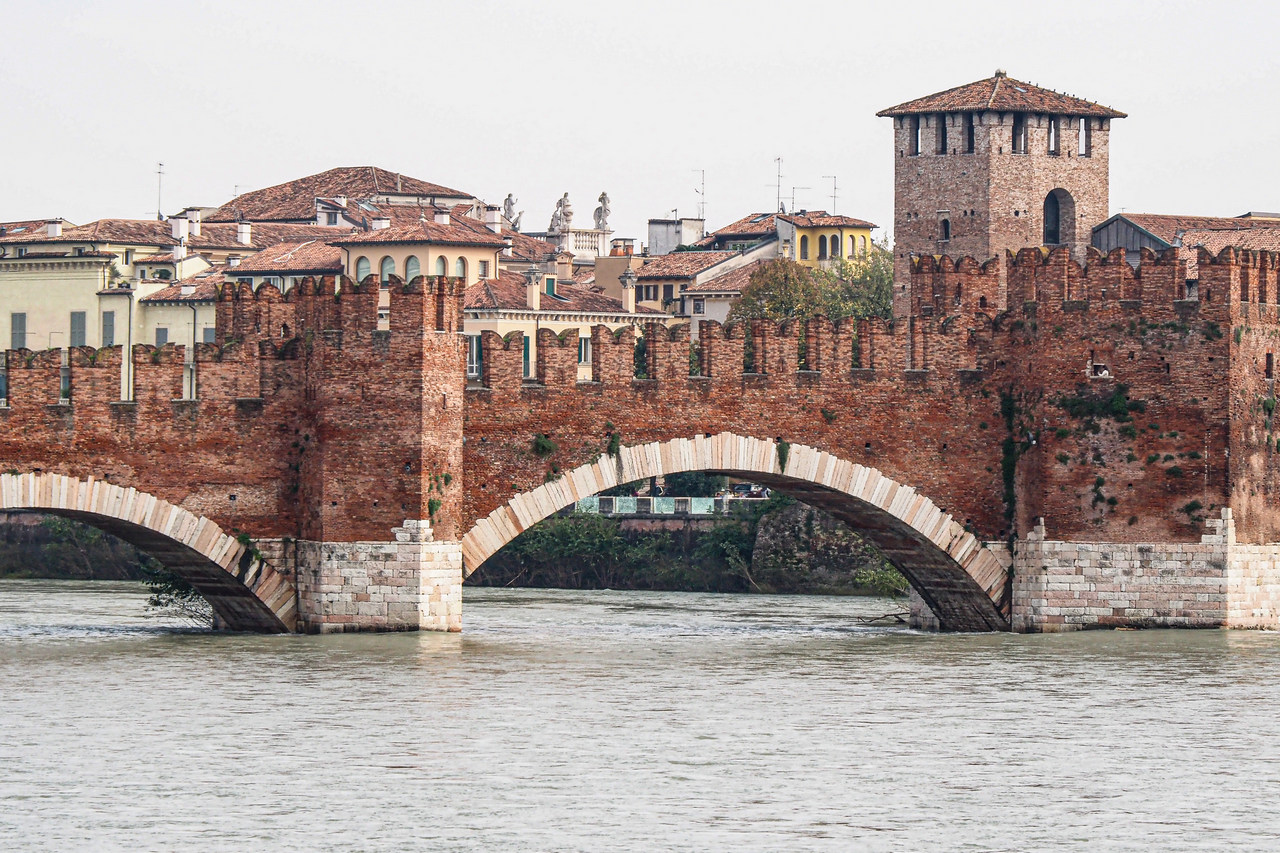
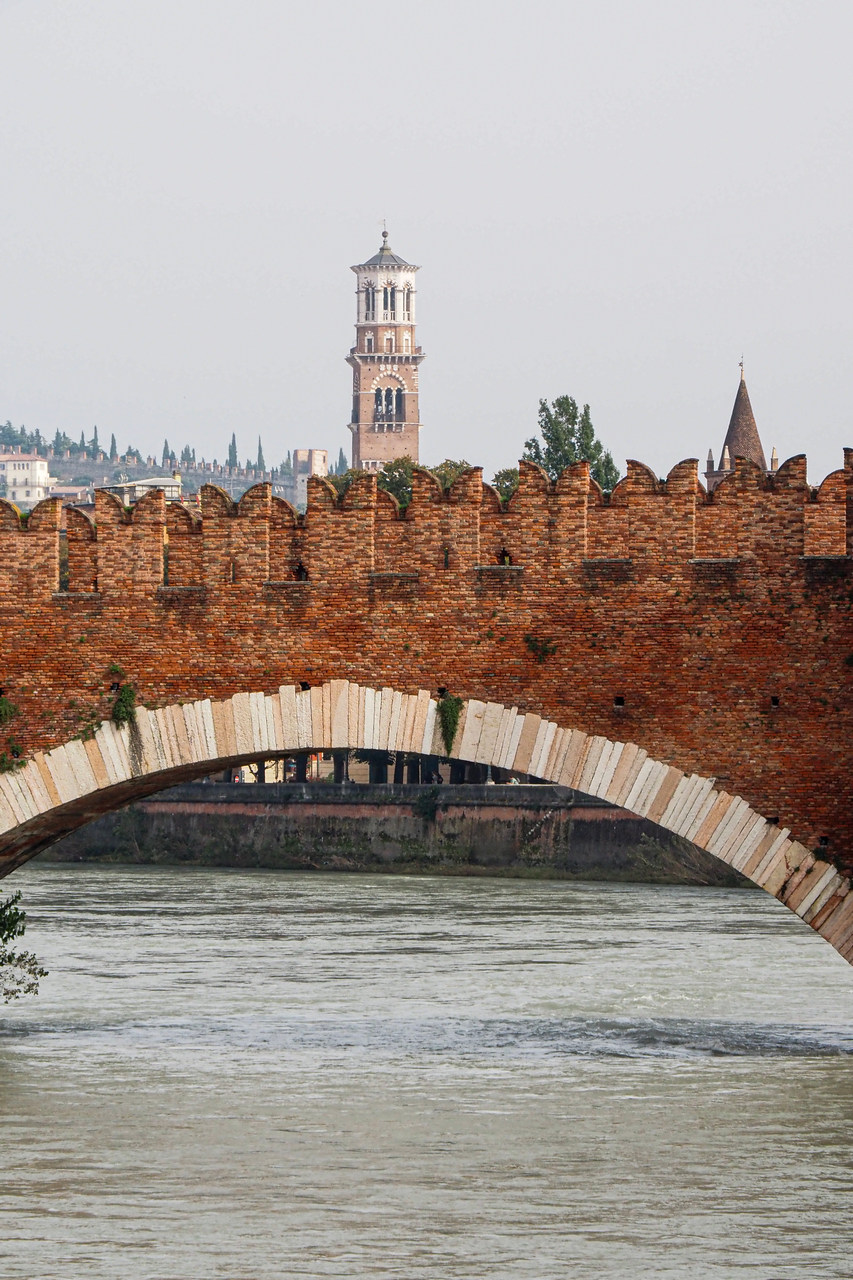
Meanwhile, the fortified bridge, Ponte del Castelvecchio spanning the Adige River was built during the same time as the fortress and intended as potential escape route by the then ruling Scaliger family. Like the fortress, the bridge was constructed from red brick and white stone. It features impressive, uneven arches, with the largest measuring nearly 49 meters.
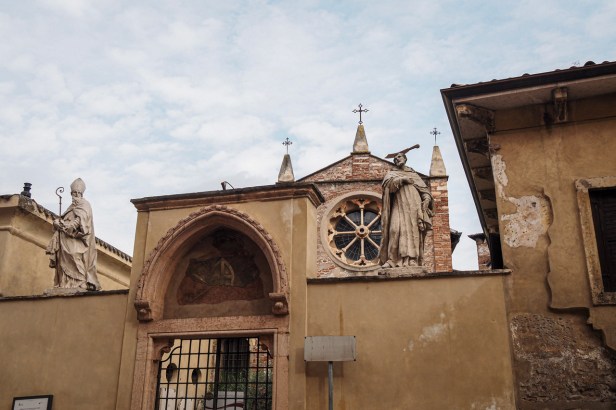
Keep on walking past Ponte del Castelvecchio for some stunning views over the bridge and the river, then heat into the heart of San Zeno district for a visit of Basilica di San Zeno Maggiore. The church is considered one of the masterpieces of medieval architecture and was built on the site where at least five other religious buildings had previously stood.
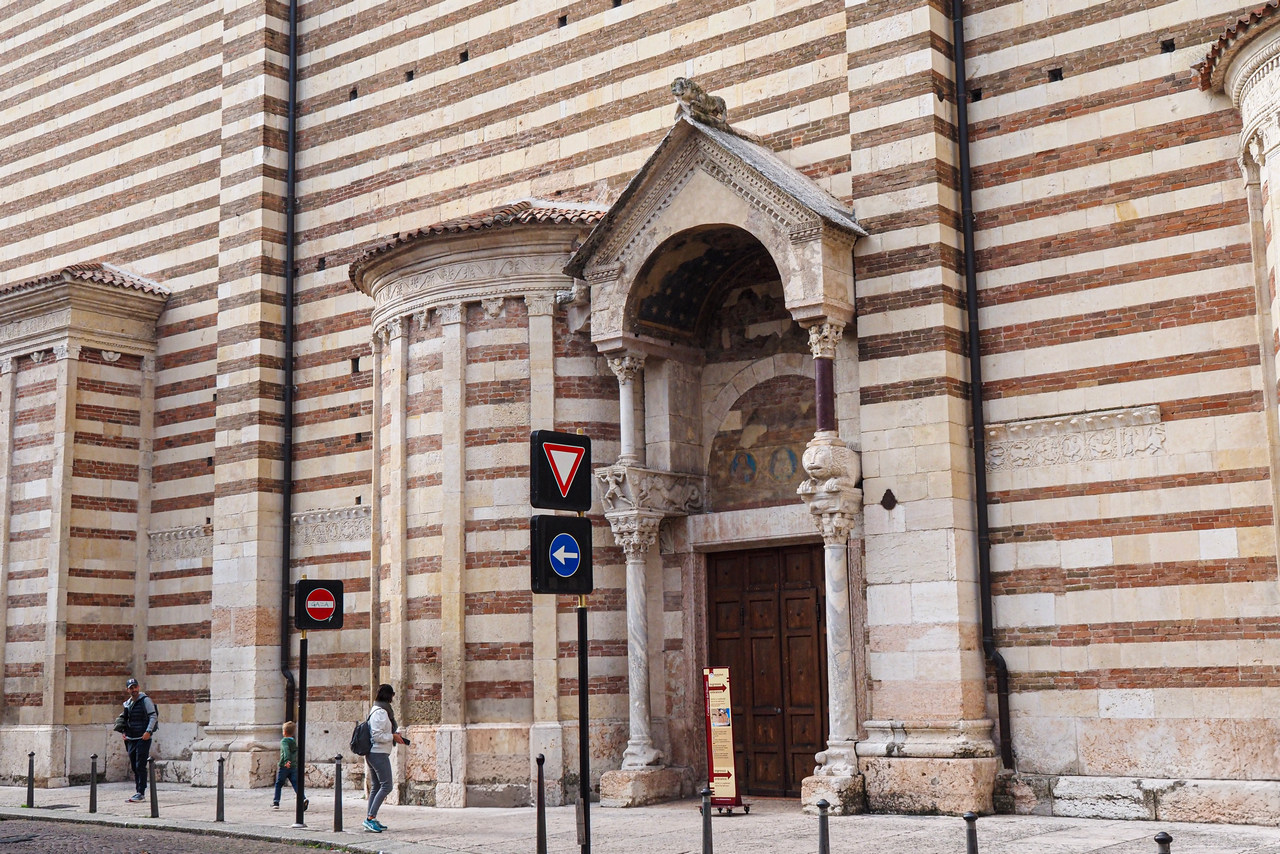
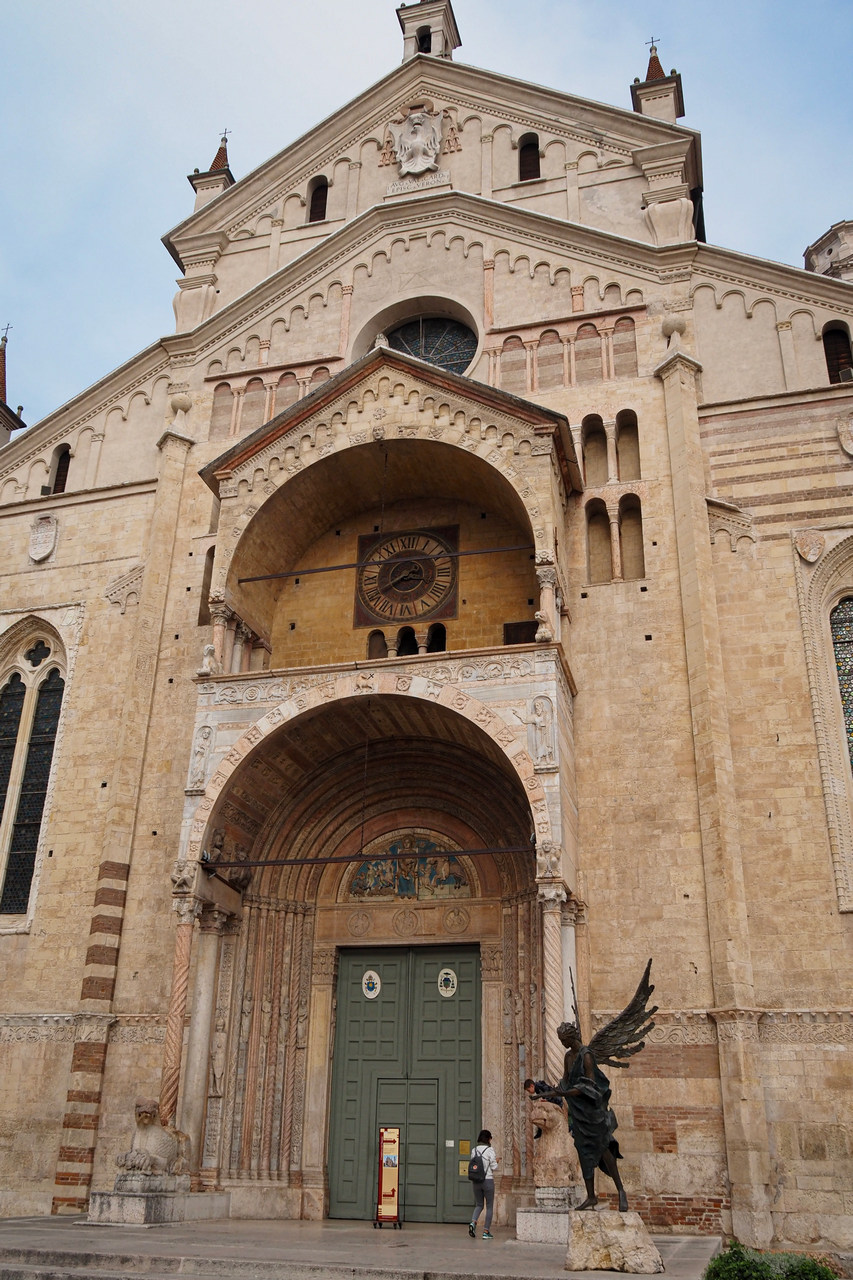
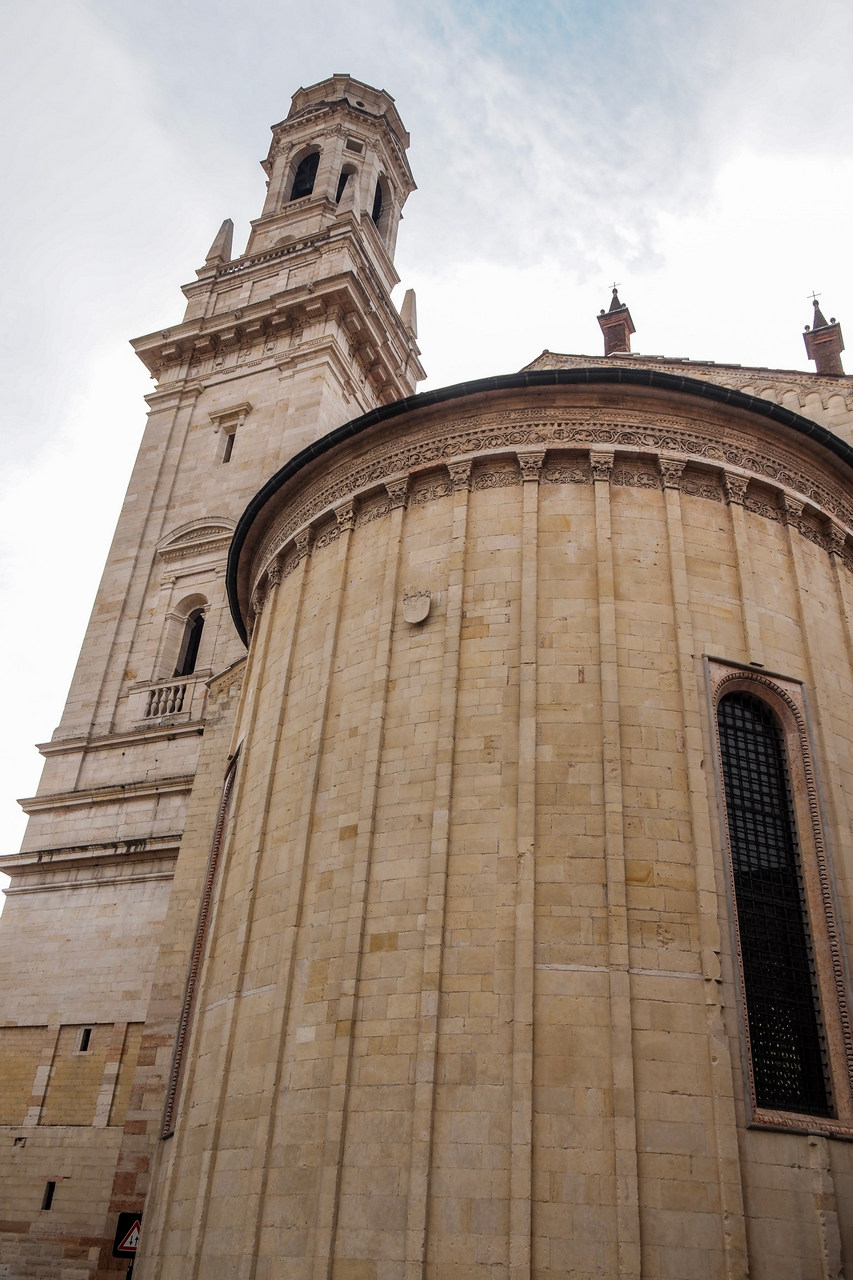
Back in the historic core, the large Verona Cathedral called Cattedrale di Santa Maria Matricolare is another of the historic churches worth exploring. Tucked away into one of the quieter streets, it features a beautiful pink-and-white marble facade. Inside, you will find several small chapels, arched ceilings and breathtaking sculptures and frescoes.
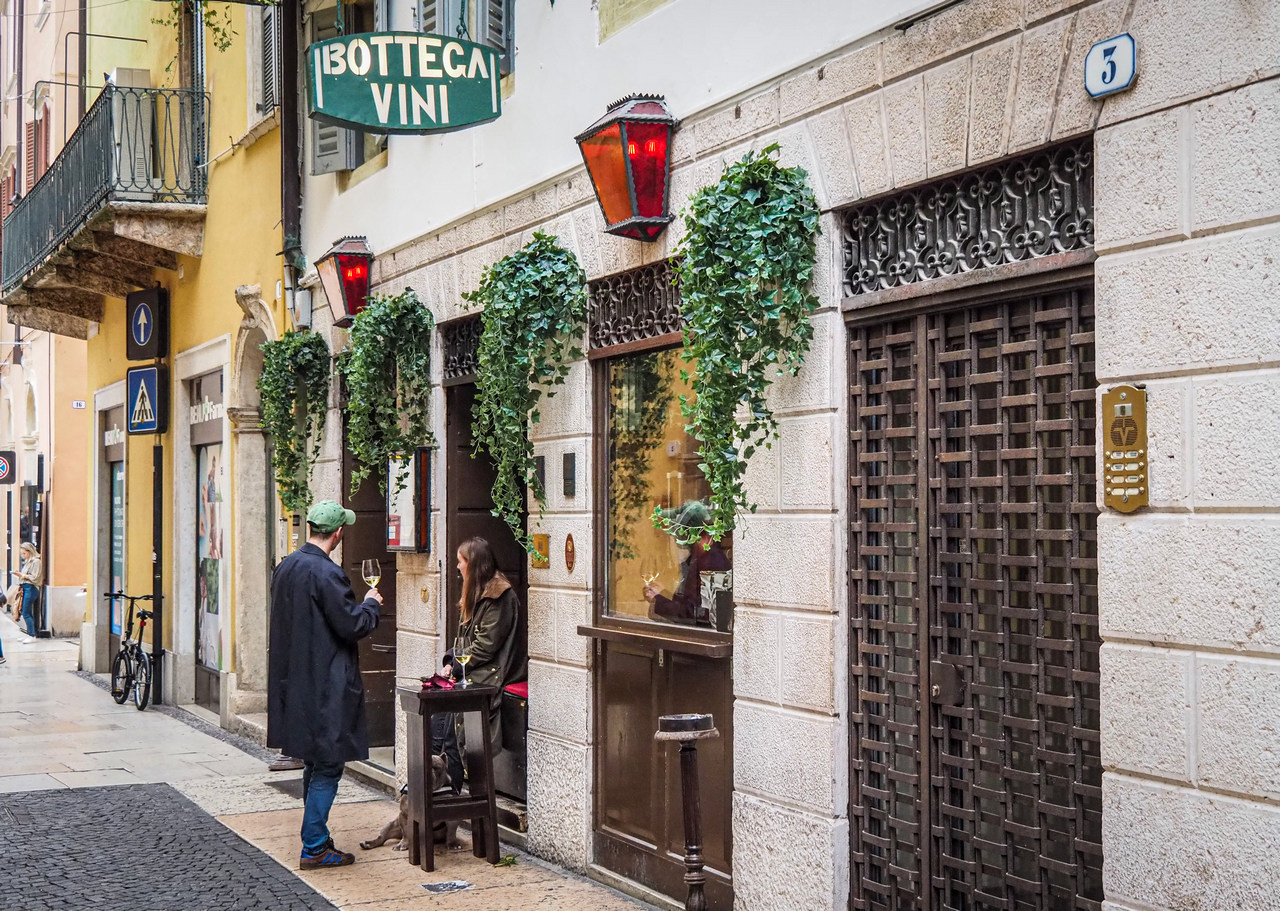
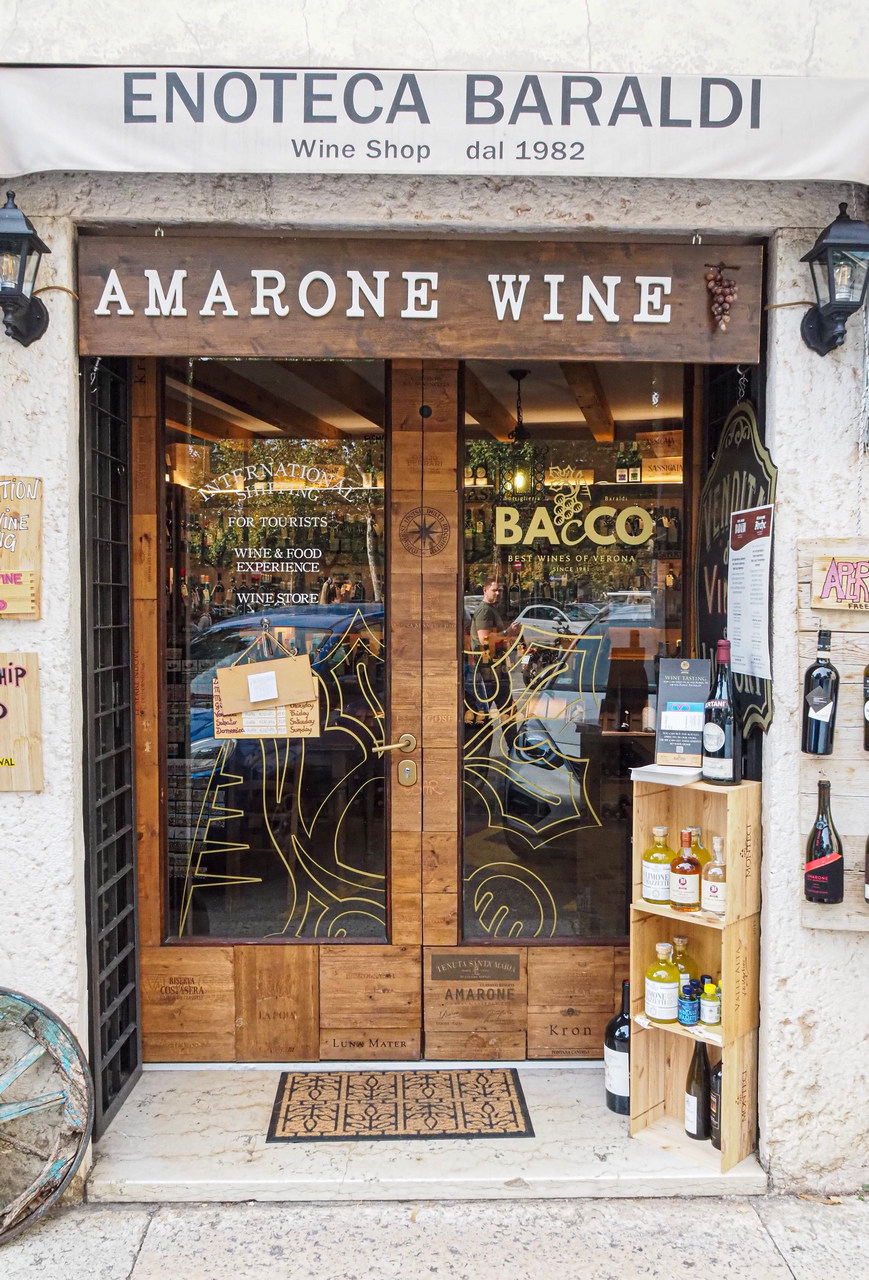
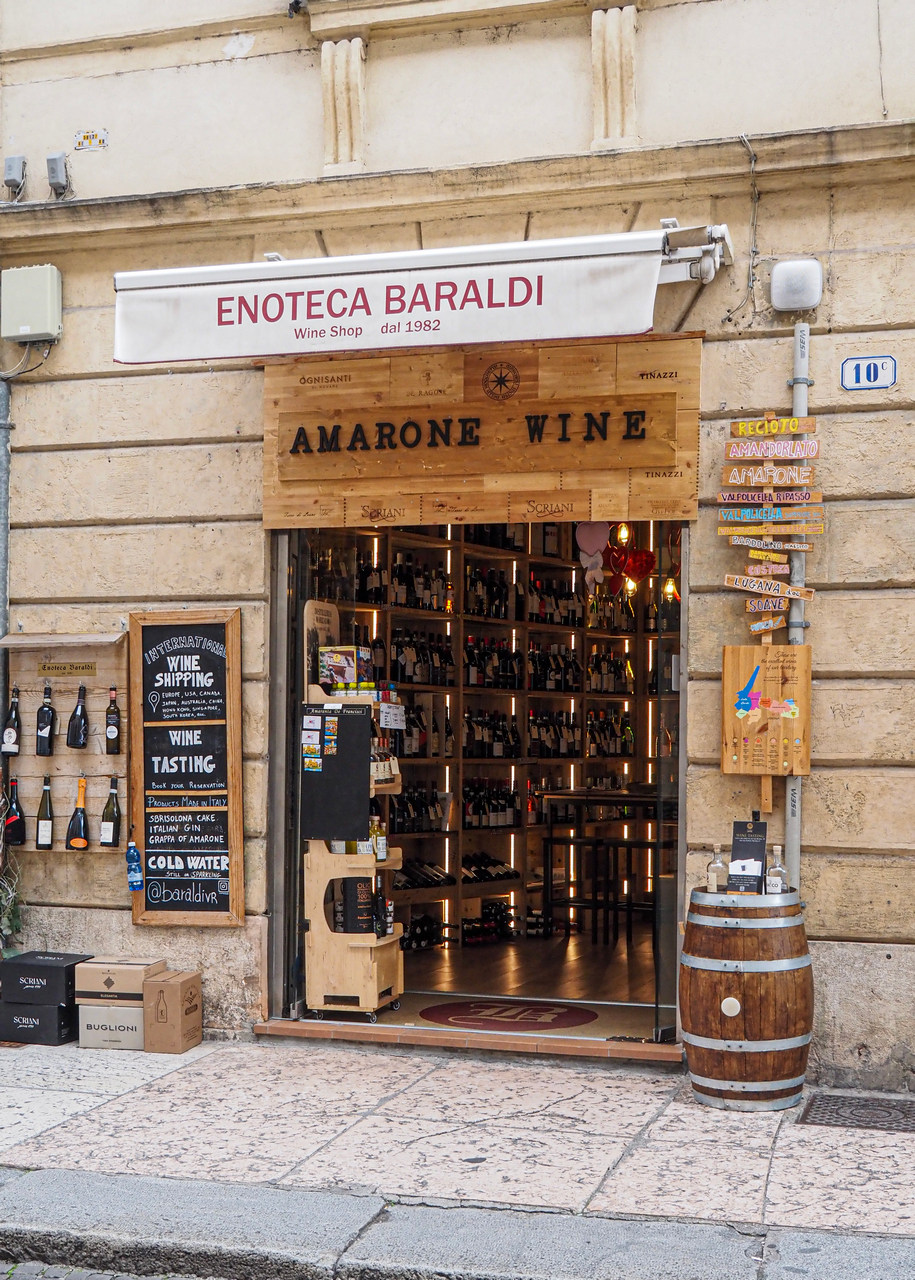
Check out the local wine bars scattered throughout the city tasting wines from the nearby wine regions Valpolicella, Soave and Lake Garda.
If all the walking around has you got hungry, don’t fear. The city is full of exciting places to eat, from Michelin-starred restaurants to traditional osterie which in some cases have been around for centuries. If you wonder where to eat in Verona, check out my post Where to eat in historic Verona.
With a rich history, stunning architecture, lively squares, shops, wine bars and restaurants all within a small, walkable area, Verona is one of the most beautiful cities in Italy and definitely deserves a spot on your bucket list.
 Carrots and Tigers