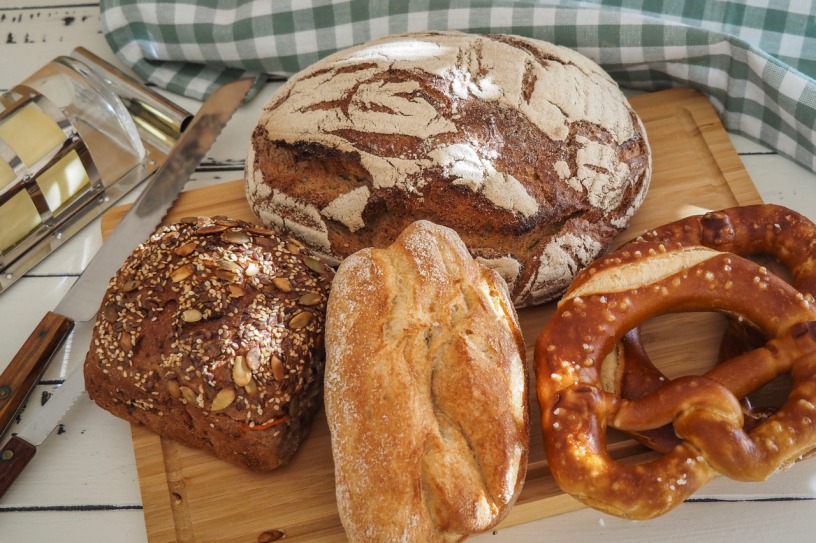
Here is your starter guide to the most popular German Bread Varieties
Taste is highly individual, but when you think of the leading food nations in the world, there are few that stand out. Germany is certainly not part of them. Which does not mean you can’t find great food here. Being home to a large multicultural population, the local culinary scene is actually hugely diverse, covering nearly every angle of the world. But if you ask someone not familiar with German food to come up with a list of truly German dishes popular on a global scale, that person will likely struggle to come up with a decent list.
Except perhaps for one particular food – German bread.
German bread is indeed among the most popular and though-after breads in the world. The widely beloved sourdough breads might even beat French baguette in popularity.
In Germany, bread is eaten at breakfast, lunch, as a snack in between meals, and dinner. In fact, a slightly old-fashioned word for dinner in Germany is Abendbrot, which literally translates into evening bread.
To be honest though, it is hard to define ‘German Bread’. There are so many types and local variations (more than 3,000 according to the Central Association of German Bakery Trade) it’s hard to navigate the whole offer even for a German living in Germany.
One thing you can be sure, however, are the quality standards of all breads sold in Germany. Bakeries must follow certain rules. For example, for a bread to be called a rye bread, it needs to contain a certain minimum of rye flour (90%), if it is a three-grain or five-grain bread at least 5% of each grain must be included, and even what constitutes a sourdough bread is regulated (all the acid must come from natural sourdough).
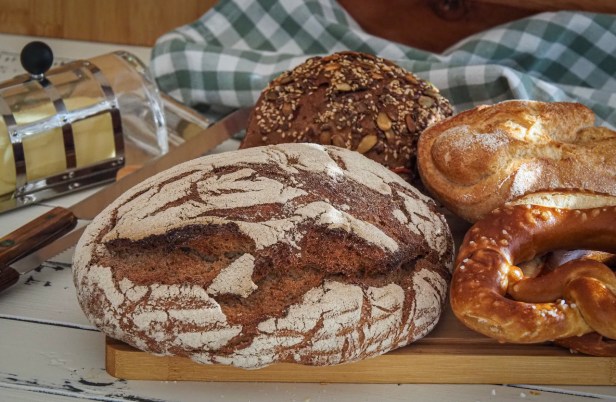
You don’t need to know about the regulations to get your bearings buying German bread or find your favourite variety. But you should know, Germans take their bread very seriously. You can be more relaxed making your own bread at home, but once you buy it from a bakery, grocery store or the supermarket in Germany, it will be made according to national regulations.
Given the huge popularity, and the craft highly regulated to guarantee the highest quality, it is perhaps unsurprising German bread culture was included to the UNESCO intangible cultural heritage list in 2014.
And each year on 27th September, German Butterbrot Day (German Brett and Butter Day) is celebrated. The name describes the most classic and simple way bread is enjoyed in Germany: topped with nothing than butter. That said, there is nothing wrong taking it to the next level and top your slice of bread with either flavoured butter variations such as parsley butter, garlic herb butter roasted red pepper butter, to name just a few, or spreads like smoked salmon spread, tomato spread, humus, or pâté.
Know the most popular German bread varieties
With more than 3,000 local variations of bread and other baked goods, no one will ever be able to know – and taste – all of them. Which is totally fine. If you are curious to taste German breads – either on your next trip to Germany or to go and find some variations at your local speciality bakery (you can find bakeries making German bread now around the world), or perhaps find a recipe try your hand making some of these breads at home – start with the main varieties.
Below, I have rounded up the main varieties of German bread. The next time you come to visit Germany, make sure to try some of them.
Pumpernickel
This rich black bread originating from the Westphalia region in northwest Germany, was first described in a document in 1450 and is thus one of the oldest bread varieties in Germany.
Pumpernickel is still one of the most popular bread varieties in Germany and is perhaps one of the best-known abroad. That said, the versions sold outside of Germany are often different to the original version.
In Germany, pumpernickel is made from 100% rye and usually sold in small parcels of pre-cut slices. It is baked in lidded pans at low temperature in a steam-filled oven for 16 to 24 hours and has a very thin or even no crust. It has an intense earthy aroma, and a distinctive bittersweet flavour.
Try the popular German appetizer consisting of pumpernickel topped with cucumber and smoked salmon. It’s delicious.
Good to know: Pumpernickel is very compact but at the same time brittle. It can therefore break easily when cut. It is also very satiating and kept under the right conditions can be preserved for months.
Farmers Bread (Bauernbrot)
Characterized by a rustic and hearty flavour, this popular bread is usually made from a sourdough starter from wheat and rye, and additional incorporates molasses or malt. It is typically baked in a round shape and a sliced top to create its particular appearance.
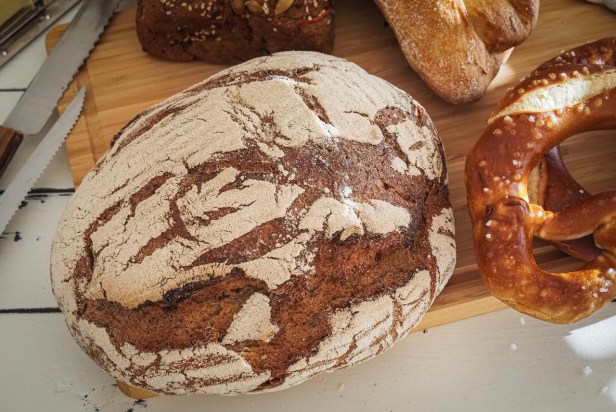
Farmers Bread has a dense texture and rich flavour and is best enjoyed with hearty toppings such as cold cuts and cheeses.
Wheat-Rye Bread (Weizenmischbrot)
This variety is baked with sourdough or yeast from a mixture of wheat and rye floor. It consists of a minimum of 50% and up to a maximum of 90% of wheat. Mixed bread has a milder taste with slightly sweet and nutty flavours relative to 100% rye bread and a soft and moist texture.
Good to know: In some German regions mixed bread is known as grey bread while in southern Germany, Austria, and Switzerland it is usually called black bread.
Rye Bread (Roggenbrot)
Rye bread is a very popular and healthy type that comes in all sorts of styles, depending on the particular rye used. It has a sourdough flavour and a dense, slightly moist texture.
Whole Grain Bread (Vollkornbrot)
By law, whole grain bread sold in Germany must contain a whole grain floor content of at least 90%. It is usually made with a sourdough starter which gives the bread a characteristic tangy taste. Baked for a longer period relative to many other bread varieties, which results in a darker crust and a chewy, dense texture.

The dark brown variety is very popular among health-conscious consumers and is often served as a substitute for a cooked dinner, topped with cold cuts or cheese. Whole grain bread is sometimes topped with sesame or pumpkin seeds.
Multigrain Bread (Mehrkornbrot)
As the name suggests, multigrain bread is made with a variety of whole grains and seeds. It has a dense, chewy texture and hearty flavour. It is usually made with a sourdough starter which is responsible for its tangy taste. Like whole grain bread, it will be baked for a longer time and therefore also boast a darker crust and dense texture.
Multi grain bread works well with hearty toppings such as cold cuts, cheese or spreads, but works also well with sweet toppings like jam and honey.
The most common varieties of multigrain bread are three seed bread (Dreikornbrot) made from rye, wheat and oat, and five seed bread (Fünfkornbrot) made from wheat, rye, barley, oat and maize grains.
Sunflower Seed Bread (Sonnenblumenkernbrot)
Sunflower seed bread is a very popular variation of the whole grain bread, with sunflower seeds incorporated in the crumb and sprinkled on the crust. The seeds add a slightly sweet and nutty taste. The type is popular at breakfast. Try it topped with cream cheese and fruit jam. It’s an unbeatable combination.
Pumpkin Seed Bread (Kürbiskernbrot)
Baked from a basis of wheat-rye mixed bread, pumpkin seed bread is baked with pumpkin seeds incorporated in the crumb and crust, along with a small addition of quark (a ricotta-like German type of cream cheese). The pumpkin seeds give the bread a distinctive spicy flavour.
Spelt Bread (Dinkelbrot)
Spelt bread by German regulations must be made with a minimum of 90% spelt flour. Spelt is a type of wheat that has not been tampered or crossed with other varieties, which means it is a purer type of wheat. It contains more vitamins and minerals relative to other wheat types and therefore is a healthier version of the traditional wheat bread.
In addition to the health benefits, spelt flour means the dough will be more extendible and therefore adding more structure to the bread. Spelt bread has a slightly sweet, nutty taste.
Barn Bread (Katenbrot)
The dark brown coarsely texture and strong-tasting bread originates in the northern part of Germany, where it was originally made at the local farms. In fact, the variety takes its name from the name given to the type of houses where small farmers or day labourers use to live in northern Germany, usually outside to towns, which are called Kate.
Katenbrot is perfect to be enjoyed with cold cuts or hearty cheeses.
Potato Bread (Kartoffelbrot)
With such a deep range of different breads, it is perhaps impossible that you would not find a variety that incorporates another beloved German produce. Potatoes are a staple in the German cuisine, and as such, there is off course a variety made with potatoes.
Mashed potatoes are used a key ingredient, which gives the bread a unique flavour and texture. Other ingredients include wheat, yeast, milk, butter, and salt. The bread will be usually baked in a round shape with a sliced pattern on top. Potato bread has a tender, fluffy and slightly moist texture.
Bread Rolls (Brötchen)
Called Brötchen in German, literally translating into small breads, are hugely popular both for breakfast and as snack/sandwich in-between or quick lunch.
Bread rolls come in all sorts of different types, and typically cover the whole range of the major bread varieties, except pumpernickel.

Good to know: If you travel through Germany, you will be fine with the term Brötchen anywhere, though depending on the region, the little bread rolls are going with all sorts of different names such as Semmel, Schrippe, Rundstück, Weck, Weckle, Weckli, or Wecken.
Bread rolls are typically cut in half, then one of the halves will be spread with butter and topped with any type of food from charcuterie, cheese, meat, fish or crabs, then topped with the other half of the roll. At breakfast, they might also be topped with jam or honey, though in that case, each half will be eaten separately.
Pretzels
Originating in the southern parts of Germany, international visitors often link pretzels predominantly to Bavaria and the Oktoberfest. However, while this delicious snack is perfect alongside a glass of beer, pretzels are also hugely popular in other parts of Germany, and you will find them in most bakeries from north to south.

Traditional, pretzels are made with wheat, malt, salt, yeast, and water. Pretzels are shaped to symbolize two arms folded in prayer, and they will be usually sprinkled with coarse salt (though most bakeries now also offer versions without salt). Pretzels have a thin, dark brown crust which is typically cracked after baking. Inside, pretzels have a fluffy, almost doughnuts-like consistency and are light coloured.
Just eat your pretzel as is or spread it with butter to add another level of deliciousness.
Good to know: In some German regions, bakeries will sell a variation of the classic pretzels, called Laugenstange. The name which translates to bread sticks, refers to the different shape of the snack, which is indeed resembling a stick. Otherwise, Laugenstangen will be made from the same ingredients and have the same cracked, dark brown curst, much like pretzels.
Next time you visit Germany, make sure to try some of the delicious German bread varieties. Most hotels will offer a good range of them at breakfast, or head to a bakery, grocery store or supermarket.
 Carrots and Tigers