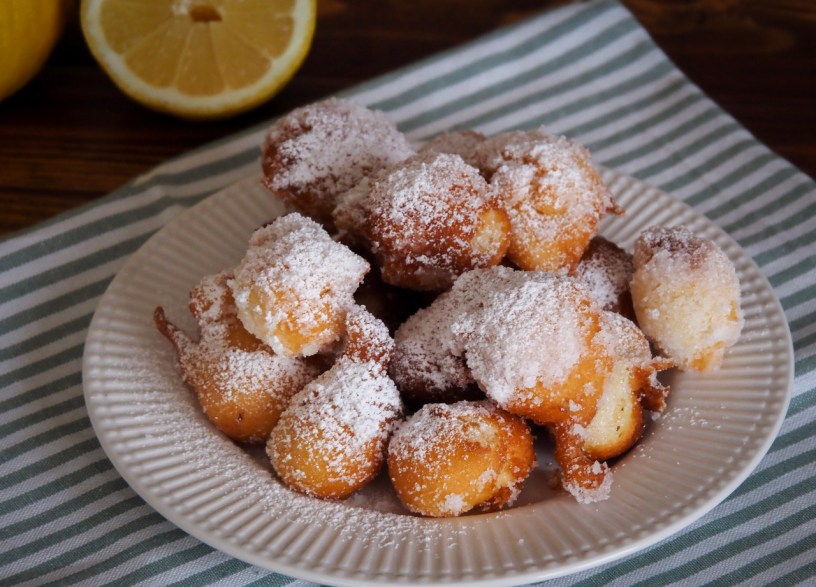
A journey through Italy’s traditional carnival desserts, the popular Dolci di Carnevale
Here we go again. Entering the final two ‘crazy’ weeks of this year’s carnival season with street parades and other festive events taking place all over Europe and beyond. It is that time where here in Germany the entire population is divided into carnival enthusiasts and those that are a little less enthusiastic (to put it mildly).
Personally, I belong to the latter category. Except …, well I still have returning to the amazing Carnevale di Venezia on my bucket list. Taking place in Venice in northern Italy during the two weeks running up to the Lent period it features historic 18th century costumes and masks, street performances and masked balls.
Plus, I can’t resist devouring the delicious fried sweet carnival treats appearing in pastry shops and bakeries these days. Here in Germany this would include Krapfen or Kreppel (sweet fried doughnuts often filled with jam or custard). Other countries have their own local favourites. But I can’t think of any country rivalling the number of Italy’s various carnival sweets / desserts.
Those most widely known are perhaps those coming from Venice but to tell the truth, these are only the tip of the iceberg. As you move through the different Italian regions, you will encounter many more local variations and entirely different styles.
With another two weeks before those observing the Lent period are requested to abstain from sweet indulgence, don’t waste any time to discover the favourite Italian carnival treats.
Below, I have rounded up seven of the most popular from Venice and beyond.
Castagnole (Venice)
Perhaps the most popular of all, castagnole are small, soft fried dough balls, often served with icing sugar or filled with cream. They take their name from the resemblance to chestnuts, called castagne in Italian. Soft on the inside and crunchy on the outside, they are another perfect example of the many variations of simply irresistible sweet dumplings made traditionally during the carnival season.
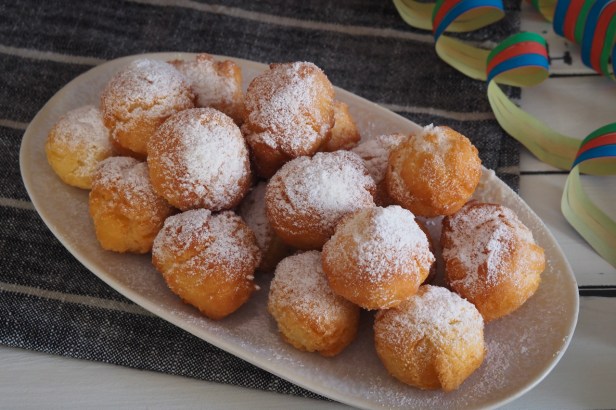
Castagnole are easy to prepare, so if you want to give it a try and make them at home, get the recipe here.
Galani / Chiacchiere (Venice)
Galani are favourite treats in various regions across Italy during the carnival season, though often they will be called differently depending on the location: crostoli, chiacchiere, sfrapole, cenic, bugie …
While they can be identified being light, crispy pastries displaying a cut commonly dusted with powdered sugar, they will look slightly different from place to place. For example, they could be slightly thicker, and the cut (or cuts) might be in the middle or at the end.
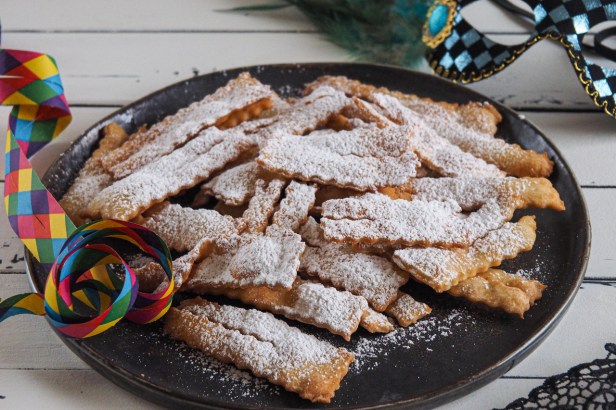
The original recipe of this delicious treat is believed to date back to the Roman empire and thus predate the Venetian Carnival and most other carnival sweets.
They are easier made then they look. Get the recipe here.
Frittelle Veneziane (Venice)
Possibly the closest variation resembling the traditional Krapfen from Austria and Germany, Frittelle Veneziana in the 18th century were officially recognized as “National Dessert of the Venetian Republic”.
They consist of yet another version of soft, airy, fried dough balls, this time enriched with sultana raisins and citrus zest. While traditionally empty (except for the raisins), recent variations include fillings of pastry cream, zabaione, or chocolate. Some, particularly in the Verona area, are made with pieces of apple (my favourites).
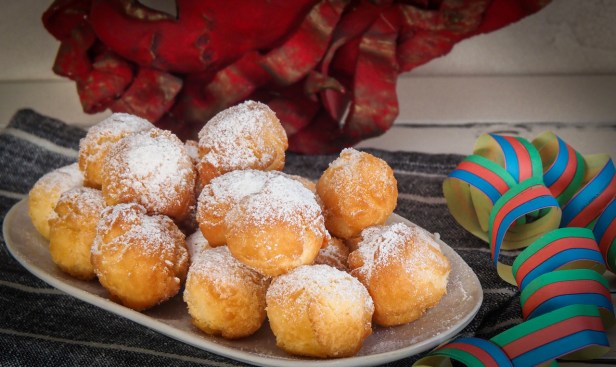
Frittelle al limone (Venice)
These lemon-scented fried balls are one of the popular variations of the simple original fried dough balls. They typically consist of flour, eggs, sugar, milk, butter, and lemon zest and juice. The result are deliciously light, fluffy, and sweet dough balls.
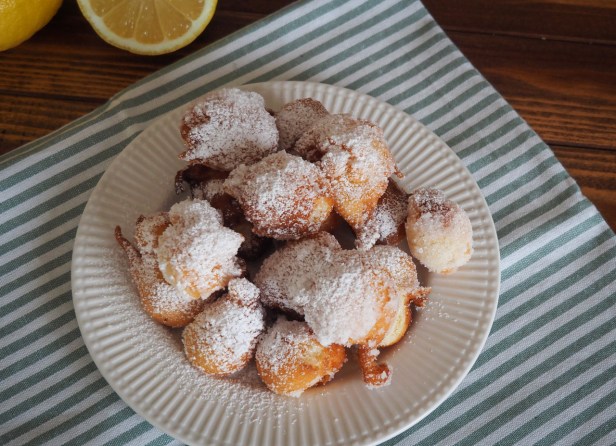
You will need some trial handling the fairly fluid batter when dropping into the hot frying oil, but no worries. These sweet little bites are worth it! Grab the recipe on my substack.
Tagliatelle di Carnevale (Emilia-Romagna)
Tagliatelle are flat, long ribbons of pasta made with flour and eggs. Undoubtedly, the most famous dish involving this type of pasta are Tagliatelle al Ragù.
Believe it or not, but during the carnival season, the identical recipe for pasta dough is worked into a dessert. The dough is thinly rolled out and covered with granulated sugar and orange zest. It is then rolled up and cut into pieces which are deep fried until golden and crispy.
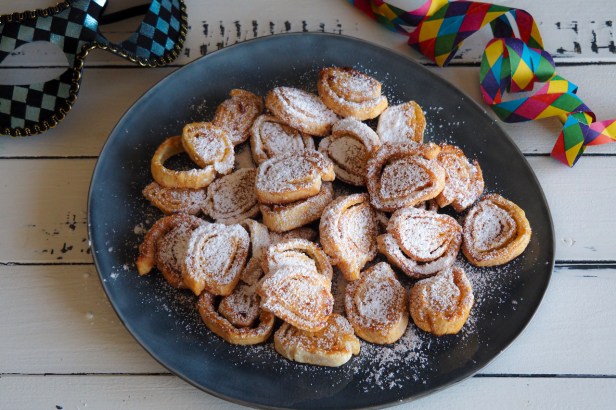
During the carnival season, tagliatelle di Carnevale, the sweet version of tagliatelle can be found everywhere in Emilia-Romagna.
If you have never made your own pasta dough at home, perhaps because you are worried it is complicated, making this sweet variety might be a good start to get some practice. Get the recipe here.
Graffe (Naples)
Count on the napolitani to give fried dough balls their own local twist. Inspired by the Austrian and German krapfen, these popular local carnival sweets are made in a similar fashion but the list of ingredients to make the dough is extended to potatoes. This results in a fluffier version of the traditional recipe.
Pignolata al miele (Sicily)
Moving to the far south of Italy, you will find a delicious local version of fried dough balls. Small pieces of dough are fried in lard and covered in honey. The result is a delicious combination of sweetness and crunchiness.
The name pignolata derives from the way this dessert is presented. Usually served in small piles, they look like small pinecones.
Have worked up some sweet cravings now? Go ahead and try making some of these carnival treats at home. Or why not plan a trip to Italy next year for a first-hand experience of the local carnival season and traditional food?
 Carrots and Tigers