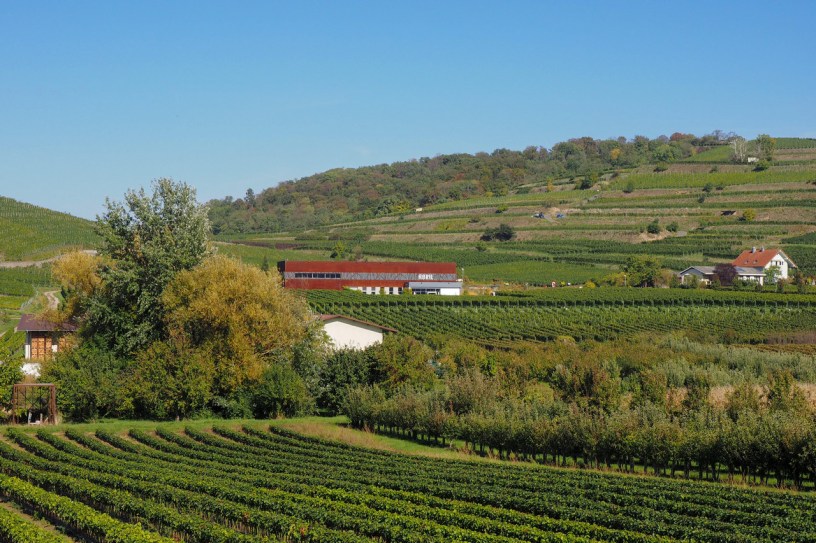
Make Germany’s southwestern-most wine region your next destination to visit, especially if you love Pinot Noir.
I totally get it. There is now a day for nearly everything, from food to beverages, animals, and anything else in between. So, take it as a simple coincidence this post is published on International Pinot Noir Day.
The grape variety is one of the most popular in the world, and it’s easy to see why. It’s elegant, light-bodied with bright acidity and silky tannins. On top, it’s very versatile and food-friendly, and grown across a wide range of regions globally.
If you like Pinot Noir, these days it’s well worth looking at Germany. Yes, Germany. The country of Riesling wines. The historically northernmost European winegrowing nation, where grapes often struggle to reach ripeness due to the temperate climate. But all this has changed over the past decade, with the local summers now usually warmer and longer.
Pinot Noir is the third most planted grape variety across Germany and these days grown across nearly all of the thirteen wine regions from north to south and east to west. That said, the leading wine regions for burgundy wines remain those in the southern part of Germany.
A quick introduction to the Kaiserstuhl wine region
The area, composed of around 4,200 hectares of vineyards located on volcanic hills, has a long winegrowing tradition, which goes all the way back to Roman times.
Known as ‘the home of the three pinots’ – all three burgundy varieties, pinot blanc, pinot gris, and pinot noir, thrive in the area – the small Kaiserstuhl area belongs to the wider Baden wine region in southwestern Germany, the only German wine region officially classifies as warm climate wine region.

The Kaiserstuhl is indeed the warmest and sunniest region in the whole of Germany, with a local climate that is similar to the climate conditions in Burgundy in France during the 1980s and 1990s. Hence, this almost Mediterranean climate and the volcanic soil are perfect for growing burgundy grapes, and Pinot Noir is the dominant variety. That said, the other two pinots – blanc and gris – are also widely grown alongside a few other varieties including Chardonnay, Müller-Thurgau, and Sauvignon Blanc.
5 compelling reasons to visit the Kaiserstuhl wine region in southwestern Germany
Wine is only one of many exciting reasons to visit the beautiful Kaisterstuhl, though it’s an important one if you ask me.
Anyway, here are some more.
- A warm, almost Mediterranean climate with approximately 1,800 to 2,000 hours of sunshine annually.
- A picturesque landscape composed of unique volcanic hills with an excellent network of hiking and biking trails for outdoor enthusiasts, spotting many observation and viewpoints offering stunning views over the area and nearby mountain ranges of the Vosges and the Black Forest; and a large biodiversity with a large range of rare species of flora and fauna.
- A rich cultural heritage displayed in several beautiful small historic villages spotting half-timbered houses, cobble stoned streets and medieval buildings waiting to be explored.
- Wine tasting, cellar and vineyard tours offered in many of the region’s round about 100 wineries.
- Excellent gastronomic experiences from traditional regional German cuisine with influences from nearby France, including Black Forest ham, tart flambe (Flammkuchen) and spaetzle to fine dining restaurants.
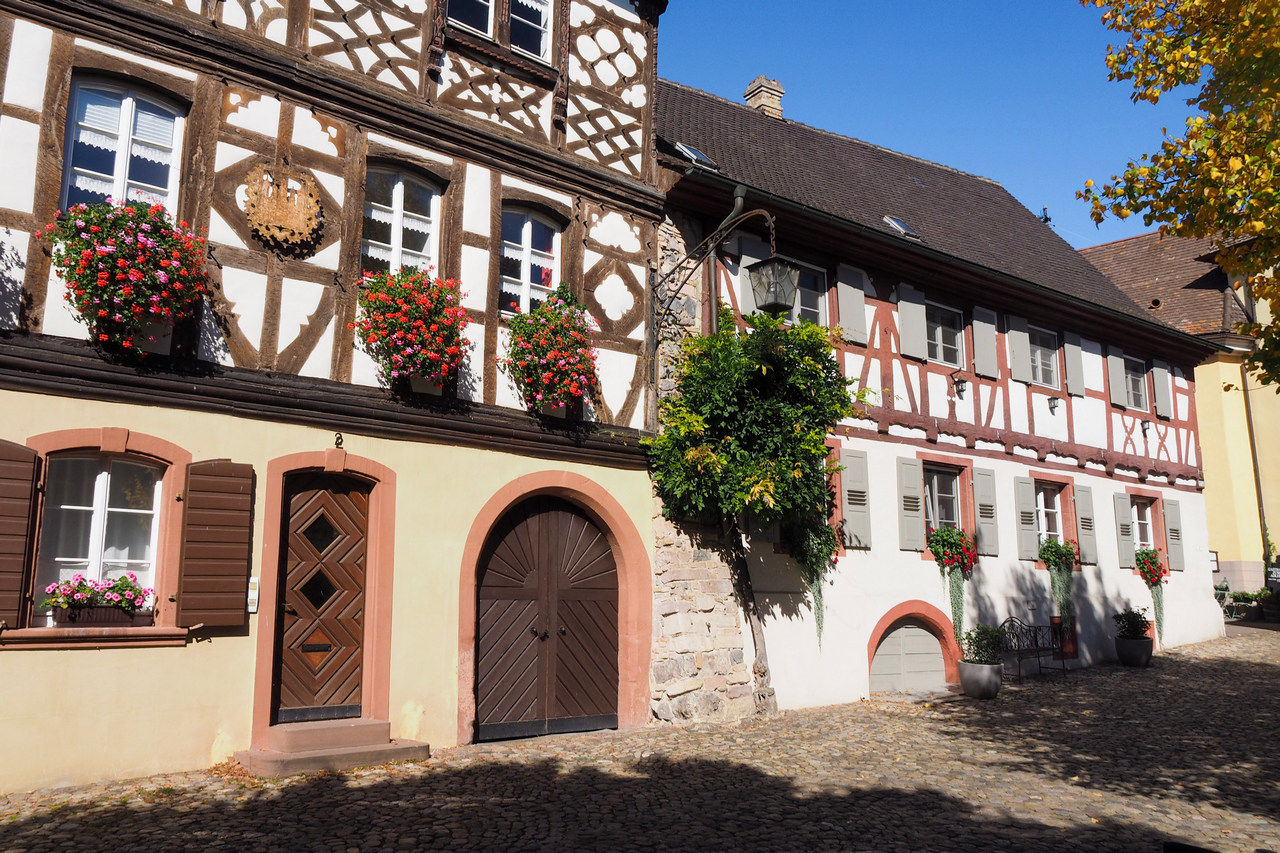


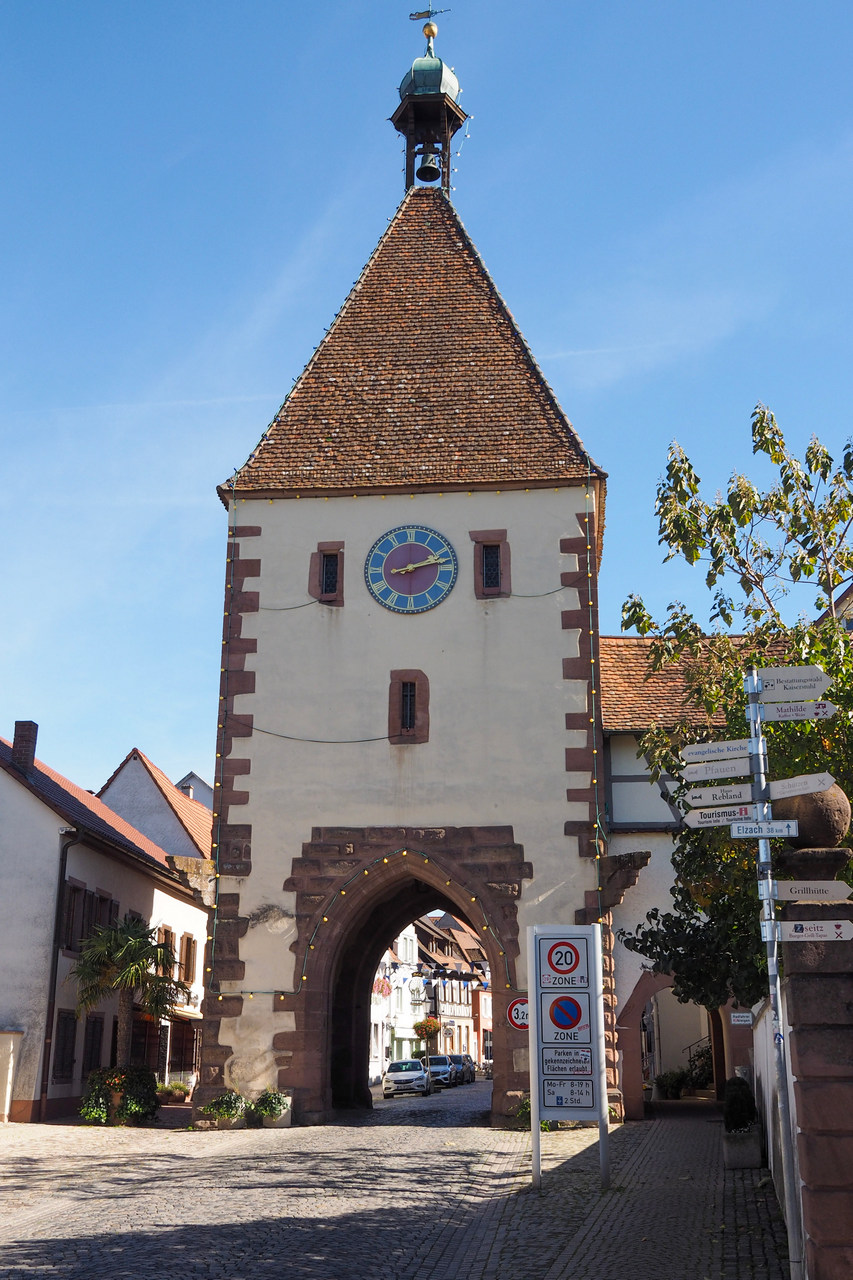

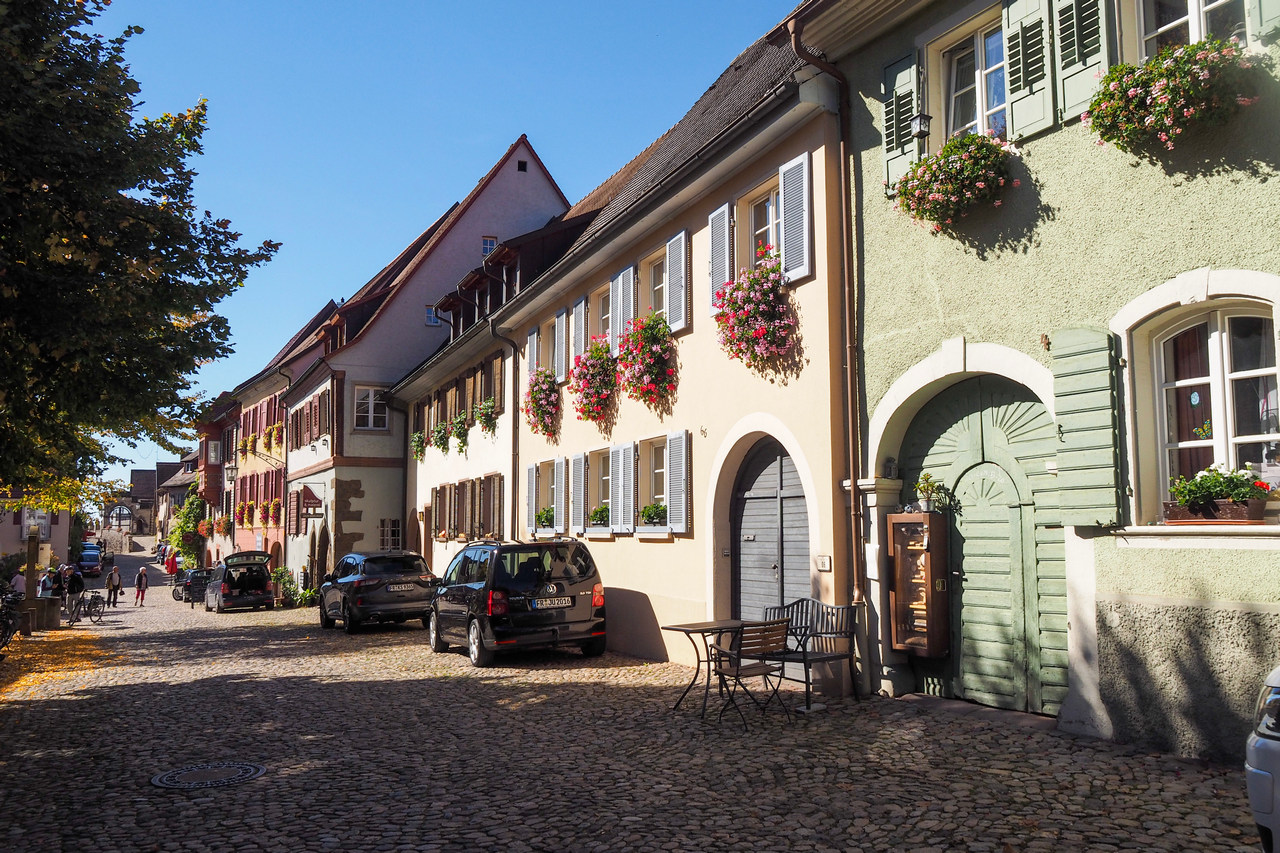

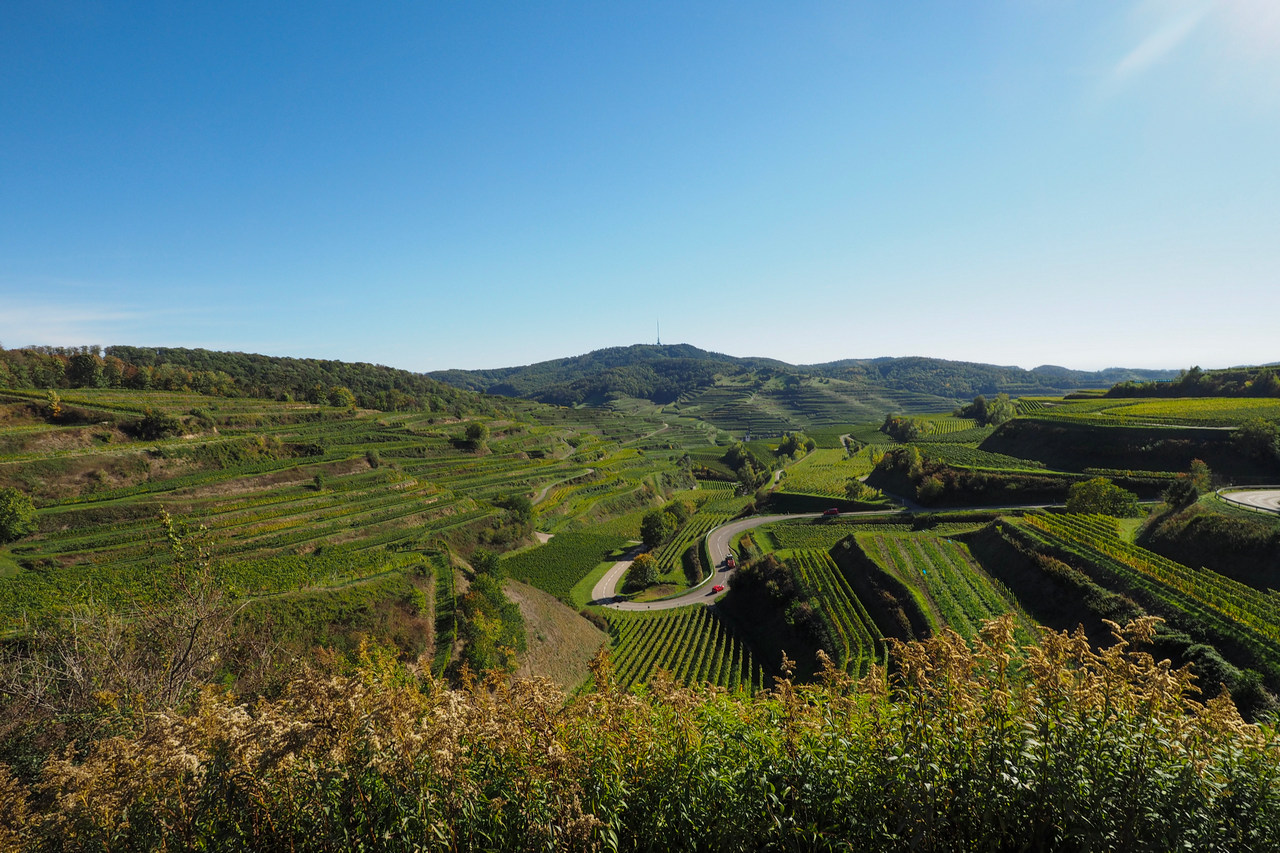
In short, the Kaiserstuhl is a hidden gem offering the perfect backdrop for slow travel away from the crowds.
10 iconic wineries in Germany’s Kaiserstuhl wine region for Pinot Noir
The small Kaiserstuhl area counts over 100 wineries, and many are among the most renowned making excellent Pinot Noir across Germany. So where should you start?
This is a question I hear often from family and friends, and all those aware of my frequent visits to Germany’s wine regions and local wineries.
So below, I have rounded out my ten favourite wineries for Pinot Noir in the Kaiserstuhl.
Weingut Salway
Led in the third generation by Konrad Salway, the winery is well-known for its focus on organic and natural winemaking, crafting wines on complete fermentation. This means, the wines are absolutely dry albeit not too alcohol heavy. Wines are matured in wooden barrels stored in a cellar build into the rock of a former stone mine, emphasizing both the grape varieties and local terroir.

Weingut Salway, which is located in the small town of Vogtsburg-Oberrotweil, makes wide range of different wines. However, it is particularly known as one of the leading local (and German) winery for Pinot Noir, for which it has won various awards.
Best Salway Pinot Noirs to try:
- Spätburgunder Kirchberg Großes Gewächs
- Spätburgunder Eichberg Großes Gewächs
Weingut Franz Keller
The winery, located in Vogtsburg-Oberbergen is perhaps the most internationally known star of the Kaiserstuhl region.

Weingut Franz Keller is particularly renowned for its excellent burgundy wines, winegrowing innovation, the stunning modern wine cellar all but vanishing into the surrounding vineyard.

Among the wide range of different wines, the winery makes several excellent Pinot Noirs. The most legendary perhaps remains the Oberberger Bassgeige. Grapes for this excellent Pinot Noir come from the vineyard with the same name, which you immediately recognize by the large bass violin prominently sitting within the vines.
Best Franz Keller Pinot Noirs to try:
- Oberberger Bassgeige Spätburgunder Erste Lage
- Spätburgunder Steinriese Großes Gewächs
- Spätburgunder Engelsberg Großes Gewächs
Weingut Dr. Heger
Founded in 1935 by physician Doctor Max Heger, Weingut Dr. Heger today is lead by Joachim Heger and his wife Silvia in the third generation.

The winery is located in the idyllic wine town of Ihringen, at the southern end of the Kaiserstuhl and named a ‘world class winery’ from both the Gault Millau and wine guide Eichelmann. One of the winery’s flagship wines is the ‘Ihringer Winklerberg Muskateller’ a VDP first growth classified wine which is made from the oldest Muscatel vines in the whole Baden wine region, plated in 1951.
This particular wine aside, Dr. Heger also stands for some of the most exciting Pinot Noirs from the Kaiserstuhl region, including an excellent rosé.
Best Dr. Heger Pinot Noirs to try:
- Spätburgunder Vorderer Winklerberg Großes Gewächs
- Ihringer Winklerberg MIMUS Spätburgunder Erste Lage
- Spätburgunder Rosé Fumé
Weingut Karl H. Johner
Karl-Heinz Johner is said to be one of the most innovative winemaker of the Kaiserstuhl. He founded Weingut Karl H. Johner in 1985 in Bischoffingen am Kaiserstuhl with the vison to make outstanding burgundy wines.
The winery’s Pinot Noirs impress with a fine, harmonious and yet very powerful essence along with a very well balanced and targeted use of barrique, which has owned Karl Heinz Johner the reputation to be one of the leading barrique winemakers in Germany.
Best Karl H. Johner Pinot Noirs to try:
- Pinot Noir Bischoffinger Steinbuck
- Blauer Spätburgunder Oberrotweiler Eichberg
Weingut Stigler
The early routes of Weingut Stigler were layed by Josef Fidel Stigler, who bought a small parcel of the renowned Ihringer Winklerberg vineyard in 1881. At the time, the family’s main business was the restaurant they owned and run at Freiburg rail station, where they served their own wines.
The restaurant was destroyed together with the rail station during World War II and since 1945 the Stigler family is fully dedicated to the winery in the Kaiserstuhl. Today, the fourth generation of the family is already fully involved.
Best Stigler Pinot Noirs:
- PAGODE Ihringen Spätburgunder Große Lage Monopol
- Vorderer Winklerberg Ihringen Spätburgunder Große Lage
- Eichberg Oberrotweil Spätburgunder Große Lage
Weingut Leopold Schätzle
The winery, located in the town of Endingen, was founded by Leopold and Margarete Schätzle back in 1970 with at the time only one hectare under vines. Today, Weingut Leopold Schätzle counts 15 hectares their own, including some of the best vineyards in the Kaiserstuhl.
The winery is well-known for the continuous high quality of their wines and constantly presented with various national and international wine awards.
Around 50% of the vineyards are planted with Pinot Noir.
Best Leopold Schätzle Pinot Noirs:
- Kirchberg Spätburgunder Réserve trocken (made from the winery’s oldest vines)
- Endinger Steingrube Spätburgunder
- Endinger Engelsberg Spätburgunder
Weingut April
Nestled in the vineyards just outside the little town of Bischoffingen am Enselberg, Weingut Abril is a winery that not only produces with excellent wines but also amazes with a stunning modern wine cellar. On top, Weingut April with more than 270 years of winemaking history is one of the oldest in the area.

The winery is known for its passion of organic winemaking, constantly setting new standards in the region.
Read my post Wines With A Sense Of Place: Weingut Abril to learn more about the winery’s excellent range of wines and wine tasting opportunities at the on-site wineshop and Vinothek.

Best April Pinot Noirs:
- STEIN Spätburgunder Magmatit
- ZEIT Pinot Noir Enselberg
- ZEIT Pinot Noir Steinbuck
Weingut Reinhold & Cornelia Schneider
Located in Endingen am Kaiserstuhl, Weingut Reinhold & Cornelia Schneider was founded in 1981 when husband-and-wife team Schneider decided to leave the local cooperative. Their new credo was to craft the highest quality wines in a sustainable way.
Despite achieving great success and being welcomed to Germany’s quality wine association VDP, the Schneider family decided in order to stay true to their own high-quality standards, they needed to do it their own way. Thus, the winery left the VDP association to work around some of the group’s rules and reduced their vineyard area to just six hectares.
This means a smaller wine range, but one that stands out.
Best Reinhold & Cornelia Schneider Pinot Noirs:
- Spätburgunder Enselberg
- Blanc de Noir Alte Reben (a white burgundy made with Pinot Noir from old vines)
Weingut Holger Koch
The winery is located in Vogstburg im Kaiserstuhl while all vineyards are in the higher, and thus cooler area of Bickensohl.
Weingut Holger Koch is known as a burgundy specialist. Typical for the whole range of burgundy wines is an extremely subtle style, with clarity, elegance, and freshness the historic attributes of the winery.
While making strictly sustainable, biodynamic wines, the winery does no longer pursue the official bio label due to too much bureaucracy and thus to much work in the office instead the vineyard.
The winery is also one of the few in Germany eliminating German Pinot Noir (Spätburgunder) vines and replanting their vineyards with Pinot Noir clones from Burgundy.
Best Holger Koch Pinot Noirs:
- Pinot Noir Reserve Steinfelsen
- Pinot Noir Selektionswein
- Pinot Noir Herrenstück
Weingut Köbelin
With winemaking in the bones – his grandfather sold his own grapes for sparkling wine production – Arndt Köbelin founded his own winery over twenty years ago. And he did not stop at wine either. Today, Weingut Köbelin is known not only for quality wines in the Kaiserstuhl area. The winery also makes an excellent fruit brandy, pomace brandy, liquor and its own vodka, called Wudka.
Best Köbelin Pinot Noirs:
- Spätburgunder Réserve Eichenlaub, made from nearly 60-year-old vines
- Spätburgunder Lösswand, made from a selection of pinot noir grapes including those from 50-year-old vines
If you are planning a trip to Germany’s Kaiserstuhl region, the above wineries are among the best for on-site wine tasting and buying wines. Including the area’s incredible local Pinot Noirs. That said, the list is not exclusive. There are many more excellent wineries in the region, which makes it a fantastic destination to visit, for great wine experiences and more.
 Carrots and Tigers