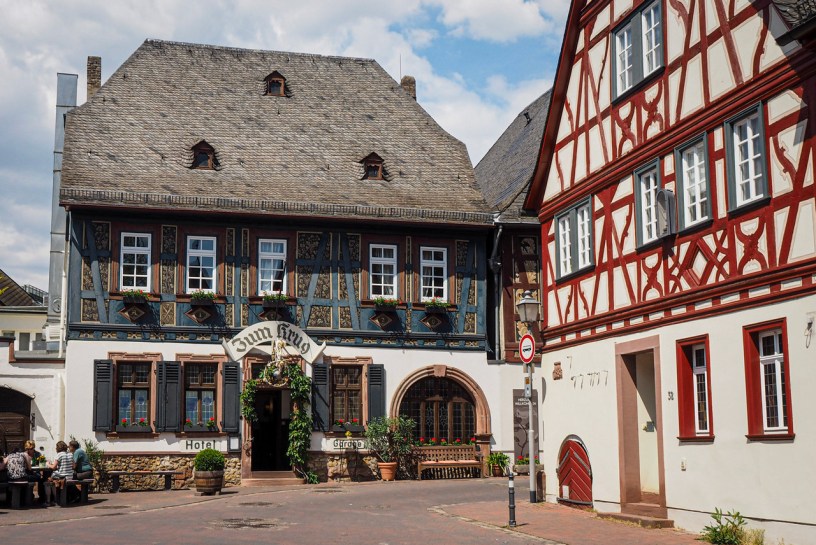
Will you travel for Riesling? Then I have the best wine regions for you to visit in Germany.
With spring around the corner, and the first rays of sunshine chasing away the winter gloom, isn’t this the time to for glorious vineyard hikes along with the first sips of the newly released Riesling vintage from the last harvest? So, today I wanted to share with you my favourite places for Riesling filled excursions.
Now, you will find excellent Riesling in all 13 official German wine regions. However, when it comes to narrowing down where to visit for a unique Riesling experience, you should make the historically leading German Riesling wine regions your starting point.
This is where you will find some of the most iconic Riesling wines along with exciting regional food, and a breathtaking scenery. Think of idyllic rolling hills, steep vineyards, small historic wine towns, castles, monasteries, and other historic sites along with the Mosel, Rhine, Saar and Ruwer Rivers meandering through.
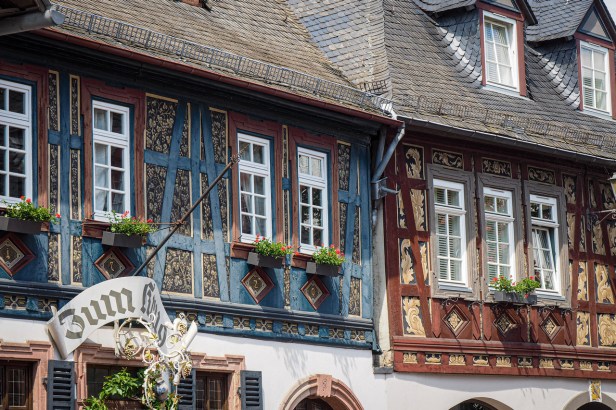
Germany’s leading Riesling wine regions include the Mosel, Rheingau, Rheinhessen, Nahe and Pfalz in the southwest of Germany. All are in easy reach from Frankfurt, and while all are classified as cool climate winegrowing areas, they are hugely diverse in scenery and nevertheless feature a milder and sunnier climate compared to the regions to the north and east.
So, where should you start?
Read on for a quick introduction to the five leading German wine regions for the country’s flagship varietal Riesling.
Rheingau, the birthplace of Riesling
Located along the northern shores of the Rhine River, not far from Frankfurt and the two smaller cities of Wiesbaden and Mainz (on the other side of the Rhine), Rheingau is one of the smaller German wine regions. But it is a mighty one.
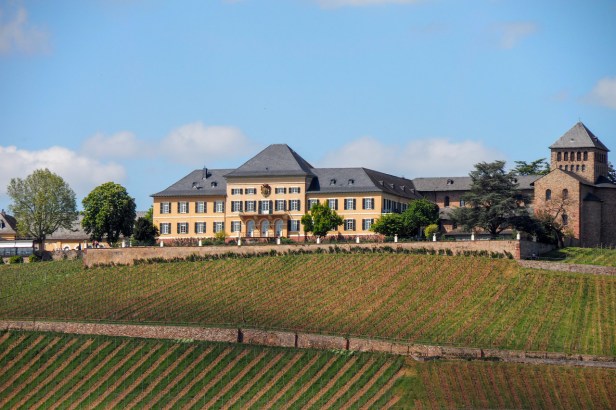
This is the very birthplace of Riesling, if historic recordings are correct. More precisely, the first Riesling wines were made at Schloss Johannisberg at some point before 1435; given the first written documentation of Riesling wine dates back to March 13th, 1435.
The region boasts softly rolling hills, small half-timbered historic wine towns, several medieval castles and monasteries, and a renowned food scene.
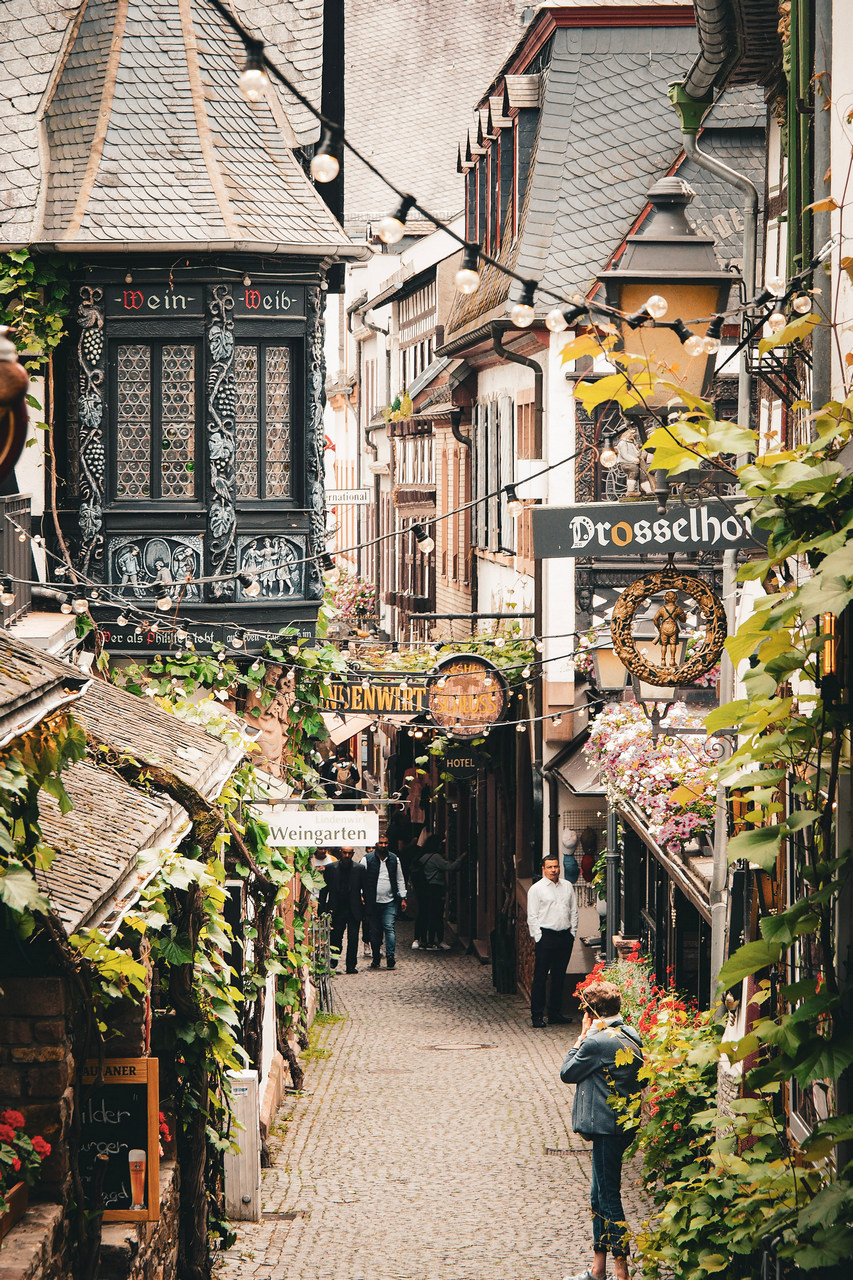
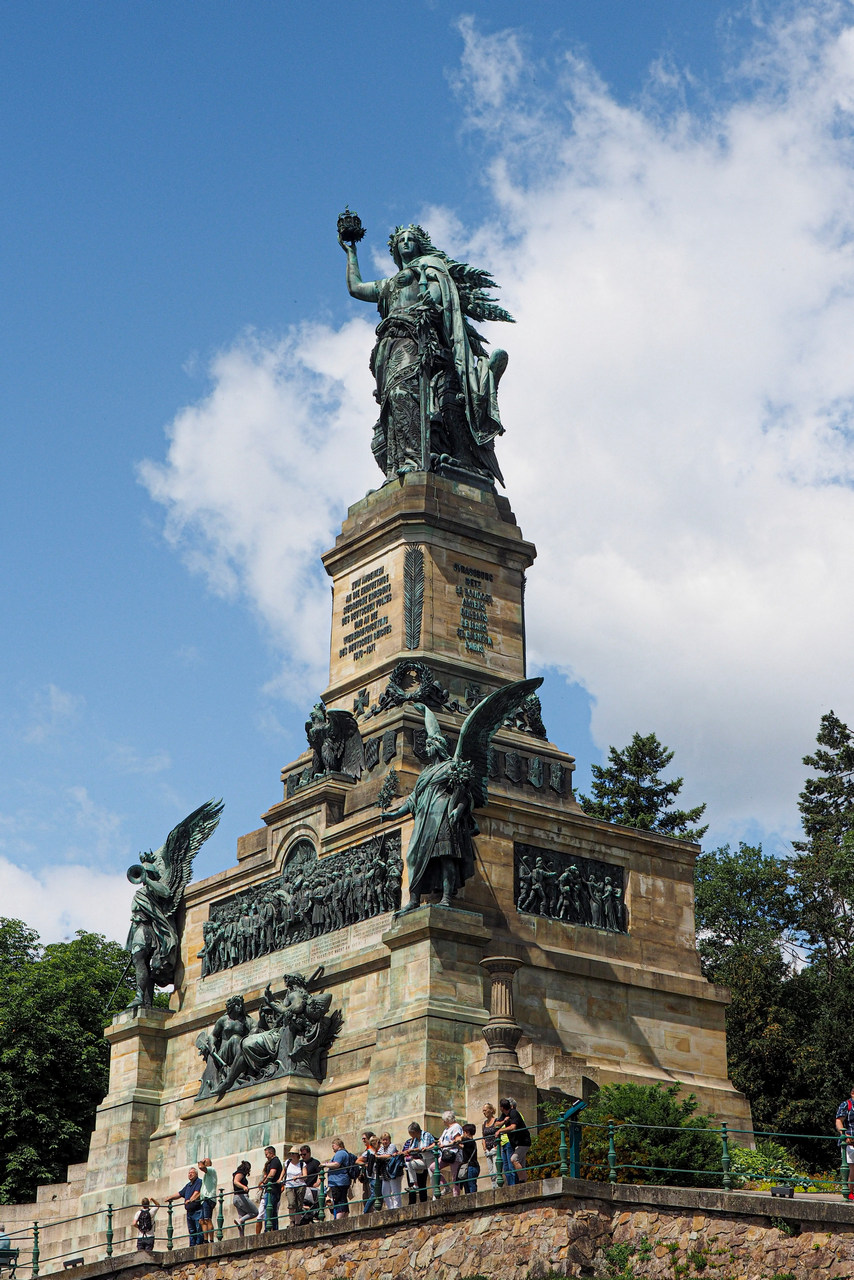
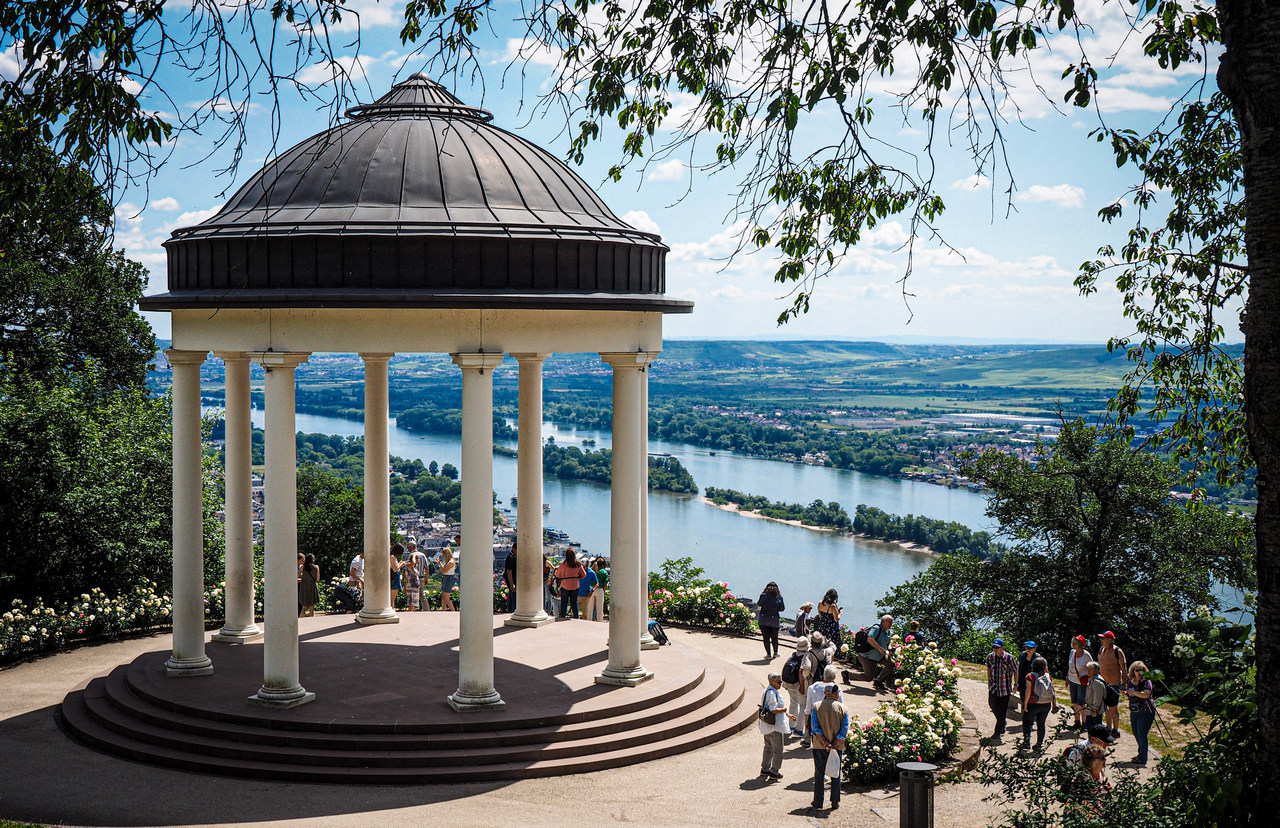
The perhaps most famous town, Rüdesheim am Rhein is also the most touristy. Highlights here include the famous Drosselgasse, 114 metres long, very small alley in the heart of the old town boasting a huge density of wine taverns and beer gardens. Plus, just a few steps away from the alley you will find the cable car that will you swiftly lift up to the Niederwald monument towering over the vineyards and river.
The towns of Eltville (the city of sparkling wine and roses), Kiedrich, Oestrich-Winkel, Geisenheim and Lorch are the major stops in the area, featuring half-timbered houses, Gothic architecture, a large number of wineries, and excellent restaurants and cafés.
South-facing vineyards, a climate that means the local ripening season starts earlier compared to the Mosel and Pfalz regions while it extends late. Thus, local Rieslings are typically dry and characterized by a focused minerality. In addition, being also the birthplace of late harvest wines, the Rheingau is renowned for complex sweet Riesling along with dry versions featuring great acidity and aromatic complexity.
Notable wineries to visit:
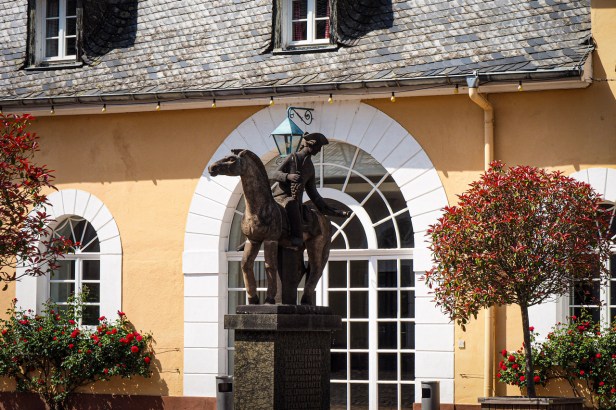
Schloss Johannisberg: The birthplace of late harvest wines is one of the oldest in the world and today it is particularly known for its range of sweet Rieslings. Though it also makes excellent dry Riesling and on site features a little tasting room and shop along with a gourmet restaurant overlooking vineyards all the way down to the Rhine River.
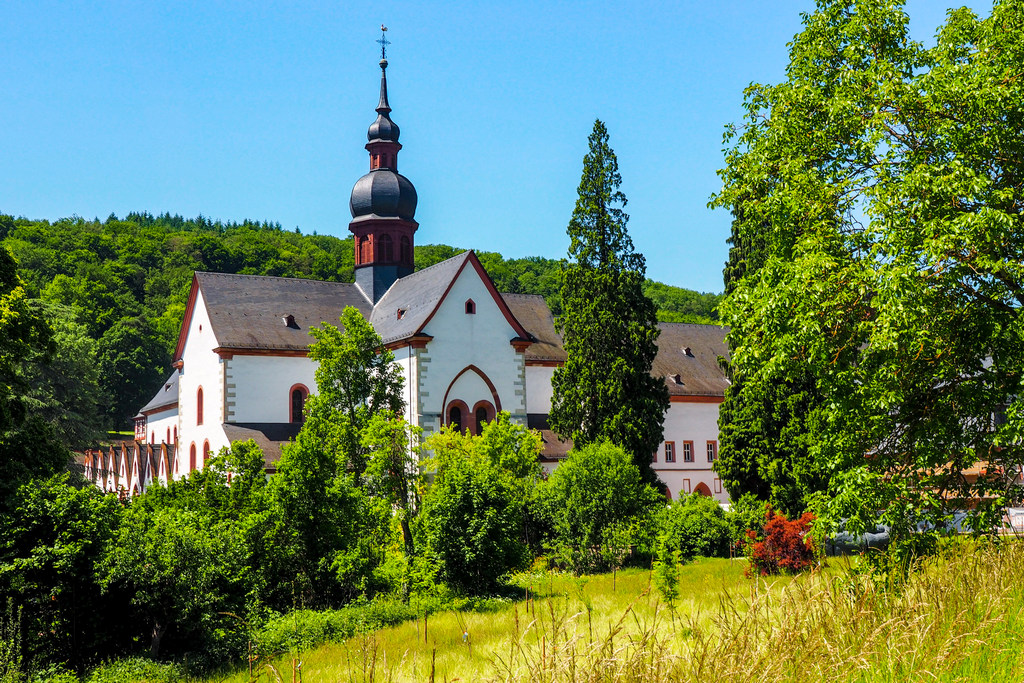
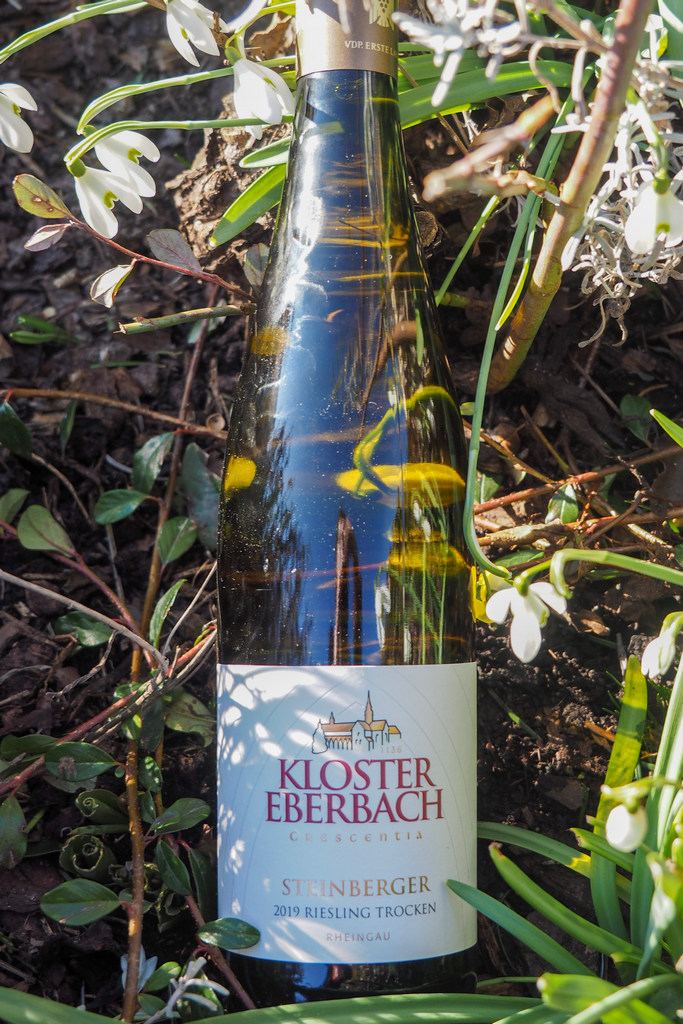
Kloster Eberbach – One of Europe’s best preserved medieval monasteries, Eberbach Abbey was built around 1136 by Cistercian monks on the east bank of the Rhine River. It is one of Germany’s oldest wineries and remains the largest to this day.
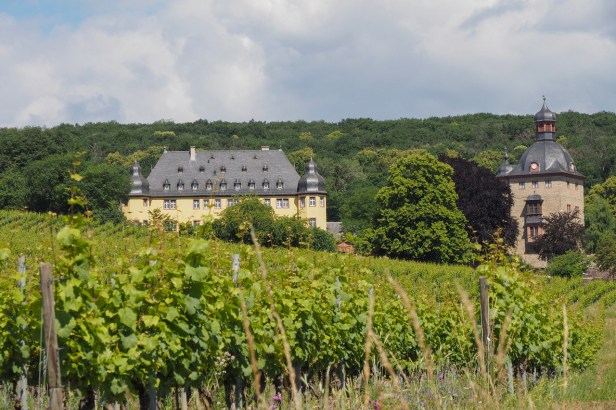
Schloss Vollrads – The site was constructed between the 1470’s when first the water tower was built and the 1680s when the impressive manor house was added, followed by the other estate buildings around 1700. Wine growing at Castle Vollrads goes back some 800 years, starting well before the actual property was built. Today, the compound hosts various wine festivals and other local events throughout the year.
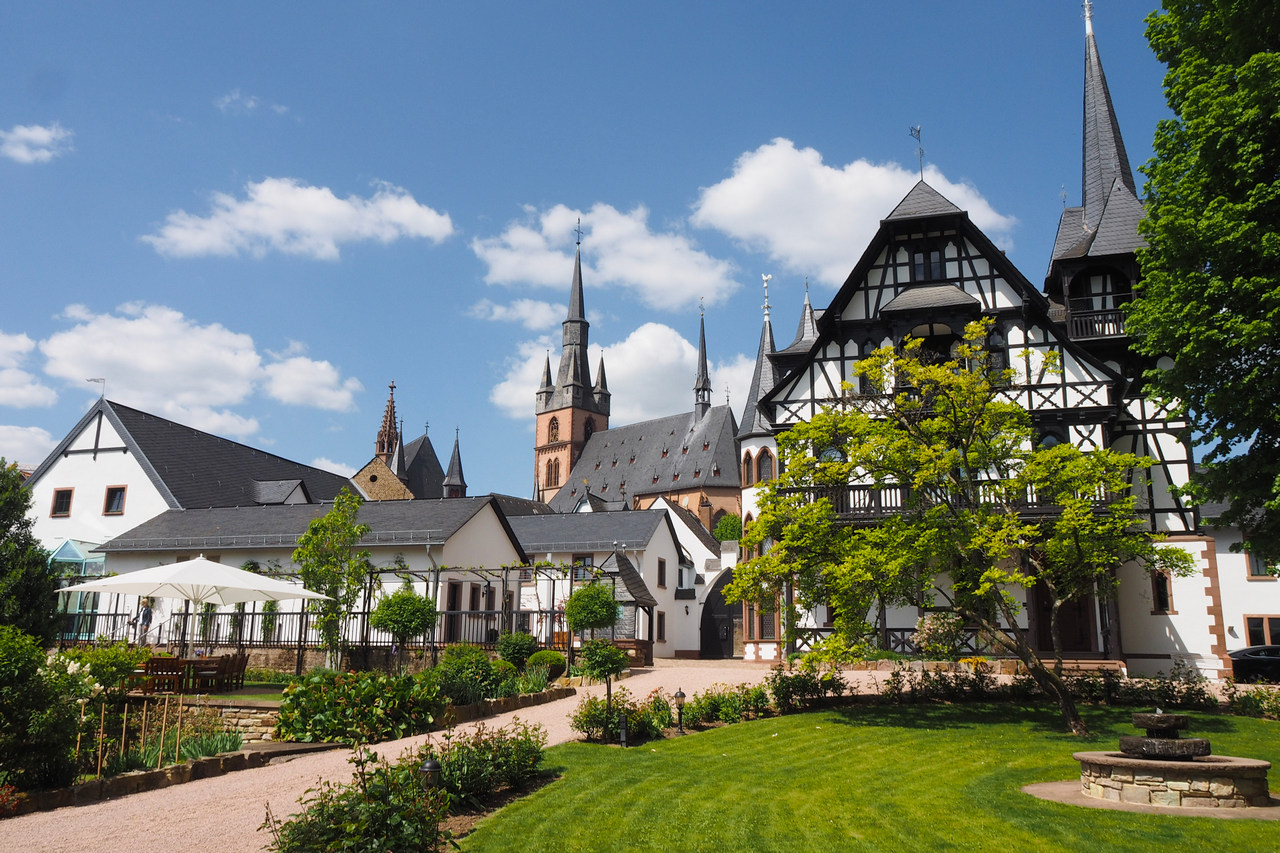
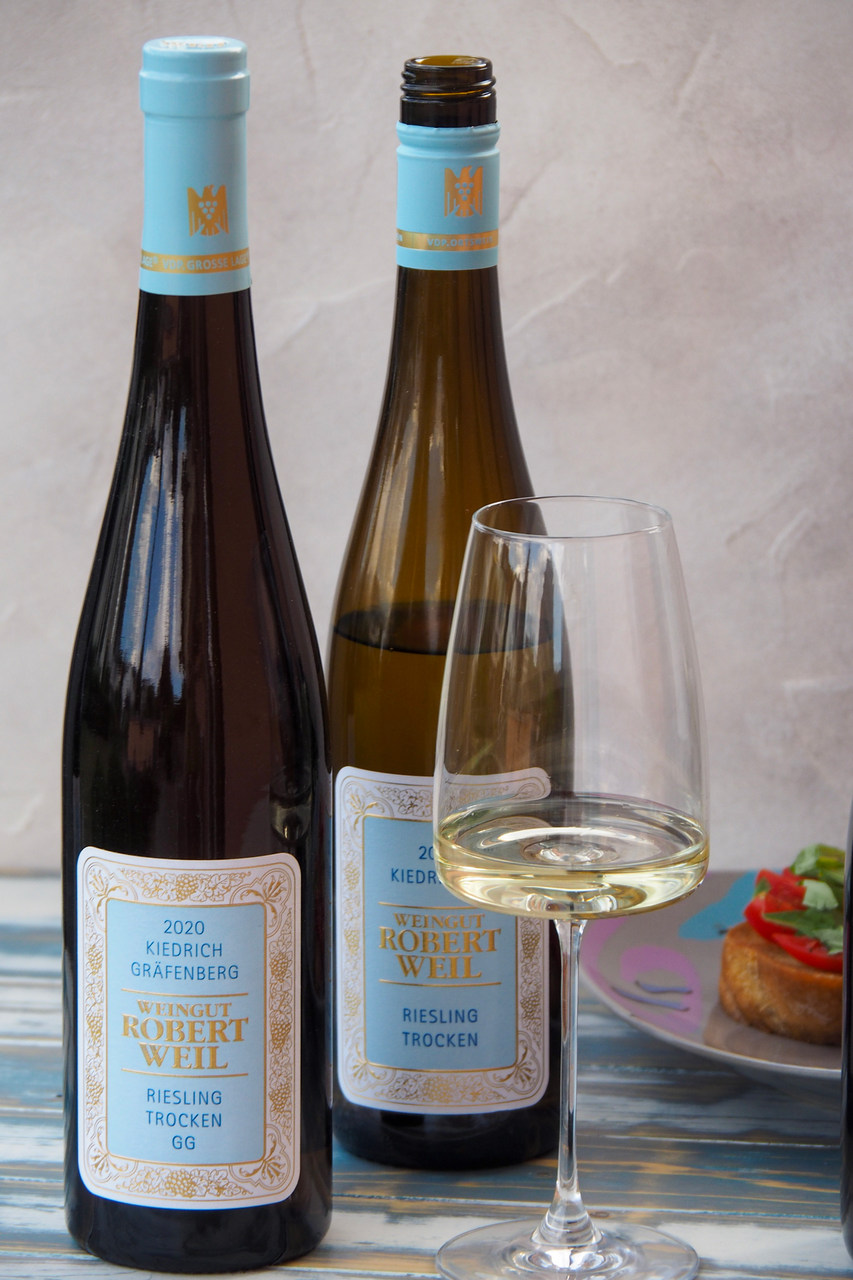
Robert Weil – Founded in 1867 by Dr. Robert Weil, a former professor of German language at the renown Sorbonne University in Paris, the estate quickly gained a name for its excellent Riesling wines nationally and internationally. It is still owned and let by the Weil family in fourth generation today and remains one of the top Riesling producers globally.
For more about the Rheingau, read my posts Visit the German wine regions: Rheingau, Seven special places to eat in the Rheingau, and Weingut Robert Weil.
Mosel, the world’s largest steep-slope wine region
Even those unfamiliar with German wine regions will most likely have heard of the Mosel Valley. After all, the area boasts some of the steepest vineyards in the world, and the scenery is truly breathtaking.
The area located in the southwestern part of Germany stretches from Koblenz all the way to Trier and is divided into the Upper, Middle and Lower Mosel Valley. Likewise forming part of the Mosel wine region are the tributaries of Saar and Ruwer.
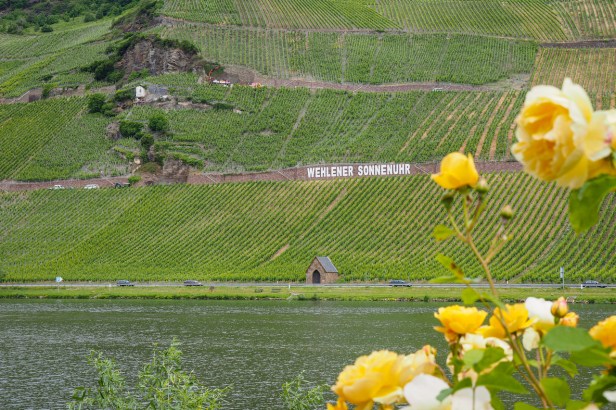
Along the river, you will find a string of winegrowing towns featuring half-timbered houses, castles (or ruins), ancient world heritage sites, Art Nouveau architecture along with a wide variety of restaurants. The major towns include Cochem, Beilstein, Traben-Trabach, Bernkastel-Kues, Lieser, Mühlheim and Piesport (from north to south). All have their own unique claim to fame.
Cochem: Home to the imposing Reichsburg Castle overlooking the town.
Beilstein: Dominated by the ruins of Metternich Castle this tiny, picturesque village is often called the ‘sleeping beauty of the Mosel’ and it is without any doubt one of the most beautiful medieval towns in Germany.
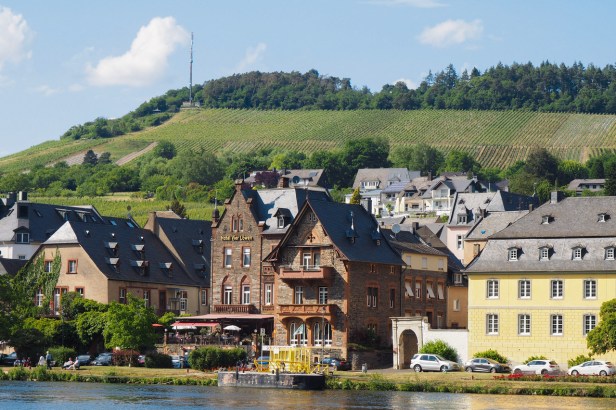
Traben-Trarbach: Once one of the riches wine towns in Europe, it is known for its beautiful Art Nouveau architecture and extensive underground wine cellars.
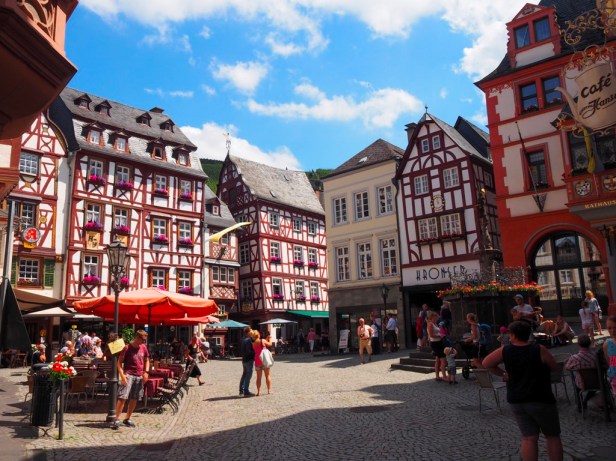
Bernkastel-Kues: Famous for its medieval market square, the unique half-timbered “pointed house” and the ruins of Landshut Castle.
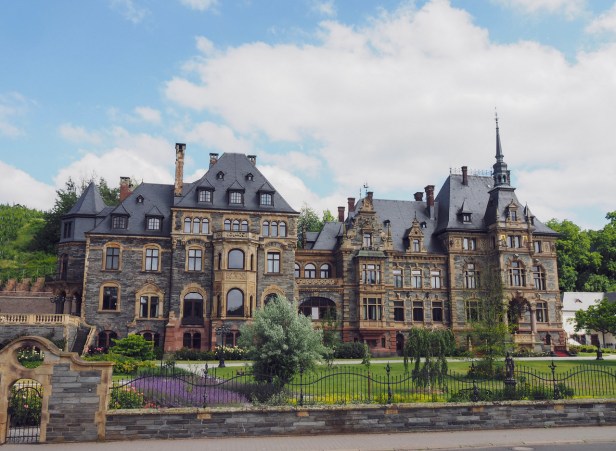
Lieser: A small wine village dominated by Lieser Castle, today a luxury hotel.
Mühlheim: A small a picturesque village known for “Zeppelin wine”, a historic Riesling from the area and the iconic St. Remigius church.
Piesport: The largest winegrowing town on the Mosel, renowned for its steep-slope called ‘Mosellorelay’, historic Roman wine presses, and the iconic “Goldtröpfchen” vineyard.
With a winegrowing history stretching back to Roman times, the Mosel is one of the oldest wine regions in Germany, producing Riesling wines that are considered by many to be the best in the world.
The steep, south-facing vineyards enjoy maximum exposure to the sun while soils are mostly composed of slate. On the other hand, the Mosel is the coolest winegrowing area in Germany. Thus, Riesling from the Mosel is regarded to be among the best in the world, showing depth, complexity and lightness.
Notable wineries to visit:
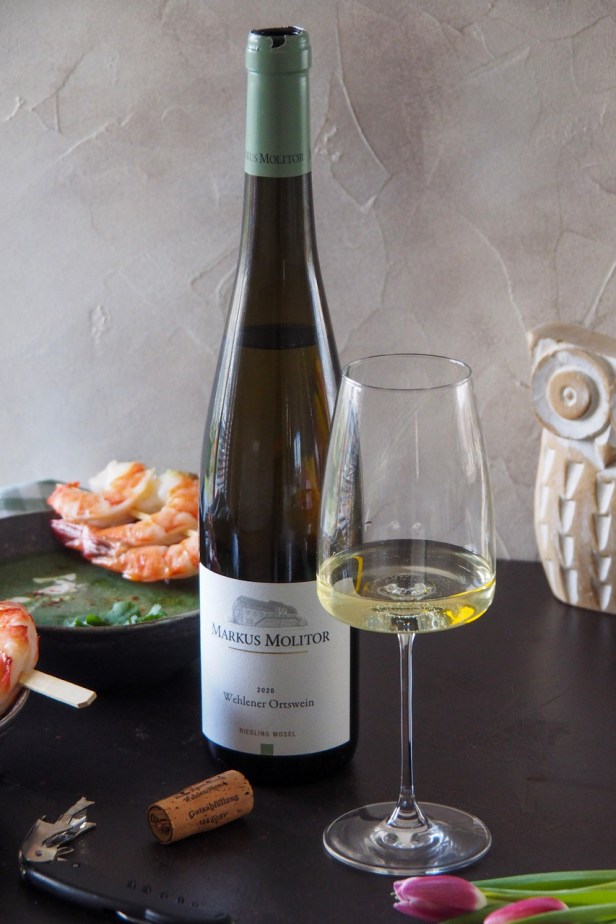
Markus Molitor: The winery, family owned since 1624 produces powerful, high-quality Riesling wines. It is particularly renowned for its three-story deep cellar carved into the slate rocks of a hillside.
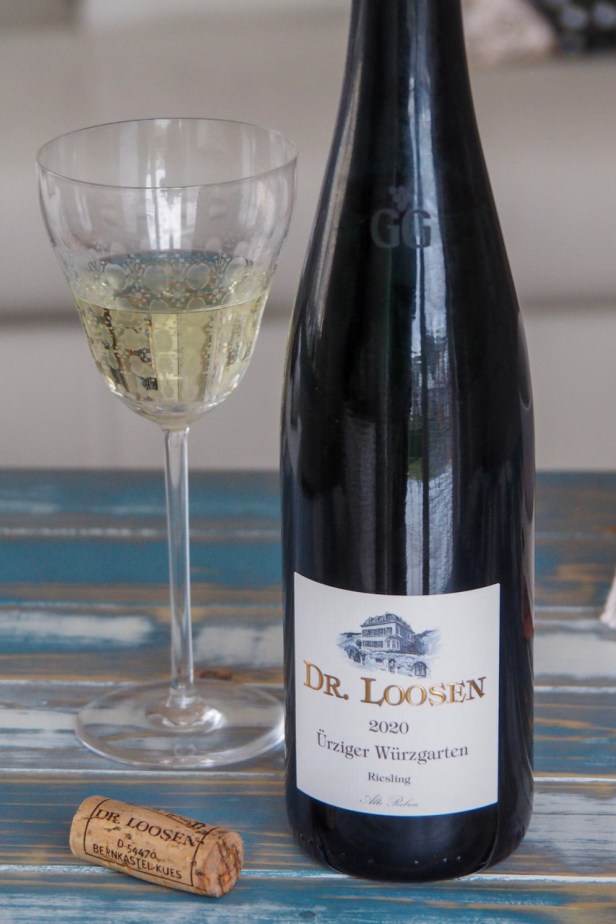
Dr Loosen: Located near Bernkastel-Kues, this is one of the most iconic Mosel wineries. Family-owned for over 200 years the winery is dedicated almost exclusively to Riesling and produces a full spectrum of styles from bone-dry to deliciously sweet. On site is a modern visitor centre build in a history style featuring vaulted ceilings.
J.J. Prüm – The 1911 established, family-owned winery is renowned for producing iconic, long-lived, and elegant Rieslings. Located in the well-regarded spot of Wehlen, J.J. Prüm also owns a part of the famous high-quality Wehlener Sonnenuhr vineyard.
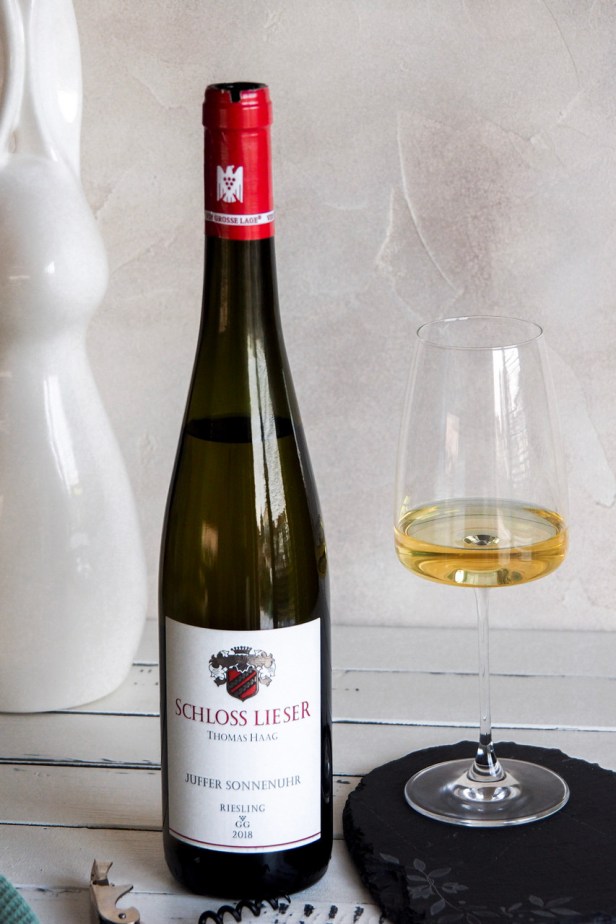
Schloss Lieser – Actually situated next to the castle and not associated with the property, this small, family-led winery is renowned for its range of delicate, terroir-driven Rieslings.
Van Vloxem – Located in the Saar tributary, the winery focuses on a range of expressive, modern styles while featuring stunning modern architecture.
Pfalz, home to the oldest German tourist wine route
The area, located in southwest not far from the French border despite still being classified a cool climate region is nonetheless one of Germany’s driest and warmest winegrowing regions. Consequently, it produces more approachable, ripe, and fruit-forward Rieslings.
The area is home to the oldest German wine route (Deutsche Weinstraße) stretching over 85 kilometres from Schweigen-Rechtenbach in the south to Bockenheim in the north. The route passes through many idyllic historic wine towns featuring half-timbered houses well worth a stop.
The slightly larger spa town Bad Dürkheim boasts a spa park home to a historic Salinarium thermal bath. It also hosts one of the largest wine festivals globally, the famous Wurstmarkt (translating into sausage market) and is home to the largest wine barrel in the world.
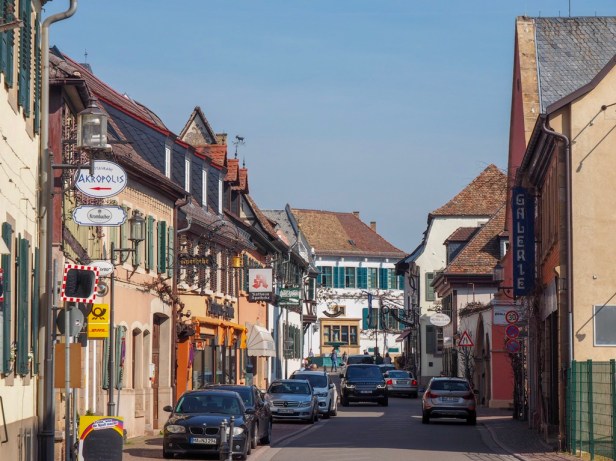
Deidesheim, also called ‘home of Riesling’ features one of the highest numbers of wineries, along with several gourmet restaurants and two of the regions’ leading hotels.
Gimmeldingen, a small historic wine town is famous particularly for early almond blossoms.
Forst an der Weinstraße is renowned for world-class, historic vineyards such as the Forster Kirchenstück.
Kallstadt boasts the 15th-century St. Salvator Protestant Church with a 36m tower, a historic lion fountain, and traditional wine taverns.
From a culinary angle, the region features a mixture of hearty, rustic German pork dishes and sophisticated, lighter influences from neighbouring France. Among the iconic local dishes, you will find Saumagen (stuffed pig’s stomach), boiled pork, liver dumplings and onion tart.
The Pfalz is well-known for its high density of smaller, owner-managed wineries with outstanding reputations.
Notable wineries to visit:
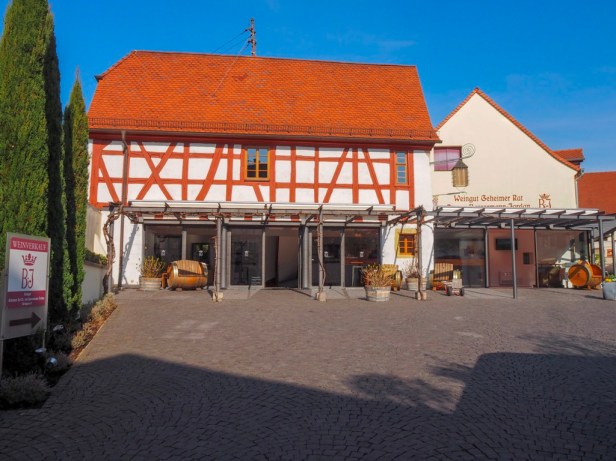
Bassermann-Jordan: Founded in 1718 the winery located in the heart of Deidesheim is known for producing high-quality, terroir-driven Riesling from renowned sites like Forster Ungeheuer and Deidesheimer Kalkofen.
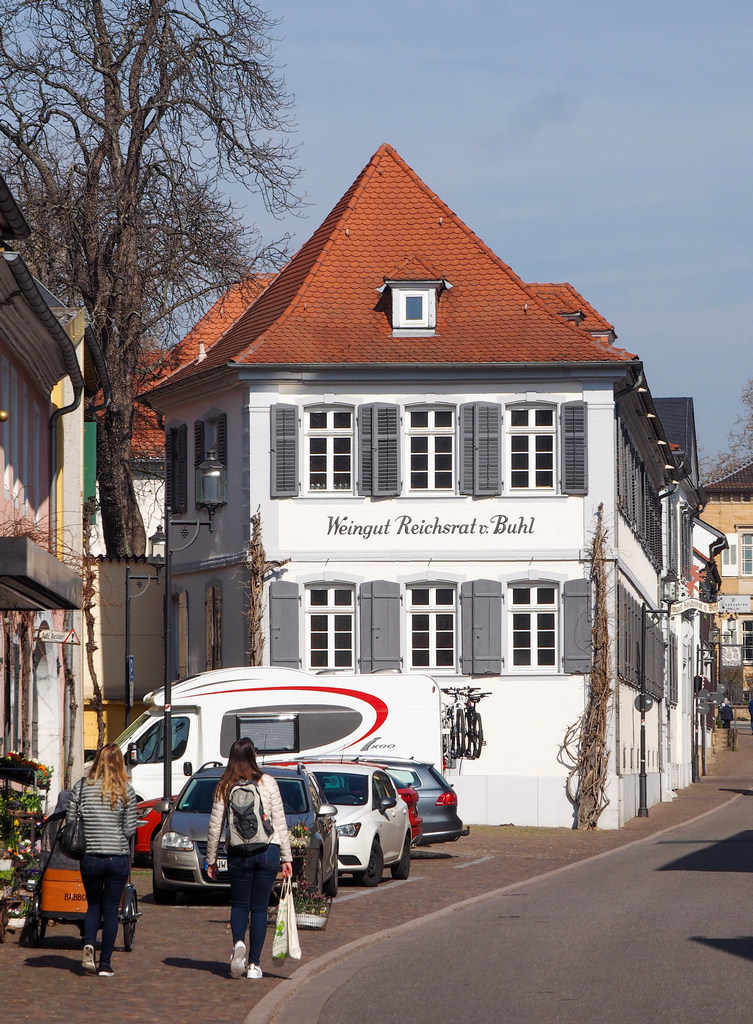
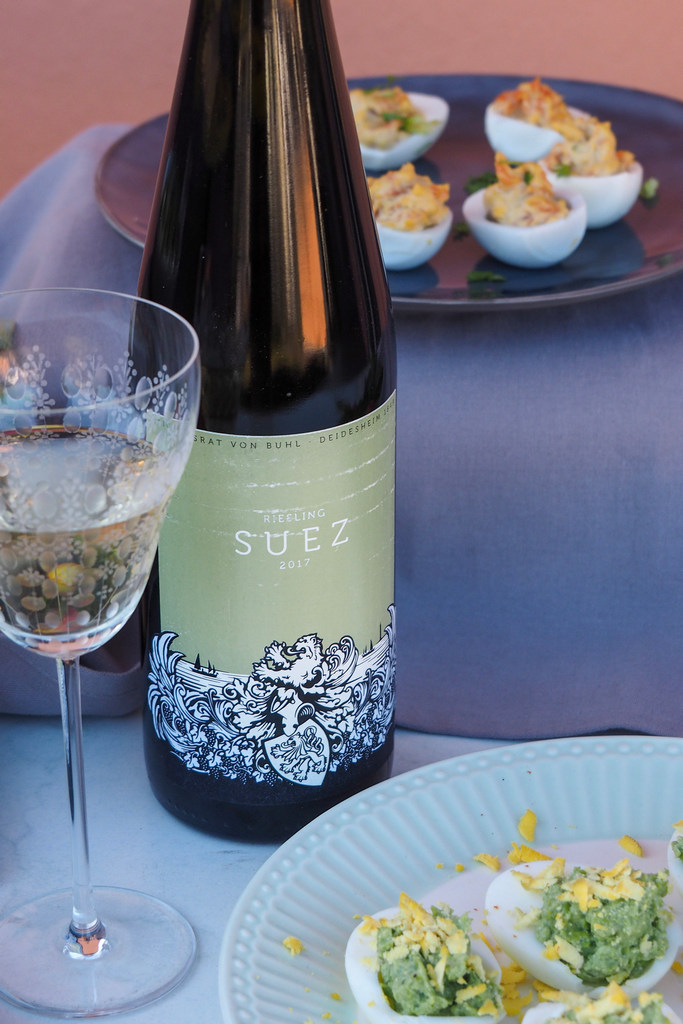
Reichsrat von Buhl: The winery famous for its terroir-driven timeless fine wines was founded in 1849 and since has been family owned. It occupies an iconic landmark in the centre of Deidesheim that dates back to the late Baroque period, featuring a lovely tasting room and wine shop. On site, you can also find the well-regarded Sushi B. Restaurant offering an outstanding opportunity to pair the winery’s Rieslings with sushi.
Dr. Bürklin Wolf: The historic, family-owned winery located in Wachenheim dates back to 1597. It is highly regarded as one of the best wineries in Germany, effortlessly combining historic winemaking knowledge with modern, environmentally conscious viticulture. Known for mineral-driven, dry, and expressive Rieslings and features a tasting room in an English Garden, offering views of the historic estate.
A. Christmann. A small, family-owned prestigious winery dating back to 1798. Today, the winery dedicated to biodynamic, terroir-driven viticulture and produces high-end, elegant Rieslings.
Von Winning: Founded in 1849, the winery is known for dry, terroir-driven Riesling with a signature spicy, oak-influenced profile utilizing natural, wood-barrel fermentation to create complex, structured wines. Von Winning offers tours of their historic vaulted cellar and tastings in their historic manor house. Also on site is the Leopold gourmet restaurant.
For more information, read my posts Why you need to visit Deidesheim on the German Weinstrasse and Your ultimate guide to explore the Palatinate almond blossom trial in Germany.
Nahe, the hidden gem of Germany’s leading wine regions
This is one of Germany’s smallest wine regions, tucked away between the famous Mosel and Rheinhessen regions in Rhineland-Palatinate.
Stretching from Martinstein in the west to Bad Kreuznach in the east. The region is characterized by steep, dramatic, and often hidden vineyard sites and picturesque, timber-framed medieval villages set among vineyards. Within the small area, Bad Kreuznach, which is well-known for tis beautiful bridge houses, and Meisenheim, a state-recognized recreational resort are the major centres.
Despite the area is protected from the encircling mountain ranges, the local climate is on the cooler side while though there are also pockets of warmer microclimates and there is a variety of soil types that surprises given the small vineyard size.
The area is known for remarkable geological diversity, featuring over 180 soil types including volcanic rock, slate, and red sandstone and it produces elegant, mineral-driven Rieslings.
The 130-kilometre long Nahe Wine Route connects vineyards, villages, and landmarks including the famous Rotenfels, a steep cliff, along with various castle ruins.
Notable wineries to visit:
Gut Hermannsberg: A former Prussian state domain founded in 1902, the winery today renamed Gut Hermannsberg specialies in world-class Riesling from 30 hectares of top vineyard sites. It also features a luxurious guesthouse with panoramic views and a lovely tasting room.
Dönnhoff: The world-renowned, family-run estate with over 250 years of history is famous for elegant, mineral-driven Rieslings from top-tier steep sites.
Schlossgut Diel: The family-owned winery based in Layen castle cultivates 25 hectares in the Nahe region since 1802. Today, it produces world-class, mineral-driven Rieslings from such prestigious sites like Goldloch and Pittermännchen.
Rheinhessen, the valley of gently rolling hills
Sunny Rheinhessen is Germany’s largest wine region, located just opposite Rheingau on the other side of the Rhein River. The area surrounded by the Rhine and Nahe rivers is characterized by a gently rolling landscape which are dotted by various lovely winegrowing towns and villages.
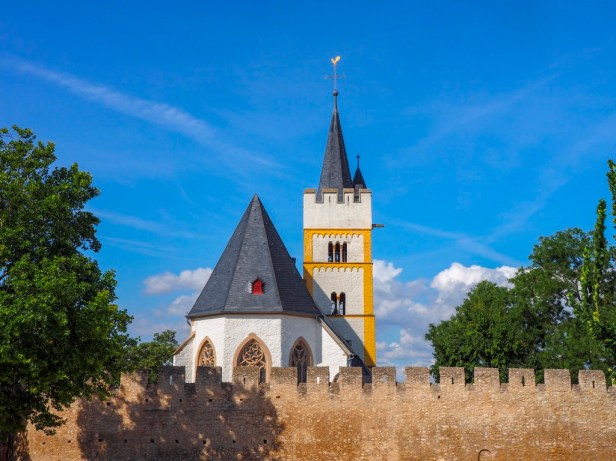
Perhaps best known is the town of Ingelheim, where differently to the wider region red wine varieties rule. Here, you will find the historic Charlemagne-era Imperial Palace known as Kaiserpfalz alongside the landmark Castle Church, half-timbered houses and sprawling vineyards.
However, the list of local towns to explore across Rheinhessen is significantly longer.
Alzey might ring a bell with lovers of classic music. The town is associated with the mythical poet Volker von Alzey, the fiddler in the medieval ‘Song of the Nibelungs’. The town also features idyllic half-timbered houses, a Renaissance town hall, fish market and the remains of an ancient Roman fort.
Oppenheim is perhaps best known for the extensive labyrinth under the old town which was only rediscovered a few years ago. It also features Gothic architecture, St. Katharine’s Church, St. Michael’s Chapel, a famous crypt and the ruins of Landskrone Castle.
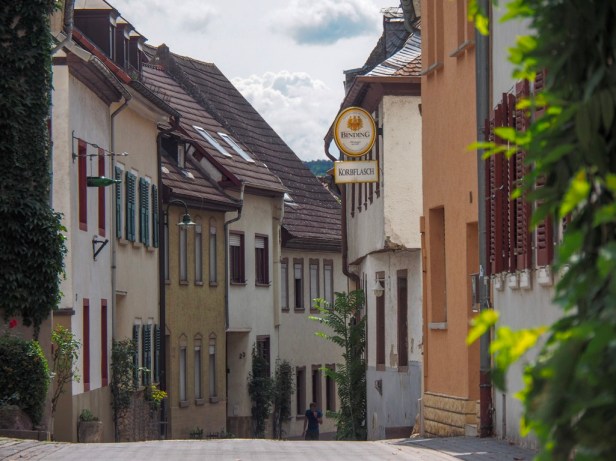
Small, historic Nierstein is famous as one of the leading Riesling wine towns in the region, home to such prestigious vineyards like Roter Hang (red slope).
Westhofen is a historic, picturesque wine village in the Alzey-Worms district featuring an ancient, well-preserved old town. It is famous for its renowned vineyardslike ‘Morstein’ and ‘Kirchspiel’.
The area is also home to the famous Rheinterasse (Rhine terrace), a scenic route stretching from Mainz-Laubenheim to Mettenheim.
Notable wineries to visit:
Kühling-Gillot: Run by Carolin Spanier-Gillot, this renowned winer winery has been family-run for more than 200 years. Remarkably the winery was always run by women until Roland Gillot married into the family in 1970. Located in the small town of Bodenheim, Kühling-Gillot specializes in mineral-driven Rieslings. Considered one of the best wineries in Germany, it regularly receives awards for its high-quality wines.
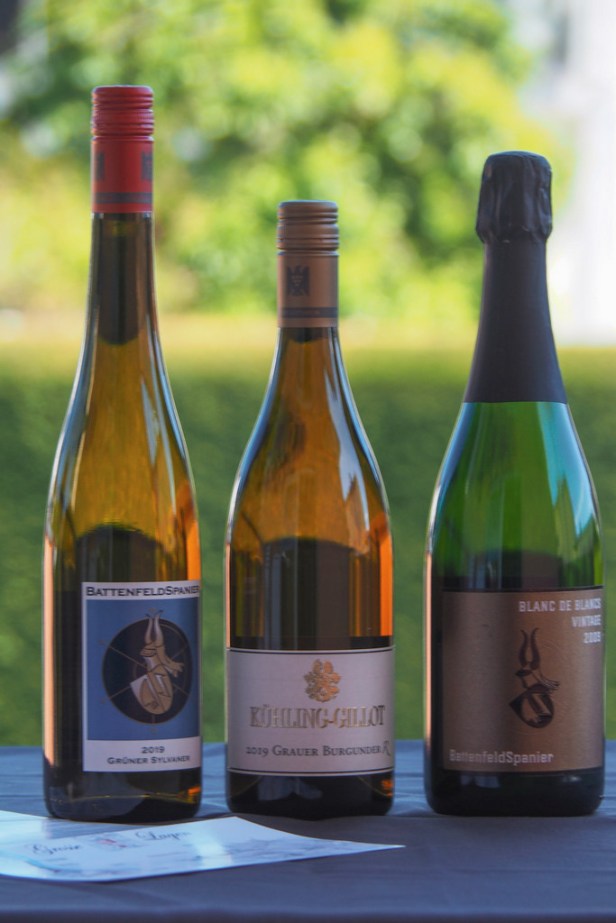
Battenfeld-Spanier: This top-tier organic and biodynamic winery located in Hohen-Sülzen, was founded in 1991 by Hans Oliver (H.O.) Spanier. It is known for producing mineral-driven, dry Rieslings from limestone soils.
Jürgen Dreissigacker: The winery run by Jochen Dreissigacker since 2005, produces premium, biodynamic, and climate-neutral wines. It is particularly known for its powerful, mineral-driven Rieslings.
Wittmann: Located in the idyllic town of Westhofen, the family-run winery is one of the local leaders in biodynamic viticulture and renowned for its high-quality Rieslings.
German Riesling is world renowned; and while the country makes many more excellent wines (hint: don’t miss Pinot Noir) a visit to the leading winegrowing regions of its white flagship varietal promises an outstanding wine adventure.
If you are a true lover of Riesling or keen to learn more about the grape variety, a visit to the leading German Riesling wine regions is a must.
 Carrots and Tigers