It’s the time of the year to embrace fuller-bodied wines complementing seasonal fall produce
I don’t know how it could happen, but we are already in the middle of October. Which means, we are well into fall/autumn.
With day temperatures still into the 20°C and plenty of sunshine until a few days ago, it’s easy to understand why my mind stayed focused on aperitivi on the patio rather than diving head over heels into fall produce. And with this, switching to fuller-bodied wines.
On the other hand, local farmers markets are currently brimming with all the delights of the season, from mushrooms to pumpkins, beetroots, pears, apples, chestnuts, and grapes. Last weekend, I even saw the first Brussels sprouts of the season.
As it would be a shame not to make the most of the still warm weather and the delicious fall produce, I made a fall-flavoured flammkuchen to be enjoyed on the terrasse.

This was the perfect occasion to open a bottle of the excellent Hex vom Dasenstein Pinot Gris that I brought home from a visit to the Ortenau in Germany’s Black Forest. The area is part of the wider Baden wine region, Germany’s southernmost wine region and the only one in Germany classified as warm climate winegrowing region in the country. Thus, it’s the perfect location growing burgundy grapes and while the area is particularly known for its red burgundy wines, wineries here also make fantastic ripe and full-bodied wines from white burgundy grapes.
About Winzerkeller Hex vom Dasenstein Winery
What I love about travelling to wine regions are those unexpected finds of wineries that have not been on my radar before. Because, with more than 11,000 wineries across the 13 official German wine regions even the most thorough research has its limitations.
Though I had a fairly long list of wineries worth seeking out during my visit to the Ortenau, the most northernly located area of the large Baden wine region in the southwest of Germany, Winzerkeller Hex vom Dasenstein was one of them.
Thankfully, a quirky sculpture featuring a witch and a Capricorn captured my attention driving through the small Archer Valley, nestled between the idyllic Rhine Valley and the Black Forest.
Hence, I decided to take a stop, and the rest as they say, is history.
Entering the spacious shop and tasting room in the wine town of Kappelrodeck, you get the impression to visit another of the many local wineries. Yet Hex vom Dasenstein in reality is a large wine cooperation, uniting more than 70 small local winegrowers and a total of 190 hectares of vineyards.
Founded more than 85 years ago (precisely in 1934), Hex vom Dasenstein, which h translates into ‘the witch from the Dasenstein’ takes its name from a legend going back to the year 1356.
As the story goes, a beautiful damsel fell in love with a farmers’ son. But the lord of Rodeck Castle, enraged about his daughters’ choice, send her away in disgrace. Left without any possessions, the farmers’ son did no longer want to marry her, and the damsel was forced to live alone in a rock cave down in the valley of the Dasenstein. Here, she planted vines and as a pastime, played many pranks on the people in the valley. As years went by, and when the damsel had turned old and ugly the people started to call her a witch, the ’Hex vom Dasenstein’.
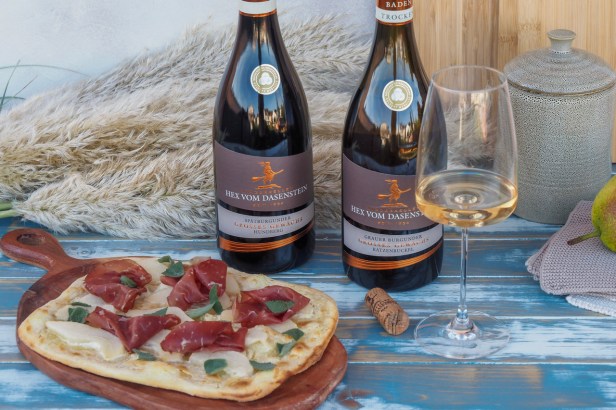
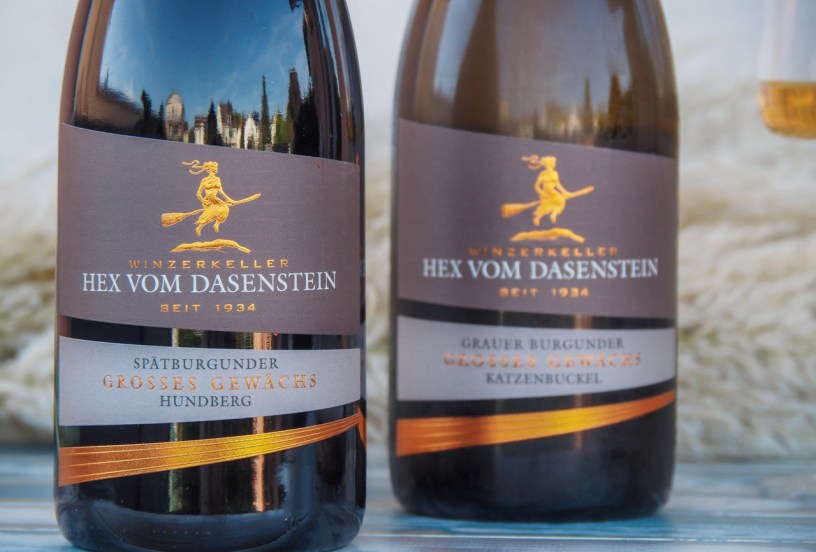
Today, the wine cooperation produces a large range of different wines, including the award-winning white and red burgundy wines Katzenbuckel Grauer Burgunder (pinot gris) and Hundberg Spätburgunder (pinot noir).
I selected the white to pair with the flammkuchen though if you love red more, the Hundberg pinot noir would be a great match too.
Tasting notes: Hex vom Dasenstein Katzenbuckel Grauer Burgunder (pinot gris)
Grapes for the Katzenbuckel Grauer Burgunder are sourced from a vineyard located on a hill in front of rugged granite slopes in the valley. Grapes are hand-picked and carefully selected, and fermentation is in part spontaneous to allow the terroir and microflora of the grapes to shine. The slightly stronger, deeper soils of the location translate into a wine with give the wine a particular melt and reverberation.

In the glass, a light yellow with radiant reflections.
On the nose, delicate aromas of ripe pears and subtle spicy herbal notes.
On the palate, creamy and smooth with aroma of pear and light notes of vanilla. Mild, pleasant acidity and long expressive finish.
Food pairing: Hex vom Dasenstein Katzenbuckel Grauer Burgunder (Pinot Gris) pairs fantastic with a wide range of food such as poultry, white meat, and hearty cheese. Or try it with my flammkuchen recipe topped with pears and bresaola.
Tasting notes: Hex vom Dasenstein Hundberg Spätburgunder (pinot noir)
Grapes are hand-picked and carefully selected. Fermentation is in part carried out spontaneous to allow the terroir and microflora of the grapes to shine followed by aging in barrique.
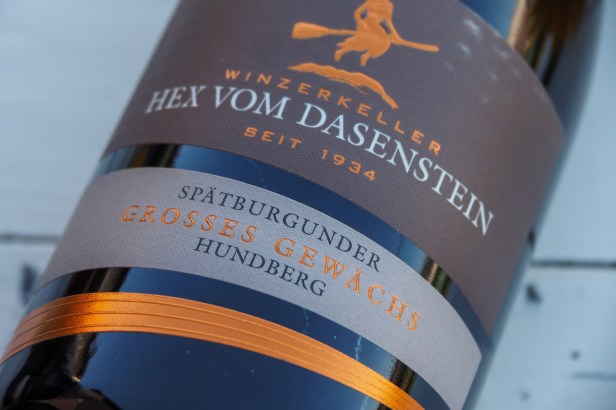
In the glass, a light ruby red.
On the nose, aromas of red barriers with hints of coffee and tobacco.
On the palate, balanced acidity, with fruity aromas and spicy nuances. Long and pronounced finish.
Food pairing: Hex vom Dasenstein Hundberg Spätburgunder pairs well with poultry, red meat, game, pasta, and hearty cheese.
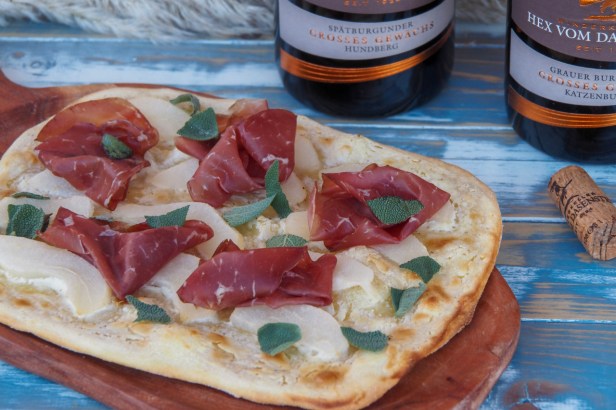
Recipe: Flammkuchen with pears and bresaola
Serves 4 small or 2 large flammkuchen
For the dough
250 g all-purpose flour
2 tablespoons olive oil
2 egg yolks
100 ml warm water
pinch of salt
For the topping
150 g creme fraiche
pinch of nutmeg
1 tablespoon lime juice
salt and pepper
1-2 pears, peeled, cored and cut into thin slices
100 g bresaola, thinly sliced
few stalks of sage leaves
For the dough, combine all ingredients and knead until obtaining a smooth dough. Form into a ball, drizzle with a splash of olive oil and wrap with cling film. Set aside and let rest for 30 minutes.
Preheat oven to 250°C.
Line a baking sheet with parchment paper.
Divide the dough into two or four equal parts and roll out into thin squares.
Stir together the creme fraiche, nutmeg, and lime juice. Season with salt and pepper.
Spread the dough with the creme fraiche mixture, then top with pear slices.
Bake for around 15 minutes until the dough is crispy and golden-brown.
Top with slices of bresaola and sage leaves.

 Carrots and Tigers